



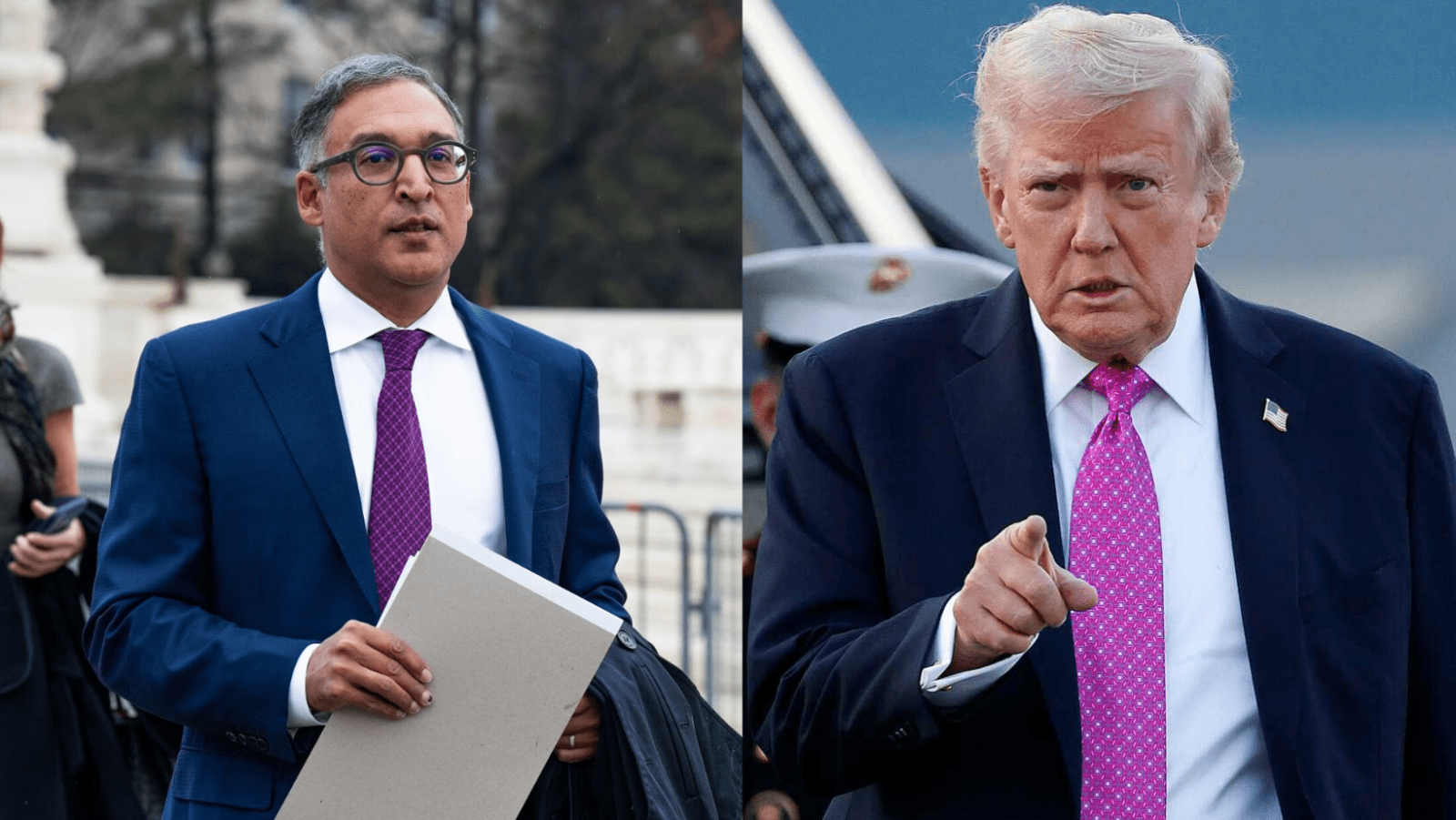
Neal Katyal, the Indian-origin American lawyer who represented small businesses affected by these tariffs along with co-counsel Sara Albrecht, has strongly criticised Trump’s decision to impose a 15% global tariff. Katyal said that if Trump truly believes the tariff is necessary, he should follow constitutional procedures and seek approval from Congress.
In the court, Katyal argued that tariffs are taxes and only Congress has the authority to impose them. He said the President had overstepped his constitutional limits by using tariffs as a tool for economic and foreign policy.
Katyal also questioned whether the new tariff can legally be imposed under the Trade Act of 1974, especially Section 122. He pointed out that the Department of Justice had earlier told the Court that Section 122 was not meant to deal with trade deficits, which are different from balance-of-payments deficits.
Seems hard for the President to rely on the 15 percent statute (sec 122) when his DOJ in our case told the Court the opposite: “Nor does [122] have any obvious application here, where the concerns the President identified in declaring an emergency arise from trade deficits, which…
— Neal Katyal (@neal_katyal) February 21, 2026
The Supreme Court of the United States on Friday struck down President Donald Trump’s earlier tariff measures in a 6–3 decision. The Court said the administration had gone beyond its powers under the International Emergency Economic Powers Act (IEEPA). It made clear that the power to impose taxes mainly belongs to Congress, not the President.
The ruling came after legal challenges argued that tariffs are a form of taxation and cannot be imposed by the President without proper approval from Congress.
In a post on X, Katyal wrote, “Seems hard for the President to rely on the 15 percent statute (sec 122) when his DOJ in our case told the Court the opposite: Nor does [122] have any obvious application here, where the concerns the President identified in declaring an emergency arise from trade deficits, which are conceptually distinct from balance-of-payments deficits.”
“If he wants sweeping tariffs, he should do the American thing and go to Congress. If his tariffs are such a good idea, he should have no problem persuading Congress. That’s what our Constitution requires,” his post read.
Trump moves to announce fresh tariffs
Soon after the Supreme Court’s decision on Friday, Trump announced new tariffs. He first introduced a 10% global tariff under Section 122, using a temporary provision that allows such a surcharge for up to 150 days. The US government later increased it to 15%, calling it “fully allowed and legally tested”.
On Truth Social, Trump criticised the Supreme Court’s ruling and called it “extraordinarily anti-American”. He defended his decision to raise the tariff rate despite the legal setback.
Katyal’s background and career
Katyal was born on March 12, 1970, in Chicago to Indian immigrant parents. His mother, Pratibha, was a paediatrician, and his father, Surendar, was an engineer.
He graduated from Dartmouth College and Yale Law School. In the mid-1990s, he worked as a law clerk for Supreme Court Justice Stephen Breyer. Earlier, he was a summer associate at the law firm Hogan & Hartson, where he worked with John Roberts, who later became the Chief Justice of the United States.
In 2010, then US President Barack Obama appointed Katyal as Acting Solicitor General. Over the years, he has argued more than 50 cases before the Supreme Court, more than any other minority lawyer. In doing so, he surpassed the record of Thurgood Marshall, who served as Solicitor General in 1965 under President Lyndon B. Johnson and later became the first African-American Supreme Court Justice in 1967.
Katyal is currently a partner at Milbank LLP and a law professor at Georgetown University.
He was involved in the legal challenge to Trump’s 2017 travel ban, often called the “Muslim ban”. He also served as a special prosecutor in the case related to the murder of George Floyd, helping secure the conviction of police officer Derek Chauvin.
Another important case he argued was in defence of the constitutionality of the 1965 Voting Rights Act in 2009, further strengthening his reputation as a leading constitutional lawyer.