



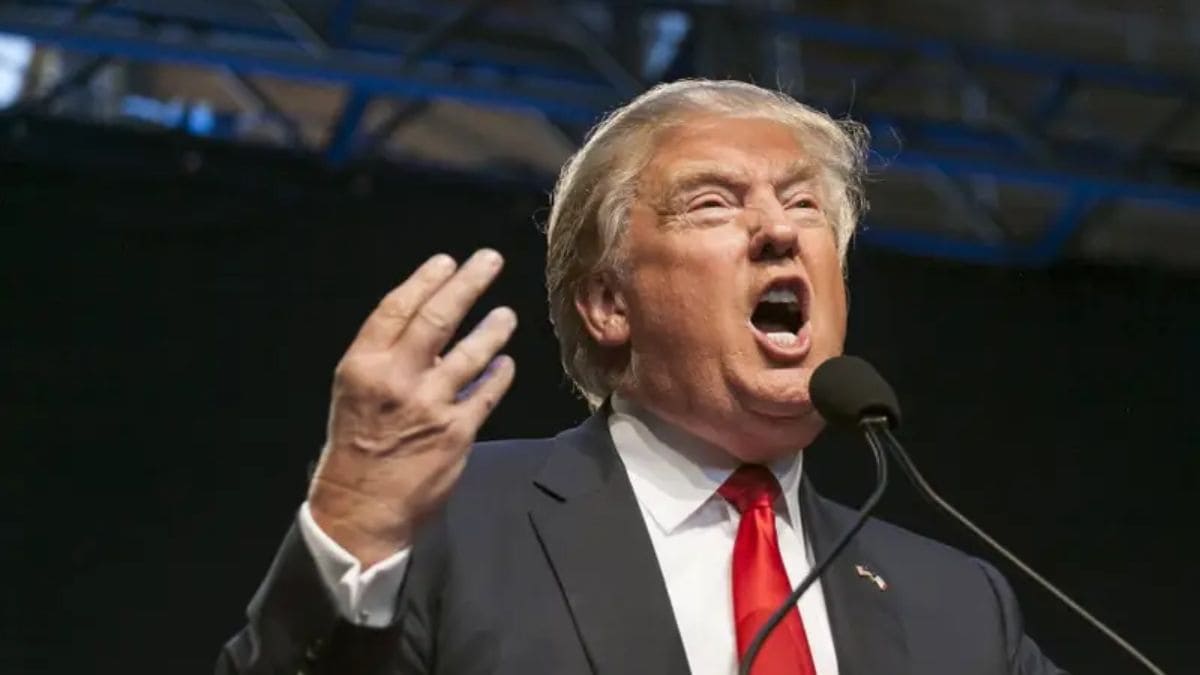
US President Donald Trump sharpened his criticism of Iran on Wednesday — broaching the possibility of fresh strikes against the Islamic Republic. The POTUS reiterated his earlier warnings about a “massive armada” heading towards the other country as he called for Tehran to “come to the table”. Iran has repeatedly warned that it would view any sort of attack as instigation for “all out war” .
‘Make a deal or else…’
“A massive Armada is heading to Iran. It is moving quickly, with great power, enthusiasm, and purpose. It is a larger fleet than that sent to Venezuela. It is ready, willing, and able to rapidly fulfill its mission — with speed and violence, if necessary. Hopefully Iran will quickly “come to the table” and negotiate a fair and equitable deal,” he wrote on Truth Social.
Trump also urged Tehran to reach an agreement that would bar nuclear weapons development and insisted that “time was running out”. He also referenced Operation Midnight Hammer — the 2025 US strikes against nuclear sites in Iran — and warned that the next attack “will be far worse” than prior strikes.
“As I told Iran once before, make a deal!! They didn’t, and there was “Operation Midnight Hammer,” a major destruction of Iran. The next attack will be far worse! Don’t make that happen again,” he warned.
What will happen if the US really attacks Iran?
The recent stance taken by both countries makes it rather likely that the US will strike Iran within days. Trump has outlined several conditions over the past few weeks — asking Tehran to stop its crackdown against protesters and demanding a deal against nuclear expansion. The prospect of a last-minute deal now seems bleak as the Ayatollah-led regime takes a defiant stance against the POTUS. A US strike can yield several outcomes depending on the magnitude and focus of the attack.
Collapse of the Khamenei regime
A US attack could lead to the fall of the regime led by Ayatollah Ali Khamenei — paving the way for military rule or even a gradual transition towards democracy. The US forces may opt for precision strikes against military bases, nuclear programme sites and ballistic missile launch and storage areas. Such an attack would likely take out key members of the Islamic Revolutionary Guards Corps and the Basij unit (a paramilitary force under the control of the IRGC) and likely topple the government.
Similar Western interventions in Iraq and Libya have previously ended brutal dictatorships — but triggered years of chaos and bloodshed. A gradual transition towards democracy remains a somewhat idealistic best-case-scenario. Many believe that the regime could also collapse amid a barrage of American strikes before finding its footing under a strong, military government composed largely of IRGC figures.
A takedown of the Islamic Republic could also create a chaotic power vacuum that triggers civil war, ethnic tensions and armed conflict between various communities. Syria, Yemen and Libya have all experienced these crises first hand and now remain wary about a recurrence in the densely populated Middle Eastern nation.
Iranian retaliation against the US
It is unlikely that Iran could emerge wholly unscathed from a strong US attack. But it has repeatedly vowed to mount at least some semblance of a counter-attack against American forces. The sinking of a US warship — and the possible capture of its crew — would be a massive humiliation for the US if it comes to pass.
Tehran could also deploy sea mines along the critical Strait of Hormuz to cripple global shipping and oil supplies. Around 20% of global LNG exports and up to 25% of oil and oil byproducts pass through this narrow waterway separating Iran and Oman every year. Iran has conducted deployment exercises in the past and such an attack would have a staggering impact on world trade and oil prices.