



There was a time when almost everyone thought building a global software company from Chennai was a bad idea. Back then, India was mostly known for IT outsourcing. If someone wanted to build a serious software product company, the advice was simple, move to Silicon Valley. Chennai was not seen as the place where billion-dollar tech firms were born.
But Girish Mathrubootham did not follow that script.
He left a comfortable vice-president job at Zoho, borrowed $50,000 from friends, and moved into a tiny 700-square-foot warehouse in Chennai with six other people. It was cramped, uncertain, and risky. But that small setup eventually became Freshworks, the first Indian-born software product company to list on Nasdaq. Today, the company is entering a completely new phase, one powered less by people and more by artificial intelligence.
Freshworks currently carries a market capitalization of approximately $2.5 billion, according to Forbes.
Betting on hungry talent instead of hungry degrees
Freshworks started as an underdog story in every sense.
The company did not have deep pockets or a Silicon Valley address. Even hiring looked unconventional. Instead of focusing only on polished resumes and elite credentials, Freshworks looked for people who could learn quickly and adapt.
One of its customer support hires was a biomechanical engineer. Several engineers were fresh graduates who had never worked with the coding language the company needed.
The startup burned through its first ₹45 lakh entirely on advertising and managed to get only around 70 customers in return. For years, the company operated silently and was often brushed aside by larger American competitors. Things then took a turn for the worse, but eventually helped Fireworks get noticed.
A well-known US rival accused Freshworks of “unethical marketing” in public. Instead of damaging the company, the controversy gave it massive visibility. Suddenly, people across the global SaaS industry were talking about this small startup from Chennai.
Soon after, venture capital giant Sequoia invested $1 million into the company. The funding changed everything and helped Freshworks move onto a much bigger stage.
The Nasdaq moment that made history
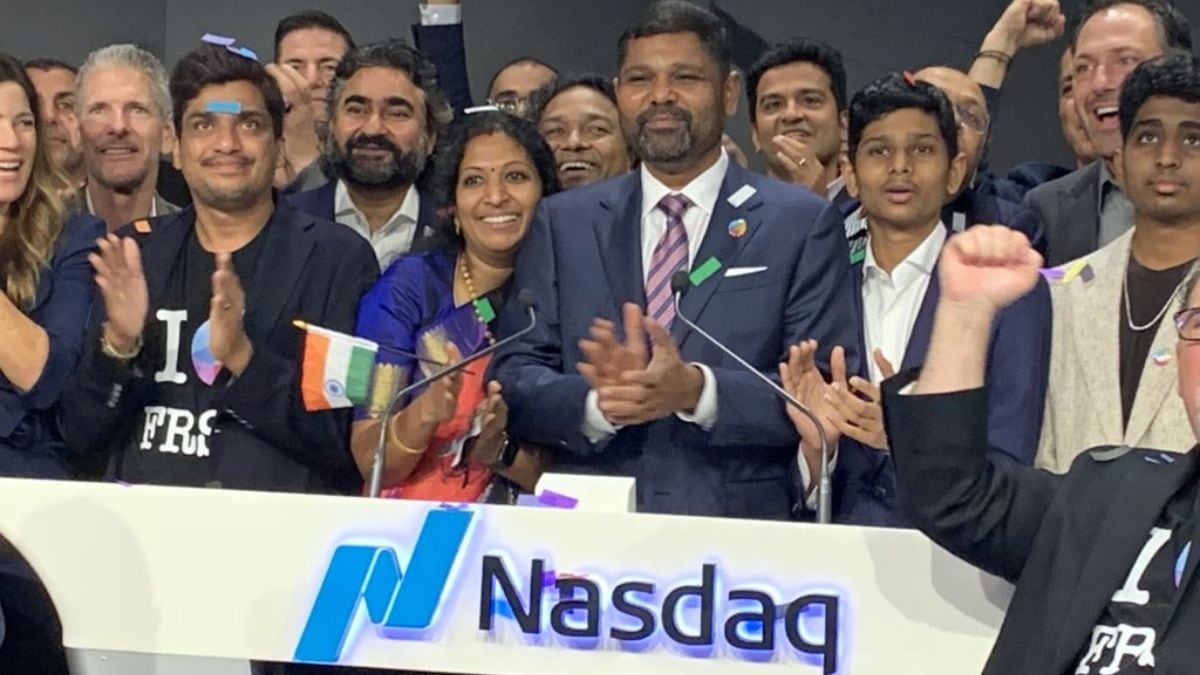
When Freshworks went public on Nasdaq in September 2021, it became a landmark moment for India’s startup ecosystem.
The IPO created more than 500 crorepatis inside the company. Around 70 of them were under the age of 30, making it one of the most viral wealth creation stories in Indian tech. For many founders and young engineers in India, Freshworks became proof that world-class software products could be built outside Silicon Valley.
Freshworks also stood out because of its approach to software. Instead of building complicated enterprise tools with huge price tags, the company focused on creating simpler and more affordable products for businesses.
The tough years after the IPO
The Nasdaq listing was a huge achievement, but the road after that was not smooth.
Like many tech companies, Freshworks faced market pressure after the IPO. The company’s share price dropped significantly from its peak during big turbulence in the tech sector. But behind the scenes, the business itself kept getting stronger.
Freshworks slowly shifted its focus toward building a healthier and more profitable company instead of chasing growth at all costs.
2025 became a major turning point
Freshworks reported revenue of $838.8 million in 2025, with trailing figures climbing even higher in later reports. More importantly, 2025 became the company’s first GAAP profitable year.
The company posted a net income of $183.7 million. The momentum continued into 2026 as well. In the first quarter of 2026, Freshworks reported revenue of $228.6 million, marking a 16% year-on-year increase.
Girish Mathrubootham’s quiet exit
After leading the company for nearly 15 years, Mathrubootham stepped down as executive chairman in late 2025. From borrowing money from friends to building a globally recognised SaaS company, his journey became one of India’s most inspiring startup stories.
Mathrubootham has since shifted his focus toward full-time investing and supporting the next generation of founders. Under CEO Dennis Woodside, Freshworks is now moving toward AI-powered automation. The company that once depended heavily on hiring and training young talent is now relying more on machines writing software code. But the move has also come with painful workforce cuts.
In May 2026, the company announced that it would reduce its global workforce by 11%, affecting roughly 500 employees. This came after another 13% reduction in late 2024.
Disclaimer: Net worth figures are based on publicly available estimates, company valuations, funding data, and media reports. These numbers may fluctuate over time depending on market conditions, private holdings, investments, and other financial factors.