



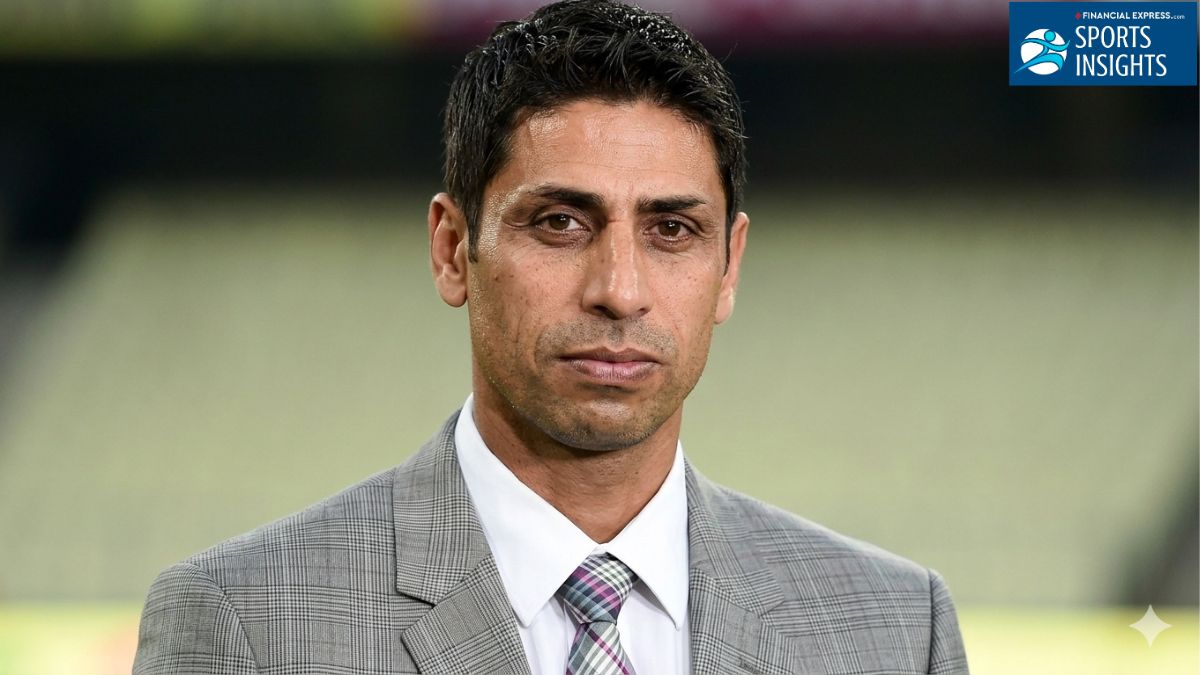
There is a photograph from the 2003 World Cup that nobody talks about much. It is not the one where Ashish Nehra is holding the ball after taking six wickets against England in Durban. It is the one taken a few minutes after that spell ended.
Nehra is bent over near the fine-leg boundary, hands on his knees, heaving. A few seconds earlier he had eaten a banana to fight the nausea. Then he vomited. Right there on the grass, in front of thousands, on live television. Then he walked back to his mark and bowled some more.
That image tells you everything you need to know about the man. He was never the prettiest cricketer. Never the most durable. Never the one selectors banked on for a full season. But when the moment arrived, when the stakes were real, when the body was screaming no, Nehra somehow found a way to say yes.
Again and again. For eighteen years. Under seven different captains. Across three formats. Through twelve surgeries. Through a body that his own teammates called “Mr. Glass.”
And here is the thing nobody saw coming. The same man who spent two decades fighting his own anatomy is now runs cricket academies in towns most IPL franchises cannot locate on a map. He owns a slice of Delhi’s hospitality scene. He commands 3.5 crore a year as head coach of Gujarat Titans.
And he still uses a phone so old that Rohit Sharma once joked Nehra is “on trend but cannot even see it.” The man has no Instagram. No Twitter. No Facebook. Nothing. In 2026, that is either madness or genius. For Nehra, it turned out to be genius.
How does a boy from Sadar Bazaar, Delhi, who used to fall asleep on the back of Virender Sehwag’s scooter while riding to Feroz Shah Kotla at five in the morning, end up here? The answer is not in the stats. It is in the scars.
The Scooter, the Sonnet, and the Man Who Shortened His Stride
Nehra was born April 29, 1979, in Sadar Bazaar, Delhi Cantonment. His father Diwan Singh worked in the Delhi Civil Supplies Corporation. His mother Sumitra taught Sanskrit. Middle class. Stable. Not rich. Not poor. Just enough that cricket was possible but not guaranteed.
He landed at Sonnet Cricket Club. Tarak Sinha, Ustaadji, looked at this tall, thin kid and thought, this boy will break. So he shortened Nehra’s bowling stride. Made it tighter. Less strain on the frame.
That adjustment did not just keep Nehra alive. It gave him swing. Real swing. The kind that moves late and sharp. The kind that destroys batting lineups.
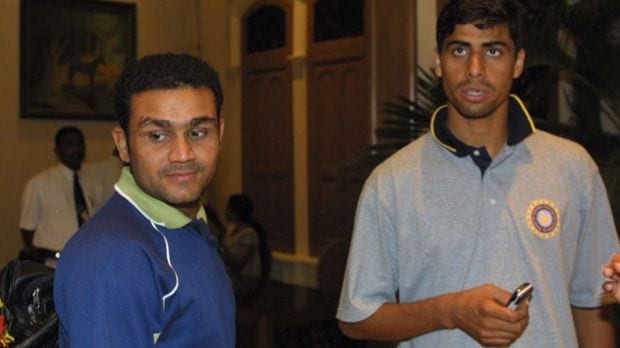
The scooter rides are real. Sehwag drove. Nehra slept on the pillion in the cold Delhi morning. On the way back, they switched. Two boys who had no idea what was coming. Nehra debuted for Delhi in 1997-98 against Haryana. Dismissed Ajay Jadeja in both innings.
Jadeja was an India player. Nehra was a teenager who had skipped age-group cricket completely. That tells you about the nerve. It also tells you about the body. Because the body was always the problem. Always.
Durban, the Banana, and the Vomit
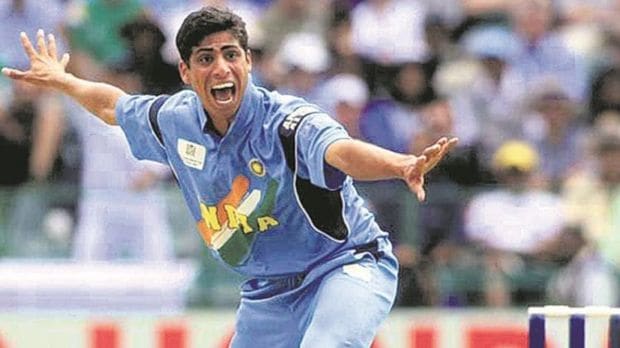
February 26, 2003. Two days before India vs England in the World Cup, Nehra rolled his ankle in the nets. Badly. Medical staff said no chance. Ganguly said play. Nehra spent 48 hours in ice. Barely slept.
Walked out at Kingsmead and picked up 6 wickets for 23. Vaughan. Hussain. Stewart. All gone. The ball was swinging like a banana. Still the best World Cup figures by an Indian until Mohammed Shami broke it in 2023.
Then he ate a banana. Then he vomited on the field. On live TV. Then he walked back and bowled more.
That is Nehra. The body says stop. The mind says shut up. The performance happens anyway. But he paid for it. Missed four years of ODI cricket because of that ankle. Four years. Most bowlers would have been forgotten. Nehra just waited. He had practice.
The Finger, the Final, and the Void
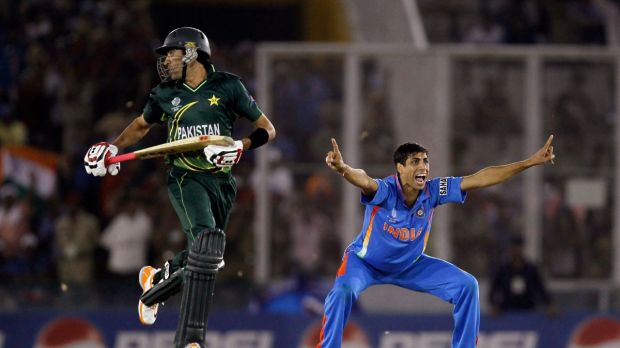
2011. Mohali. World Cup semi-final against Pakistan. Nehra had been dropped after conceding 16 in the final over against South Africa. The crowd wanted him gone. Selectors agreed. He sat out the quarter-final.
Then they picked him for the semi-final. He bowled 2 for 33. Most economical spell among all bowlers. Pakistan choked. India was in the final. But while fielding his own bowling, Nehra fractured a finger.
Just like that. He watched the final against Sri Lanka from the dressing room. Wearing the India jersey. World Cup winner. But not in the final.
That stays with you. Years later, as Gujarat Titans coach, he tells players that every squad member matters. Not just the eleven. Not just the trophy holders. Everyone. Because he knows what it feels like to build the bridge and not cross it.
The Comeback at 36 That Nobody Ordered
2016. Five years after his last ODI. Age 36. Body held together by prayers and tape. Nehra comes back to international cricket. A good IPL with Chennai Super Kings forced the selectors’ hand. He played the T20 World Cup. India’s best bowler. Named in the ICC Team of the Tournament. At 36.
That same year he caught chikungunya. He said it was the worst pain of his life. This from a man with twelve surgeries. Twelve. Back. Knee. Ankle. Finger. Hamstring. The full list. He used to joke that his injuries were not on his body. His body was stuck somewhere among the injuries.
But he kept bowling 140 km/h in his late thirties. How? He stopped listening to trainers. Started listening to himself. Moved to yoga. Understood his own body better than any physiotherapist. That insight became the foundation of everything next.
The House for Ustaadji
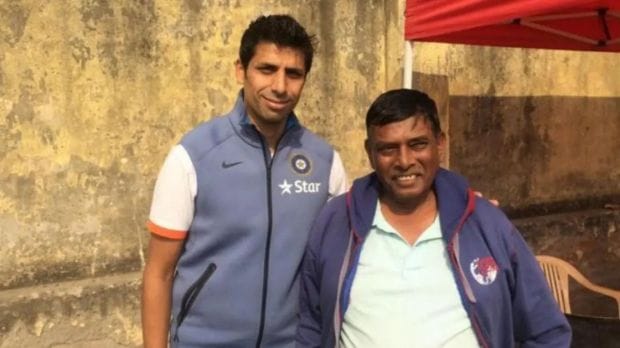
Tarak Sinha, the man who shaped Nehra’s action, fell on hard times. Landlord served eviction notice. Sinha had nowhere to go.
Nehra found out. Bought a house. Handed the keys. No press release. No Instagram post. Nothing. The story only came out in a book about Virat Kohli. That is the kind of man he is. Invests sports money into people who built his foundation.
Same instinct that made him shout at MS Dhoni after a misfield in 2005. Same instinct that made him hit Flintoff for a six at Lord’s in 2002, then watch the whole team laugh on the balcony even though India was losing.
Same instinct that made him hit Shane Bond for a six in Hamilton and then immediately repent, talking to himself about the audacity.
Serious about the game. Does not take himself seriously. That balance is rare. That balance is worth money.
ANCA: The Real Business Play
Here is where it gets interesting. The Ashish Nehra Cricket Academy is not some Delhi vanity project for rich kids. It is a business with a real strategy.
Flagship in Noida, tied to Indus Valley Public School. Fees: 4,500 to 5,200 rupees per month. But the real play is Tier-2 and Tier-3 Uttar Pradesh. Rath. Mahoba. Prayagraj. Gorakhpur. Places where good coaching barely exists. Fees there: 1,600 to 2,800 rupees per month.
That is deliberate. Nehra is not chasing South Delhi kids who can pay Rs 50,000. He is building a brand in the towns where he would have grown up if his father got transferred.
Advisory board? Ajay Jadeja. Zaheer Khan. Ajit Agarkar. Credibility. Local penetration. Sustainable growth. That is the Nehra method. Simple. But not easy.
Restaurants, Bars, and the Brother Who Runs Them
The hospitality side is run by his brother Bhanu. Mind Curries Hospitality. Amicis Hospitality Pvt Ltd. Several formats.
Mia Bella. European-style gastro-pub in Hauz Khas Village. Known for aesthetics and global grills.
Schengen. Continental dining in Malcha Marg. For Delhi’s diplomatic crowd.
Janpath Grill House. Molecular grill and buffet. Live barbeque plus food science.
Office Office. Co-working space that turns into a casual pub at night. Targets young professionals in Pune, Mumbai, Bengaluru.
The group once targeted 100 crore revenue by 2020 with a 70-crore investment plan. Micro-breweries. Cartoon-themed bars like Yabadabadoo and Scooby bar. During IPL season, these places host IPL dinners and give away autographed Nehra merchandise.
Cricket brand feeds hospitality brand. Hospitality brand feeds back into cricket brand. Synergy, if you want to use a fancy word. Or just smart business, if you don’t.
Why No Social Media Makes Him Richer
Here is the counterintuitive part. Nehra’s refusal to be on social media does not hurt his brand value. It multiplies it.
In a market where every cricketer is posting workout videos and sponsored content, Nehra’s absence makes him rare. Makes him trustworthy. Makes him valuable. Brands pay a premium for authenticity they cannot manufacture.
Priya Biscuits pays 1 crore for one ad because Nehra’s “bucolic awkwardness,” as one brand manager called it, cuts through the noise.
My11Circle uses him because his face says trust, not trend.
His commentary earnings crossed 1.6 crore in 2023. His GT salary is estimated at 3.5 crore per year. His brand endorsements add another few crore annually. The academies generate revenue across five locations. The hospitality ventures, while run by his brother, trade on his name and image.
Add it up. 71 crore. Maybe more by now. Financial Express has not independently verified these numbers.
The Coach Who Does Not Use a Laptop
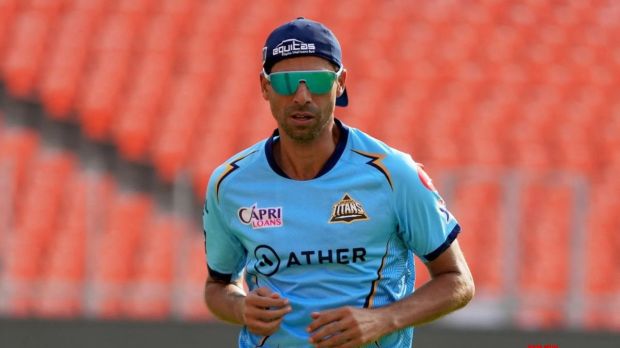
Gujarat Titans, 2022. Brand-new franchise. No history. No fans. No legacy. And a coach who does not carry a laptop. Who does not believe in complex data. Who stands on the boundary like a football manager, shouting, reading the game in real time.
They won the IPL in their first season. First Indian head coach to do that in his debut year.
Sai Sudharsan failed and was still backed. Mohammed Siraj rediscovered his seam position. Prasidh Krishna corrected his length. Rashid Khan and uncapped domestic recruits treated the same. No hierarchy. No silos.
Nehra’s philosophy? “No rocket science. Just clarity and chemistry.” He tells players to “just be.” Does not overhaul techniques. Does not flood minds with analytics.
Creates an environment where new recruits feel settled. Where mindset stays constant even when the squad changes every three years because of auctions.
Three playoffs in four seasons. One title. A team that plays without fear. That is the Nehra method. And it is worth 3.5 crore a year to Gujarat Titans. They know what they are paying for.
The Last Laugh
Ashish Nehra’s career makes no sense on paper. A body made of glass that refused to shatter. A fast bowler who became a better thinker with age. A man who missed the biggest final of his life but won the biggest title as a coach. A player dropped more times than he was picked but always came back anyway.
He kept breaking. He kept coming back. And somewhere between the twelve surgeries and the chikungunya and the vomit on the Durban grass and the house for Ustaadji, he figured out that the same stubbornness that kept him bowling at 140 km/h with a destroyed body could also build a 71-crore empire.
That is the Nehra model. Simple. Not easy. But it works.
Editorial Note: This is an independent profile. Mr. Ashish Nehraand his representatives were contacted but did not respond prior to the time of publication. In the absence of direct comment, this article was reported using publicly available records and regulatory filings, where applicable. This content was produced in accordance with FinancialExpress.com’s editorial guidelines.