



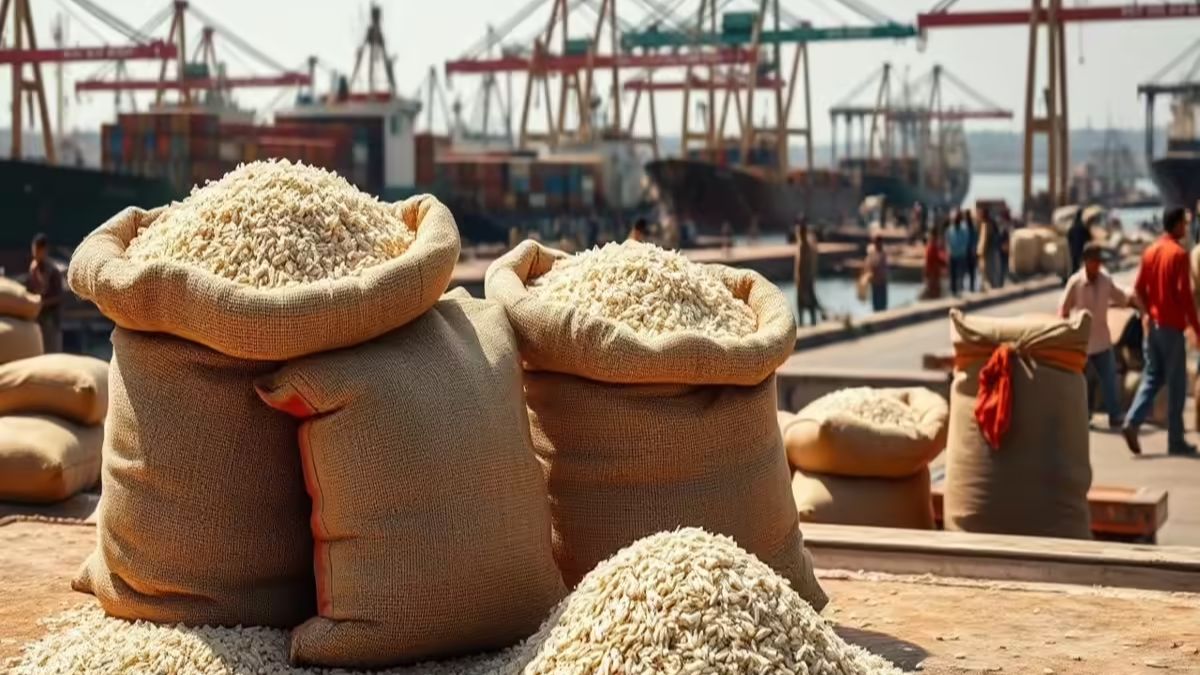
While protecting a large part of its farm and dairy sectors from US exports, India has agreed to eliminate or reduce tariffs on a range of items including animal feed from dried distillers’ grains (DDGs), red sorghum, tree nuts – almonds, walnuts, & pistachios -, fresh and processed fruit, soybean oil, wine and spirits.
The lower 18% tariff on US imports of seafood, largely frozen shrimp, comes as a boost for the sector. Seafood remains India’s largest agricultural export to the US, accounting for $2.8 billion of $7.38 billion in FY25 shipments.
Minimum Prices and GM Restrictions
True to its stance, India has not permitted imports of genetically modified (GM) soybean and maize, the US’ two top agri exports. Moroever, imports of ethanol (currently blended with petrol), dairy and poultry products have not been allowed.
Union commerce minister Piyush Goyal said, on Saturday, India has not done anything that could affect the farmers of India. “No genetically modified items will be imported into India. No relief or concession has been given on dairy, maize, soya meal, sugar, millets, citrus fruits,” the minister said.
Goyal said agri-products including spices, tea, coffee, coconut and coconut oil, cashew and areca nuts, and fruits and vegetables such as mango, banana, guava, kiwi, papaya, pineapple, avocado and mushrooms would face zero reciprocal tariffs.
To protect apple farmers against cheaper imports, Goyal said the country currently imports around 0.6 million tonne (MT) of fruit annually while imports from US will be subject to minimum import prices of Rs 80/kg along with 25% duties which comes to around Rs 100/kg. Under existing free trade agreements, India has reduced the import duty on apples and other fruits from New Zealand and the European Union to 20% from 50%.
“Tariff reductions on US fresh fruit such as apples and oranges, and on soybean oil, are likely to hurt Indian farmers and could face strong opposition from farmer groups,” Ajay Srivastava of GTRI said. Srivastava added it is also unclear which “additional agricultural products” have been included for tariff cuts.
Clarifications on several of these sensitive categories and whether they would be excluded from tariffs or subject to safeguards are awaited.
Ricky Thaper, joint secretary, Poultry Federation of India urged that import of soybean meal be added to the list of duty-free imports of agricultural products, including DDGs, red sorghum for animal feed, which would beneficial for the poultry, dairy and aqua industry.
Boosting Seafood and Basmati
With the reduction in duties to 18%, India’s exports of marine products and basmati rice and spices which were hit due to imposition of 50% tariff will get a boost.
“Decrease in duties will improve the competitiveness of Indian Basmati rice in the US market and create better opportunities for higher exports,” Ranjit Singh Josan, vice-president, basmati rice millers and exporters association of Punjab, said
Bilateral agri-trade between India and the US stood at around $6.6 billion in 2024. India’s exports of agri-products consist of marine products, spices, rice and processed food products.
Seafood, largely frozen shrimp, remains India’s largest agricultural export to the US, accounting for $2.8 billion of $7.38 billion in FY25 shipments.
India’s imports 58% of its edible oil consumption mostly palm, sunflower and soybean which currently attracts around 27.5% on all crude forms, and 36% duty on all refined variants. In the oil year 2024-25 (November-October),
India imported about 4% of the total 4.8 MT of soybean oils from the US in 2024-25 oil year (November-October) and the rest is sourced from Argentina, Russia and Brazil.
The joint statement stated “recognizing the importance of working together to resolve long-standing concerns, India also agrees to address long-standing non-tariff barriers to the trade in U.S. food and agricultural products”.