



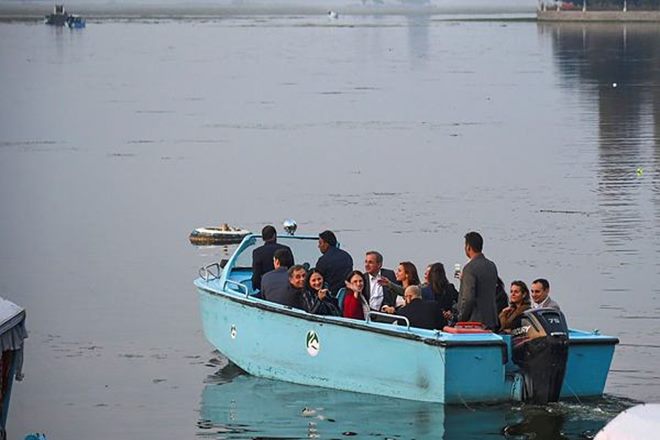
While the government’s decision to allow a group of members of the European Parliament (MEPs) to visit Jammu & Kashmir “to talk to locals and assess the on-ground situation” is aimed at changing the international narrative on the region, it is a big gamble. An official statement issued by the PMO after the MEPs’ meeting with the prime minister reads, “Their (the MEPs’) visit to Jammu and Kashmir should give the delegation a better understanding of the cultural and religious diversity of the region of Jammu, Kashmir and Ladakh; apart from giving them a clear view of the development and governance priorities of the region.” While there is always the possibility the group may not endorse India’s view, if it does, many will point to the group’s constitution: many of the parties the MEPs represent are seen as xenophobic, and anti-Islamic. There is also the issue of how foreigners were allowed while Indian MPs weren’t.
Also, while it is clear the situation hasn’t normalised—doing so can take months given the level of the militancy—inviting the MEPs looked half-baked anyway.
Against such a backdrop, it is hard to fault former Union minister Jairam Ramesh when he terms allowing MEPs to visit J&K while preventing Indian lawmakers from doing the same as “an outright insult to India’s own Parliament and our democracy”. It doesn’t help that the visiting MEPs are not an official European Parliament delegation, but are on a ‘private’ visit. Ironically, with the prime minister and other senior officials meeting the MEPs, it is possible to argue the issue has been internationalised; while the visit closely follows the US Congressional hearing on the Kashmir lockdown, the government’s action could lead to requests for fact-finding missions from UN bodies (UNHRC, for instance), international NGOs, etc. What that could lead to is anybody’s guess.