



West Asia, the world’s leading oil-producing region, is at war on several fronts. Following the massive US-Israeli air strikes on Iran since last Saturday, Tehran has retaliated with a barrage of medium-range ballistic missile and drone strikes targeting US bases in Qatar, Bahrain, Kuwait, and of course Jerusalem and Tel Aviv. The US embassies in Saudi Arabia and Kuwait were hit in a drone attack, prompting an advisory for all Americans to leave countries across the region. As if all of this weren’t serious enough, Israel is striking Lebanon to target Iran’s proxy group, Hezbollah. All of this makes for a full-blown conflict in the region. The big question naturally is whether it will soon blow over with dialogue and diplomacy or escalate further in the weeks ahead.
The imponderables in this regard largely pertain to US President Donald Trump’s lack of clarity on the objectives of striking Iran. In the first formal Pentagon briefing since the conflict began, US Defence Secretary Peter Hegseth stated that the military’s sole objective was to destroy Iran’s ability to project power beyond its borders, which it had been using to provide cover to develop a nuclear weapon. But how can Tehran develop this weapon when Trump claimed its nuclear facilities were totally “obliterated” by US bunker-busting bombs last year? In negotiations with the US, too, Iran insisted that it will never build a bomb but needed nuclear enrichment only for generating power. Trump, for his part, is fixated on regime change.
But what does regime change entail despite the US taking out Ayatollah Ali Khamenei, the nation’s supreme leader, besides top officials of the defence establishment? In a telephonic interview to the New York Times, Trump offered contradictory visions on how power might be transferred. For starters, there could be a Venezuela-type situation in which only the top leader is removed in a military strike but the rest of the government remains in place that is willing to work pragmatically with the US. Another scenario is for the hardened officers of the Islamic Revolutionary Guard Corps to hand over their weapons to the Iranian populace. Trump has also been urging the citizenry to take over the government, “when we are finished”.
The Iranians are showing no signs of backing down or capitulating to Trump’s surprise. Instead they are preparing for a long war that will impose costs on US allies and interests across the region. But they have so far inflicted only a limited number of casualties on the US amidst the loss of several F-15 fighter jets over Kuwait due to so-called friendly fire. If they are able to raise the body count in the days ahead—especially as Trump has not ruled out putting boots on the ground—the calculation is that the US will look for a way to end the ongoing conflict. This is another way of stating that Trump always chickens out. Diplomacy then will perhaps give a much better deal to the Iranians than negotiating under fire which he desires.
The US strikes on an oil-rich region are the second time this is happening this year. In January, the operations to capture Venezuela’s President, Nicolas Maduro, did not impact oil prices very much as the country accounted for less than 1% of global oil production. West Asia is far more important, and Iranian drone attacks have resulted in shutdowns of Saudi Aramco’s 550,000-barrel-a-day Ras Tanura facility and Qatar’s liquefied natural gas production, impacting prices. Earlier episodes include drone strikes on September 14, 2019, that targeted oil processing facilities at Abqaiq and Khurais in eastern Saudi Arabia, cut the kingdom’s oil production by about half—representing 5% of global oil production—and destabilised oil markets.
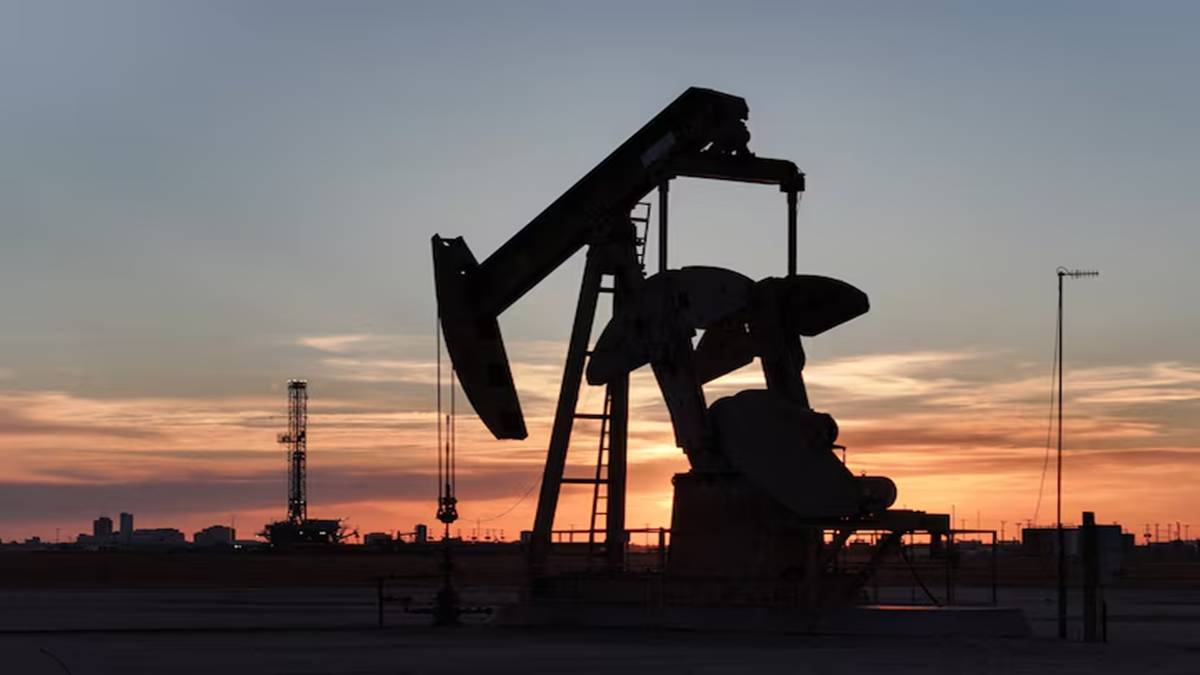
The outlook on global oil prices could be much worse if US-Israeli strikes also disrupt Iran’s oil production as it is the fourth-largest Organization of Petroleum Exporting Countries (OPEC) producer, generating 3.37 million barrels per day in 2025. Disruption would straightaway take out 4.2% of global crude supplies. The shutdown of the Strait of Hormuz, through which a fifth of global seaborne traded oil flows daily, is likely to keep oil prices on the boil. In this milieu, OPEC and its allies agreed to only a modest oil output boost to calm nervous markets as it has little spare capacity to add to supply, except for its leader Saudi Arabia and the United Arab Emirates which will also struggle to export oil until navigation in the Gulf returns to normal.
All of this indicates that the outlook on oil prices is clearly predicated on whether the conflict will soon end or will be a more protracted affair. With the former, oil prices will resume trending to lower levels like they have been doing last year or spike dangerously upwards with the latter. A de-escalation of the conflict is the best outcome for West Asia to return to normalcy. A diplomatic off-ramp is necessary to break the spiral of intensifying US-Israeli strikes and retaliation by Iran that engulfs the region in conflict.
The writer is an economic and business commentator based in New Delhi.
Disclaimer: The views expressed are the author’s own and do not reflect the official policy or position of Financial Express.