



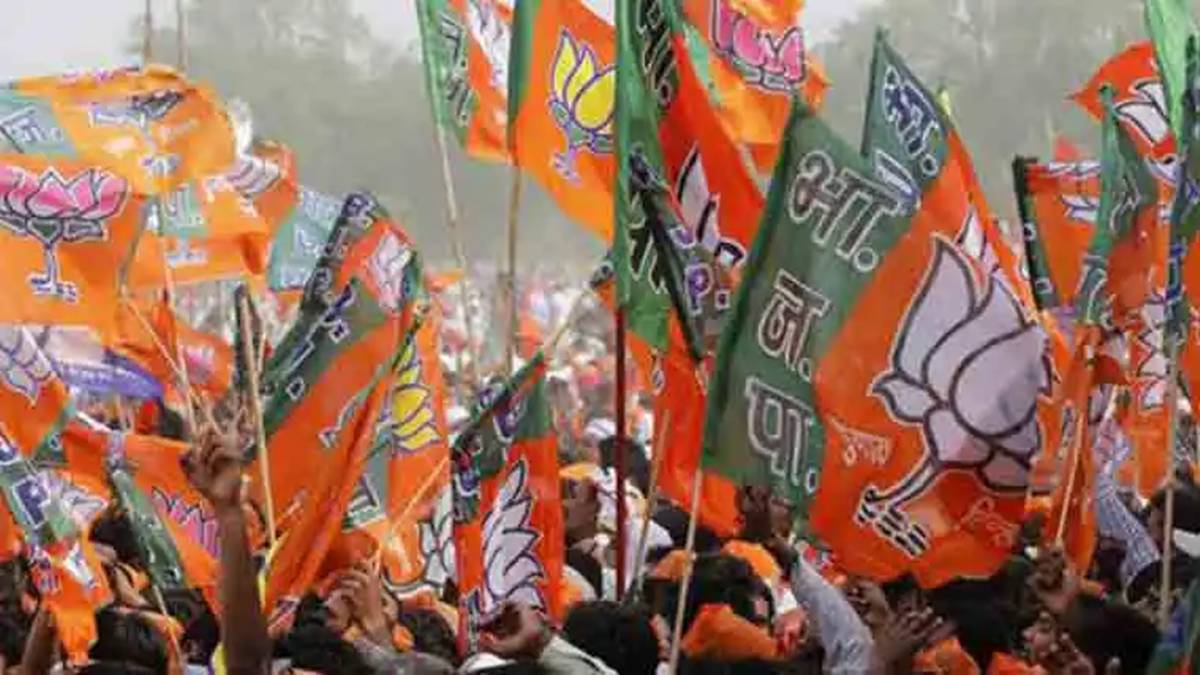
Nowadays, we often see press coverage about the breakdown of regional parties in various states of India. MPs and members of legislative assemblies belonging to such parties are deserting their organisations to join national outfits like the Bharatiya Janata Party (BJP). There is also a lot of speculation in the media that regional parties like the Trinamool Congress (TMC) and the Sharad Pawar-led Nationalist Congress Party might join a bigger national party, and that the Shiv Sena (Uddhav Balasaheb Thackeray) may have similar plans. What does such a discourse and development reflect? What will be the implication of such trends on the political democracy in India? What does the future hold for politics and parties basing themselves on specific regions?
Some political analysts assert that we are gradually moving towards a two party-based political system. If that happens, it may produce two kinds of results. First, Indian politics may move towards a kind of monochromatism — that is, there will be little choice for the public in electoral politics. On the one hand, it will remove confusion from people’s minds when it comes to deciding who they want to elect. On the other hand, a multiplicity of options in politics will be weakened and get reduced. Secondly, some analysts believe that in such a scenario Indian politics will be organised into two views or positions which will help constrain any anarchic expressions of democratic opinion.
Our society is a conglomeration of various social, cultural, and economic groups on the lines of caste, religion, and language that in turn form various political interest groups. These interest groups sometime form political parties based on caste, communities, and language. In Uttar Pradesh, for instance, there are clear caste-based political parties such as the Suheldev Bharatiya Samaj Party (which is dominated by the Rajbhar caste) or the Nishad Party, which claims to represent the interests of communities such as Mallah, Bind, Nishad, among others. There are other such as the Apna Dal or the Samajwadi Party (SP) that have a base represented by one caste — such as Kurmis and Yadavs respectively for the two parties. However, they also try to mobilise other social groups to maximise their chances of strong electoral performance.
A party like the All India Majlis-e-Ittehadul Muslimeen, led by Asaduddin Owaisi, is vocal about the interests of Muslims in India, whereas a Dravida Munnetra Kazhagam in Tamil Nadu or both the factions of the Shiv Sena in Maharashtra espouse politics that represents ethnic, regional, and linguistic identities.
With the growing media buzz about likely inclination among some of these parties to merge with national parties, what is the fate of representation of social groups? National parties like the BJP and Congress may then evolve into loose confederations of wide-ranging interests groups and appear to be platforms for their political expressions.
Consequently, national parties may become more federal in nature — in terms of their form, content, structure, organisational representation, and politics. Their vote bases too may expand, as a result of which their very character may change substantially. In fact, such a change has already happened in case of the BJP. It has expanded greatly over the last few decades and has tried to become more flexible as an organisation, rendering it more and more inclusive.
An important question is why are we seeing a trend of parties getting fractured and merging despite their leaders having practised, from the very beginning, a deeply passionate politics that is centred on specific groups and regions.
It is true that several of these parties — be it the Rashtriya Janata Dal in Bihar, SP in Uttar Pradesh, or the TMC in West Bengal — steadily turned into family-based organisations. As a result, some of them have lost trust and credibility among a section of their core constituency. This reflects in their failure to deliver strong, decisive results in recent elections. Their party cadre and leaders may be losing confidence in their future prospects. Such insecurity can contribute to the breakdown of parties, as we are increasingly seeing. Seen from a careerist lens, many leaders may lose hope in the electoral potential of such parties, while some may even question the amount of respect they get within them. All of these factors have led to deep decay in these once powerful regional parties.
It is also a reality that internal democracy sees a dilution and decline in family-run political parties. When the party cadre and leaders suffer from a sense of loss of dignity, organisational strength and electoral performance become natural casualties. In such a situation, they look for opportunities to jump ship, often choosing national parties that hold greater promise for their political career. Insecurity, fear of irrelevance, allurement, and greed may no doubt have a role in their exit — but the root causes often stem from the culture of a single family’s dominance.
If the phenomenon of fracturing and merger of regional parties with national ones grows further, then the politics of Indian democracy may take a turn from heteroglossia to diglossia — to borrow terms in sociolinguistics used by eminent social thinker Mikhail Bakhtin to describe voices and linguistic expressions. In that scenario, democracy in India may become more polarised and thinner. It would also mean various social groups in the country are ready to gather at fewer forums to express their politics. Many social groups may merge together and form even bigger political parties in future. Contrary to what many might suspect, that could also be read as a positive sign for cohesive democratic politics. We have to wait and see how the future of political democracy unfolds in India.
The author is the Vice-Chancellor, Tata Institute of Social Sciences