



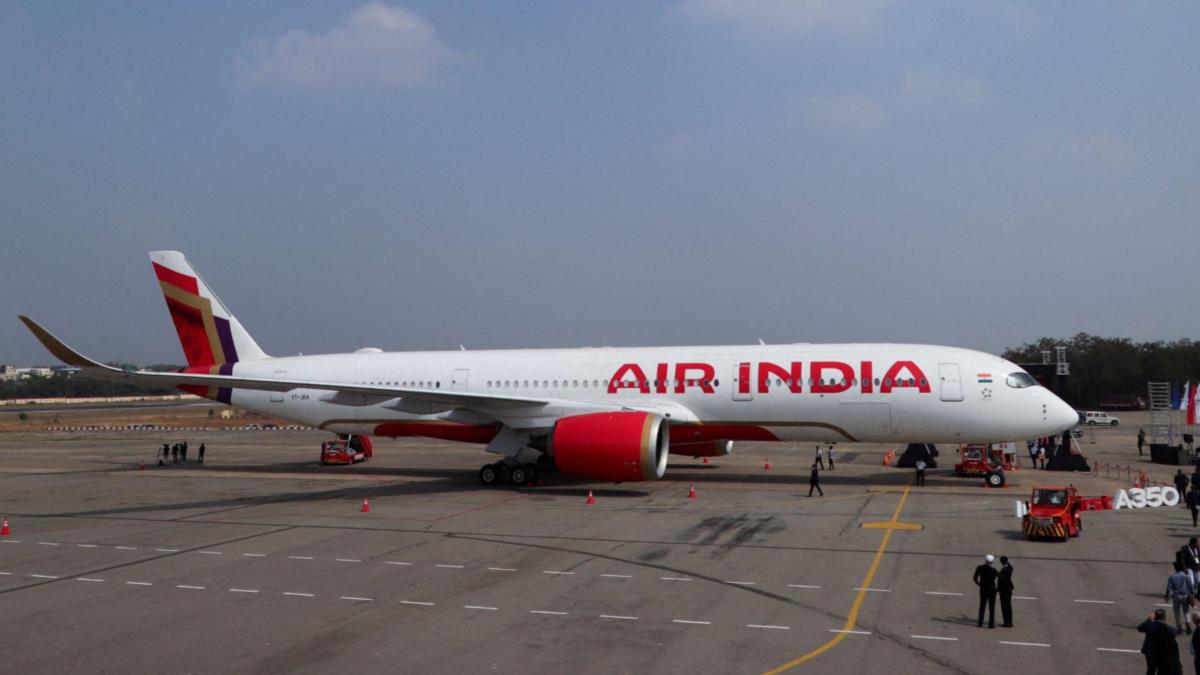
Campbell Wilson’s decision to step down as CEO of Air India brings into focus not just a leadership transition but the state of a turnaround that has, so far, delivered more in intent than in outcome. Nearly four years after the Tata Group reacquired the airline, the contours of a strategy are visible. What remains less clear is whether execution has kept pace with ambition.
There is little doubt that Wilson’s tenure was designed as a structural reset. The airline placed one of the largest aircraft orders in aviation history, now close to 600 planes, signalling long-term intent to reclaim global market share. It consolidated four airline entities into a single operating structure, an essential step in reducing fragmentation. It initiated a brand overhaul, invested in digital systems, and began upgrading legacy aircraft and onboard product. In institutional terms, this marked a shift from a state-run entity to a private-sector operating model, with changes in leadership, processes, and culture.
These are not trivial achievements. They address deep-rooted issues that had accumulated over years of underinvestment. They also explain why the turnaround was always going to be capital-intensive and front-loaded in terms of costs. Aviation, by nature, has long gestation cycles. Fleet renewal, network expansion, and infrastructure creation do not yield immediate returns. To that extent, continued losses in the initial years are not unexpected.
Yet, the numbers now being reported suggest the gap between plan and performance has widened. Air India’s losses are estimated to rise sharply in FY26, to around Rs 20,000 crore or more—well above earlier internal expectations—and place it among the largest loss-making entities within the Tata portfolio. At a group level, losses across new ventures, including aviation and digital businesses, are estimated to approach Rs 29,000 crore, sharpening the focus on capital allocation and execution discipline.
Capital Gap
This is where the context of Wilson’s exit intersects with a broader governance conversation within the Tata Group. Noel Tata, chairman of Tata Trusts, which hold roughly 66% of Tata Sons, has reportedly raised concerns over mounting losses in new ventures. The issue is not simply the scale of investment but the pace at which the investments translate into operational stability and financial visibility. Air India, by virtue of its size and visibility, sits at the centre of that debate.
More importantly, the shortfall is not only financial. The more immediate and visible gap lies in customer experience. For all the structural changes underway, Air India has struggled to consistently improve service reliability and perception. Delays, inconsistent inflight experience, and uneven ground handling continue to surface with regularity. This matters because the Tata takeover had raised expectations of a sharp break from the airline’s past under government ownership. That perception shift has, at best, been partial.
External factors have undoubtedly complicated execution. Supply-chain disruptions have delayed aircraft deliveries and retrofits. Fuel price volatility and airspace constraints have raised costs. The fatal crash of AI171 has added a layer of scrutiny that goes beyond routine operational challenges. But these headwinds do not fully explain the persistence of service inconsistencies, which are more closely tied to internal processes and execution bandwidth.
Operational Headwinds
Wilson’s own framing of his tenure—as a phase of building foundations—captures part of the reality. The airline today is structurally better positioned than it was in 2022. But a turnaround cannot rest indefinitely on foundations. The next phase must translate these investments into measurable gains in reliability, service, and financial performance. The question for Air India is no longer whether the strategy is sound. It is whether the organisation can deliver on it. Wilson leaves behind an airline with direction and scale, but one where outcomes remain contingent. The reset is visible. The turnaround is not yet.