



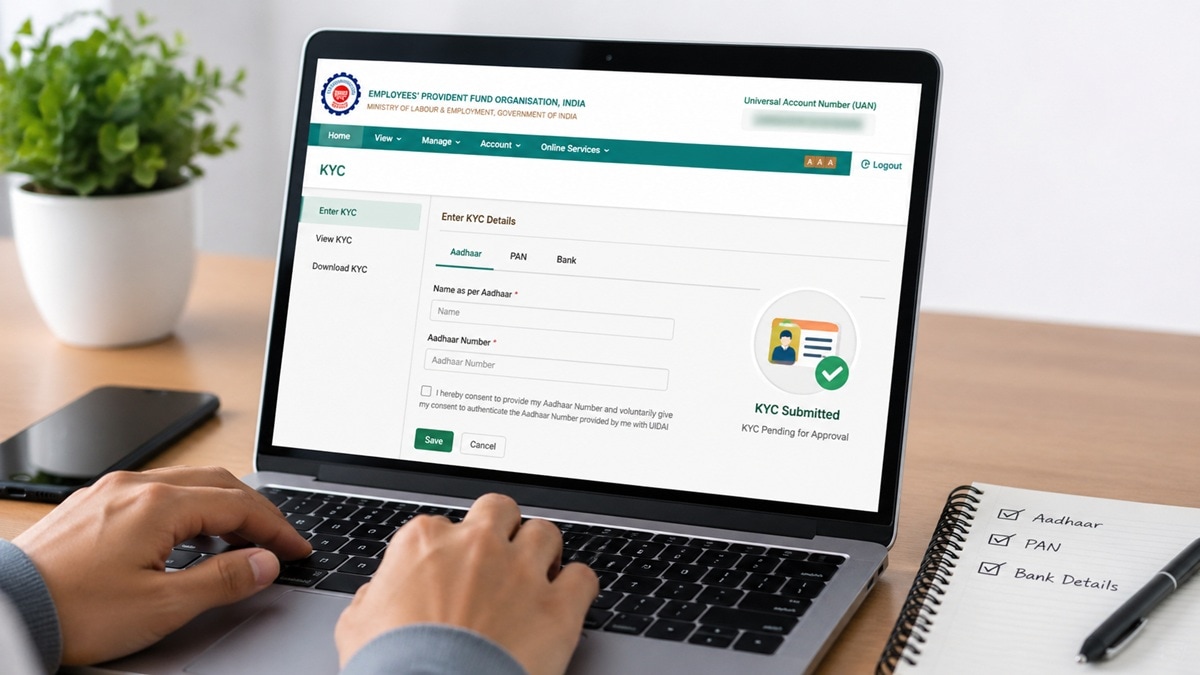
Employees often assume that if their Employees’ Provident Fund (EPF) balance is not visible under their current UAN (Universal Account Number), the money has gone missing. In reality, such cases are usually linked to account mapping, employer filings, data verification, or system processing delays. As employment becomes increasingly mobile and social security systems become more digital, these issues have become more common.
If your EPF balance isn’t showing under your current UAN, the issue is often not a missing contribution, but it often turns out to be a visibility or linking problem.
Recently, many EPF members have reported missing passbook entries due to the Employees’ Provident Fund Organisation (EPFO’s) ongoing ledger system upgrade. Though the temporary delay is part of the system transition, all valid contributions are updated once the pending data is synchronised.
However, system upgrades are only one of the reasons why an EPF balance may not appear under a member’s UAN. Here are the most common causes.
1. Employer Contributions Have Been Deducted but Have Yet to Reflect in the Passbook
A deduction of EPF from an employee’s salary does not result in an immediate update of the EPF balance. Employers are required to deposit both the employee’s and employer’s EPF contributions with the EPFO by the 15th of the following month. Since the introduction of the Electronic Challan-cum-Return (ECR) system, employers no longer file separate returns; the contribution details are submitted through the ECR itself at the time of deposit.
As a result, there is an inherent time gap between the salary deduction and the appearance of the contribution in the employee’s EPF passbook.
“Once the contribution is deposited and processed, it is generally reflected against the Universal Account Number (UAN) within a week and, in most cases, within 15 days. Consequently, employees may experience a delay of approximately 20–30 days from the date of salary deduction before the contribution becomes visible in their passbook,” said Rishi Agrawal, CEO and Co-Founder of Teamlease Regtech.
2. Previous PF Accounts Have Not Been Consolidated
Your previous PF account may not have been transferred to the current UAN yet (this happens especially during job switches). Thomas Stephen, Director & Head – Preferred, Anand Rathi Shares and Stock Brokers, says EPFO treats UAN as a single umbrella for multiple PF accounts. If you change jobs, you should declare the same UAN to the new employer to complete the transfer.
While a UAN is intended to provide a lifelong identifier for an employee, every new employment typically generates a separate Member ID. If balances from previous employment have not been transferred and consolidated under the current account, employees may only see contributions linked to their latest employer.
“This is one of the most common reasons for a lower-than-expected balance appearing under a UAN. The funds continue to remain safe within the EPF framework, but they may be spread across multiple Member IDs accumulated over the course of an employee’s career. As workforce mobility increases, ensuring seamless account consolidation has become an important part of managing retirement savings,” said Rishi Agrawal.
3. Exit details from previous employment are missing or incomplete
Your details may not match across records. EPFO says previous member IDs or PF accounts may not get linked if there is any deviation in name or other basic details. In such cases, the KYC needs to be updated before the accounts can be properly reflected.
For the EPFO system to recognise a transition between employers, the previous employer must update the employee’s Date of Exit. If this information has not been recorded, the system may continue to treat the earlier employment as active, creating complications in transfers, account linkage, and service history updates.
Employees are often unaware of this dependency because the issue originates from a previous employment relationship rather than their current one. Yet a missing/incorrect Date of Exit can create a chain of administrative delays that ultimately affect the visibility of balances and the smooth transfer of accumulated provident fund savings.
4. KYC information has not been fully verified
The EPFO’s digital infrastructure relies heavily on verified Aadhaar, PAN, and bank account details. These records help establish identity, prevent duplication, and facilitate seamless access to online services. If KYC information remains unverified or is pending employer approval, certain EPFO functionalities may become restricted.
In some cases, employees are unable to view passbook details, initiate transfers, or access account information because the system has not completed the necessary verification checks. As India’s social security ecosystem becomes increasingly integrated with digital identity frameworks, maintaining accurate and verified KYC records is becoming essential for uninterrupted access to benefits.
5. Data synchronisation and system processing delays
The EPFO manages millions of accounts and processes vast volumes of contribution data every month. Periodically, the organisation undertakes backend upgrades, ledger reconciliations, and system synchronisation exercises to improve accuracy and performance. During such periods, there may be temporary delays in updating passbooks or displaying balances.
These situations often create concern among employees who fear that contributions have not been credited. However, in most instances, the issue is related to data processing timelines rather than the underlying funds themselves. Large digital systems occasionally experience temporary visibility gaps even when the records and balances remain intact.
6. If the employee is working in an exempted establishment
If you are working in an exempted establishment (An exempted establishment is a company permitted to manage employee PF through its own approved PF trust instead of EPFO), your passbook will not appear on the UAN portal at all. EPFO clearly states that members in exempted establishments must contact their employer/establishment for the PF statement.
7. System failure
Sometimes the issue is simply EPFO system downtime or ledger posting delay. EPFO’s website currently shows that the member passbook facility can be unavailable during network failure, and it has also communicated that passbook updates for certain wage months may take a couple of days because of revamped ECR (Electronic challan cum returns) ledger posting.
Key takeaways
The EPF system today is more portable, digital, and accessible than ever before, but its effectiveness depends on timely employer remittance, accurate employee records, verified identity information, and seamless account linkage. For employees, periodically reviewing UAN details and employment records is becoming as important as checking the balance itself. Visibility of social security benefits ultimately depends not just on contributions being made, but on the information behind those contributions being complete and accurate.
It’s important to note that, in most cases, the balance is not lost. It is either waiting for transfer/linking, delayed in posting, blocked by a mismatch in records, or unavailable because of the employer type or a temporary EPFO system issue. However, if PF contributions are not being deposited, remain missing for several months, no Member ID is linked despite active employment, or claims are being rejected due to a missing balance, the matter should be escalated immediately.
Disclaimer: This article is intended for informational and educational purposes only and should not be construed as legal, financial, or retirement-planning advice. EPF rules, EPFO procedures, contribution timelines, and account management processes are subject to change based on notifications issued by the Employees’ Provident Fund Organisation (EPFO) and the Government of India. Individual cases may vary depending on employment history, employer compliance, KYC status, and account records. Readers should verify information through the official EPFO portal or consult their employer, EPFO office, or a qualified professional before taking any action based on this article.
Every financial journey has a turning point. What’s yours?
Financial Express is launching a new series highlighting real experiences with money, investments, and the taxman. Did a sudden tax rule catch you off guard? Did a piece of financial advice change your life? Your story could provide invaluable, practical lessons for thousands of fellow taxpayers. Share your experience with us. We respect your privacy: no stories will be featured without a direct conversation and your full consent. Thank you.