




The Nifty 50 gained 5.9% last week reflecting the positive sentiment on D-Street. Even as markets are rallying, it is important to identify stocks that stand out.
In that context, three stocks – Anand Rathi Wealth, Gallantt Ispat, and Schneider Electric Infrastructure, have technical structures that serious investors should pay attention to.
Let us analyse the chart structure of these stocks.
1. Anand Rathi Wealth: The Breakout with Volumes
There are times in the market when the price says something, and the volume backs it up. It looks like Anand Rathi Wealth is in that stage.
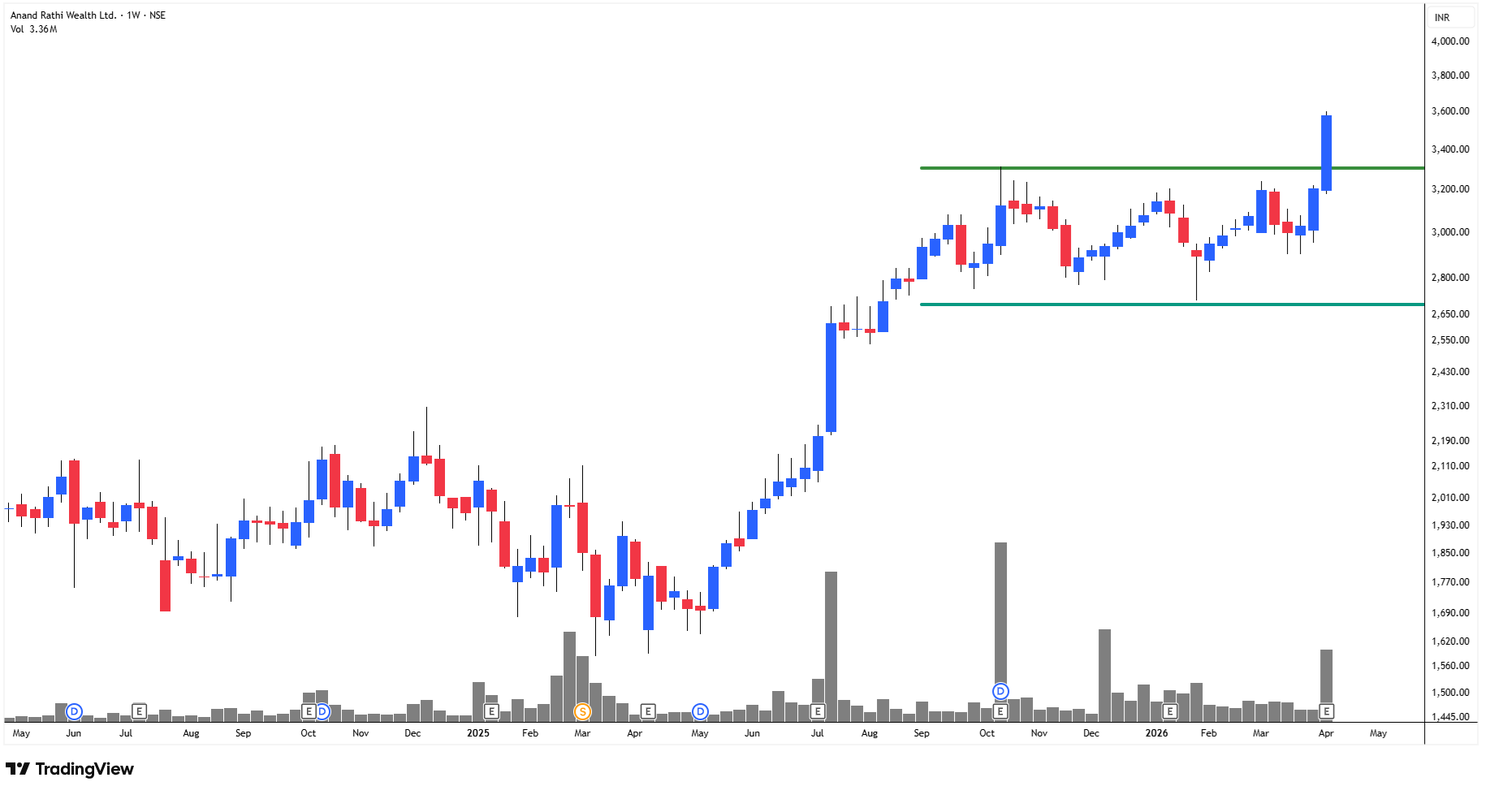
For a few weeks, the stock was moving in a horizontal channel, following both support and resistance levels like a good trader. This kind of structure often shows accumulation, which is when smart money builds up positions without making a lot of noise.
The stock has broken through the channel resistance, and this move is backed up by a rise in volumes, which shows that people are taking part.
Investors may accumulate on every pullback toward the breakout zone of Rs 3,330. If the stock stays above that level, it makes the case for continuation stronger.
2. Gallant Ispat: Strength that comes from being compressed
Steel stocks have been slowly coming together, and now Gallant Ispat is in the spotlight.
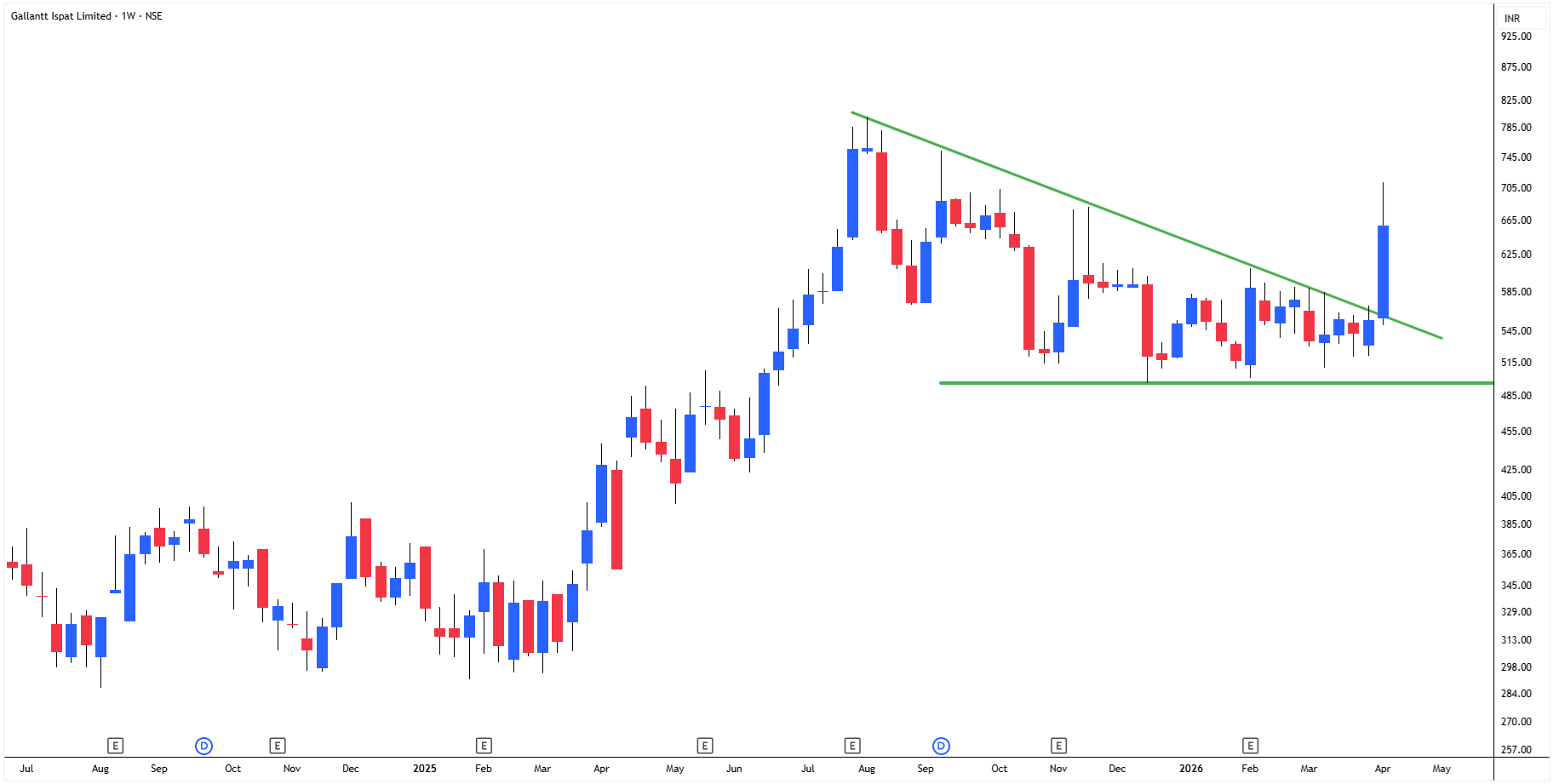
The stock had been making a Descending Triangle formed by lower highs suggesting that sellers were putting pressure on the market, while a flat support zone stayed strong, like a battlefield between buyers and sellers.
But markets like to keep you guessing.
Gallant Ispat has broken out above the descending trendline instead of breaking down, which is a bullish reversal signal instead of a bearish setup.
Investors may potentially accumulate the stocks and if the price forms higher lows, it means the breakout is strong. But if it goes back into the pattern, it could mean that the breakout was false.
3. Schneider Electric Infrastructure: A Pennant Full of Momentum
Schneider Electric Infrastructure is the only chart that shows all three things – momentum, structure, and potential.
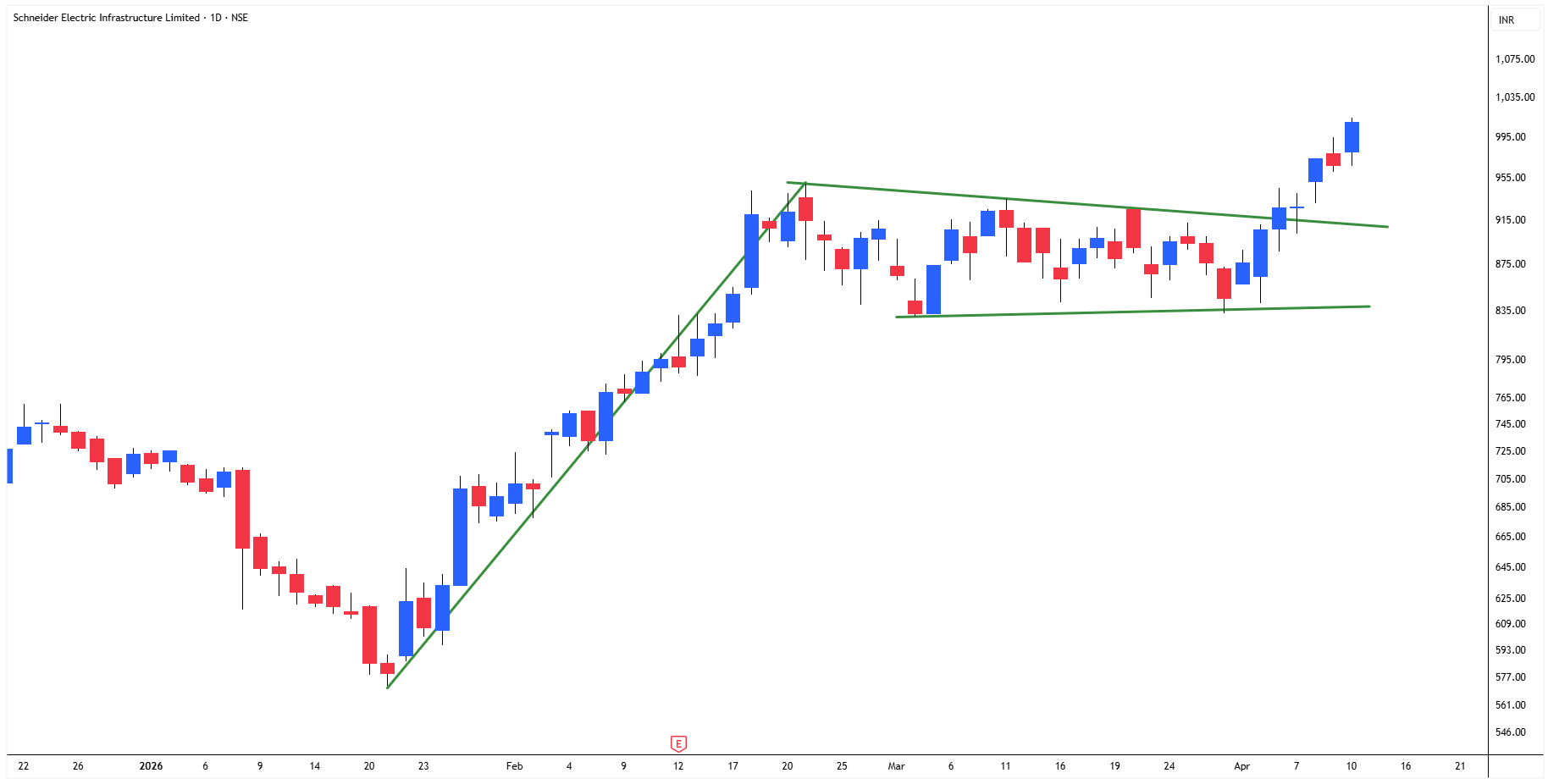
The stock has made a classic Bullish Pennant Pattern, which is a sign that the price will keep going up. But what makes this even more interesting is how strong the pole is. It went up almost 65% before the consolidation.
It’s like a runner who sprints ahead and then stops for a moment to catch their breath.
If the breakout holds, traders often use the height of the pole to set targets. But instead of getting too excited about targets, pay attention to how the price acts after the breakout.
Because markets reward confirmation, not anticipation.
Should You Invest?
These three stocks are in different industries: wealth management, steel, and infrastructure. However, they all have one thing in common, they are moving from consolidation to possible growth. This is the stage where trends start.
With the markets trending bullish and changing the sentiments, these breakouts offer favourable risk to reward opportunities.
Disclaimer:
Note: The purpose of this article is only to share interesting charts, data points and thought-provoking opinions. It is NOT a recommendation. If you wish to consider an investment, you are strongly advised to consult your advisor. This article is strictly for educative purposes only.
Brijesh Bhatia is an Independent Research Analyst and is engaged in offering research and recommendation services with SEBI RA Number – INH000022075. He has two decades of experience in India’s financial markets as a trader and technical analyst.
Disclosure: The writer and his dependents do not hold the stocks discussed here.
The website managers, its employee(s), and contributors/writers/authors of articles have or may have an outstanding buy or sell position or holding in the securities, options on securities or other related investments of issuers and/or companies discussed therein. The content of the articles and the interpretation of data are solely the personal views of the contributors/ writers/authors. Investors must make their own investment decisions based on their specific objectives and resources, and only after consulting such independent advisors if necessary.