



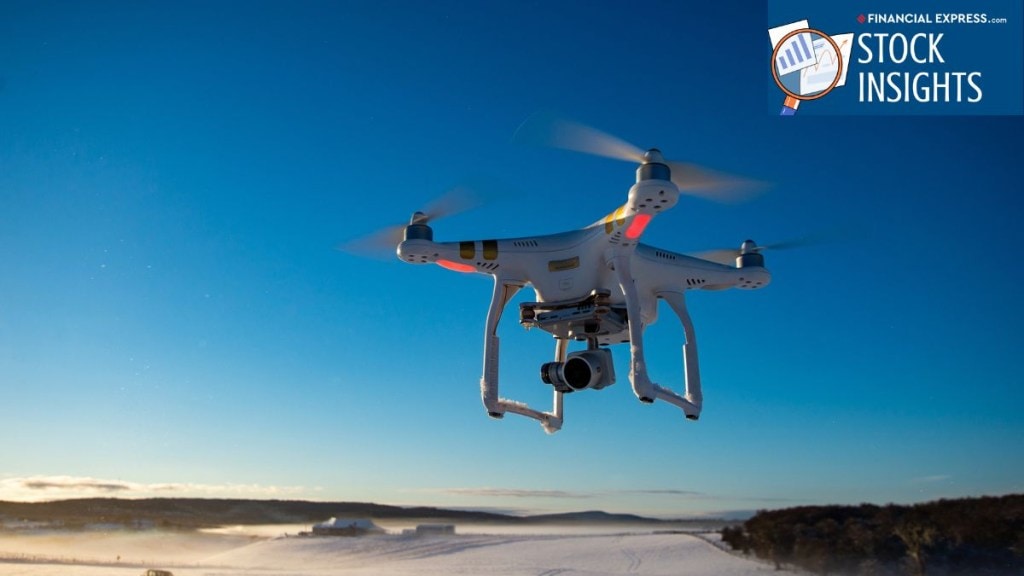
As per widely circulated reports, the upcoming Union Budget 2026 is poised to introduce a ₹ 10,000 crore, multi-year incentive package to scale domestic drone manufacturing under the government’s “Drone Shakti” push. Unlike the Production-linked incentive scheme for drones and drone components, this package is expected to combine investment-linked incentives with manufacturing support to help build the industry.
The “Two-Tier” Subsidy Explained
This scheme is expected to run for five years. It will have a two-tiered subsidy structure. The first tier will provide a 10-15% subsidy on capital expenditure for the setup of drone manufacturing units. Another 10-15% subsidy will be linked to manufacturing output. The aim is to make Make in India drones more cost-competitive.
To reduce dependence on imported drone parts, this scheme will also require 50-60% domestic content. For listed suppliers and smaller Original Equipment Manufacturers, the combination of a large headline allocation and tighter local-content rules could be a structural catalyst. This new Budget support would materially increase the addressable incentive pool and extend fiscal certainty for capex-heavy investments. FinancialExpress.com has not independently verified the accuracy of this planned scheme.
The moot question is: which companies are expected to benefit from this potential budget…
#1 Zen Technologies: Architects of India’s Defence Fortress
Zen Technologies has established itself as a key player in the drone and anti-drone sector. The company is gradually shifting its focus from its traditional emphasis on simulation to a future in which anti-drone systems are expected to account for approximately 50% of its revenue.
The Spectrum of Sovereignty
Zen’s business spans the entire lifecycle of drone warfare, from propulsion components to sophisticated neutralization systems. Zen systems can detect and jam drones across a wide frequency range, from 100-120 GHz. This includes everything from commercial frequencies to advanced military-grade drones used by enemies.
Acquiring the Arsenal: The M&A Roadmap
Through recent acquisitions, Zen is expanding beyond defence systems into the production of drone components and offensive capabilities. The acquisition of Vector Techniques has enabled it to manufacture aerospace-grade, customizable motors for UAV applications. This reduces India’s reliance on imported components.
Through TISA Aerospace, the company has added loitering munitions (suicide drones) to its portfolio, providing an 18–24-month head start in Research and Development. The acquisition of Bhairav Robotics facilitates the development of defence robotics and automated land combat systems.
The “Kill Switch” Moat
Zen’s competitive moat is its ownership of Indigenous Intellectual Property rights. Management emphasises that foreign-sourced anti-drone systems carry the risk of embedded malware that could be activated during a conflict, turning the software against the user. By owning the source code and hardware design, Zen ensures the government can verify the system’s security.
This aligns with the Indian Ministry of Defence’s “Positive Indigenisation Lists,” which promotes Make in India products and components. Furthermore, the company is heavily investing in AI initiatives. AI is being integrated into anti-drone systems for threat classification. This helps counter “AI vision-based” drones that do not rely on GPS or ground control, making them otherwise impossible to jam.
The ₹6,000 Crore Disconnect: Visibility vs. Ambition
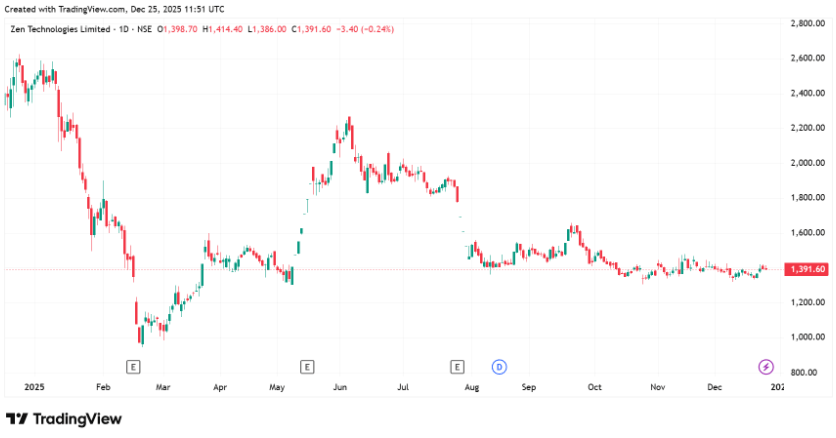
However, the company’s financial performance in the first six months of FY26 has been sluggish. Revenue decreased by 33% year-on-year to ₹332 crore. EBITDA fell by 13.3% to ₹177 crore, but margins still increased by 1,233 basis points (bps) to 53.2% due to cost optimization. Still, Profit after tax (PAT) decreased by 22.3% to ₹107 crore.
Despite a muted performance in the current fiscal year, Zen Technologies has reiterated its target of reaching revenue of ₹6,000 crores, to be achieved across FY27 and FY28. A strong order pipeline and Zen’s ability to execute ₹500–₹750 crores of order book per quarter in the coming years support this outlook.
As of 30 September 2025, Zen’s consolidated order book stood at ₹675 crore. This is split between domestic orders (₹554 crore) and export orders (₹121 crore). This order book provides revenue visibility for less than one year. The company expects to win more orders by the end of FY26.
#2 Paras Defence and Space Technologies: Master Architect of the Sovereign Fortress
Paras Defence is actively involved in the drone and anti-drone sectors. It indigenously manufactures critical components and has a strategic vision to lead the Indian market in these emerging domains. Paras operates through two main subsidiaries dedicated to unmanned aerial systems.
The Optronic Monopoly: Manufacturing the “Eye” of the UAV
Paras stands out in the Indian market as the only company to manufacture electro-optic cameras specifically for drones and Unmanned Aerial Vehicle (UAV). Through a joint venture with Israel’s Controp Precision Technologies, it produces world-class Electro-Optical/Infrared systems for multiple platforms, including drones.
Hydrogen and Hyperspectral Vision
It is designing India’s first hydrogen-powered drone in collaboration with Heven Drones, Israel. With a flight time of 12 hours and a payload of 22 kgs, these drones will have high energy density, fast refueling, and quiet operations. These drones can remain over a target all night. This is a game-changer for border security.
Neutralizing the 2km Rogue Threat
It also manufactures anti-drone systems. Dexter-20 is the star product, with a jamming band of 2 km. Each Dexter-20 will cost around ₹70-80 lakh. Its optics and optronics Systems division designs and produces advanced sensor-based solutions for UAVs. This supports target detection, tracking, and surveillance.
The Company manufactures and commissions turnkey products for drone detection and jamming. Eventually, Paras aims to become India’s No. 1 Anti-Drone Company. Under this budget, Paras is expected to be a direct beneficiary, creating a captive domestic market for them.
Two of its subsidiaries operate exclusively in the drone vertical. Paras Aerospace, in which Paras holds around 58% stake, focuses on delivering drone-based solutions for military, industrial, and agricultural applications. It develops platforms specifically designed for aerial surveillance and payload delivery.
Paras Anti-Drone Technologies, another subsidiary (in which Paras holds a 55% stake), develops cutting-edge technologies to counter new emerging aerial threats. Its portfolio includes radars, phased array antennas, software-defined radios (SDRs), and complete anti-drone systems designed to enhance perimeter security.
Growth vs. Margin Compression
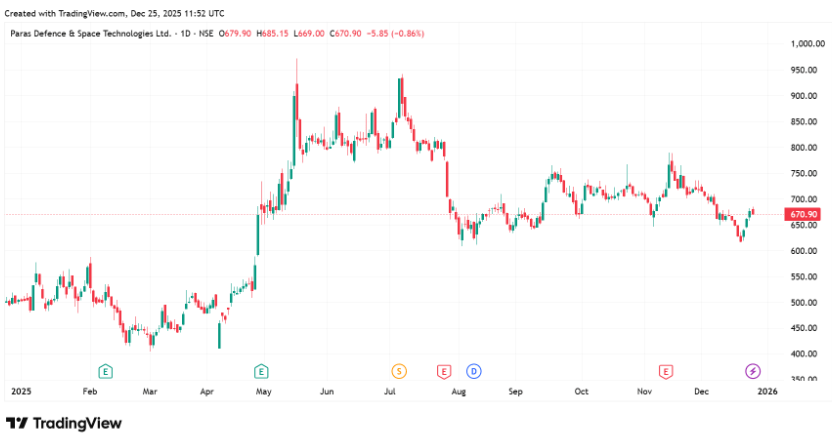
Both these subsidiaries accounted for 4.7% of the company’s FY25 revenue of ₹365 crore. Paras’ financial growth has been robust. Revenue increased by 16.4% year-on-year to ₹199 crore in H1 FY26, driven by order book execution. PAT increased by 22.2% to ₹33 crore, even as operating margins declined 140 bps to 26.1%. As of 17 November, Paras’ order book stood at ₹1,000 crore, providing revenue visibility of over 2 years.
#3 IdeaForge Technology: Rugged Smartphone of the Sky
IdeaForge is the market leader in India’s UAV market, holding a 50% market share. Having started as an innovative project in 2004, it has spent over 20 years developing indigenous drone technology in India. According to Drone Industry Insights 2024, IdeaForge ranks 3rd globally in dual-use (defence and civil) drone manufacturing.
The High-Altitude Hegemony
IdeaForge drones are designed for dual-use applications. SWITCH (V1/V2), an unconventional fixed-wing VTOL (Vertical Take-off and Landing) hybrid, is used for long-range surveillance and military mapping. This is the only certified platform of its class from both DGCA (Civil) and DGQA (Military).
IdeaForge is also developing next-generation drones:the ZOLT Tactical UAV, and the YETI logistics platform. The ZOLT is currently in the trial and build phase, with several units in production specifically for field trials.
It has reached technical readiness level 8. Management says that ZOLT is receiving immediate demand from the armed forces. This is because it can operate in GPS-denied and radio-silent environments, which has become a basic requirement for border operations.
The NATO Seal: Standardizing for the Global Supply Chain
Its robust quadcopter series (NETRA) is designed for critical missions, including border security and coastal patrol. A smaller category UAV quadcopter (Q6 V2) is specifically designed for large-scale mapping projects. It recently received a NATO Stock Number (NSN), verifying its compliance with global military standards. Other platforms include the Q4i, ZOLT, and YETI.
IdeaForge systems are tested to operate in extreme temperatures (-30°C to 55°C), high humidity, marine environments, and at high altitudes exceeding 19,685 feet (6,000m), such as the Siachen Glacier. The drones are used in defence, civil, enterprise, mining, and agriculture.
The Financial Frostbite: Navigating a 56% Revenue Collapse
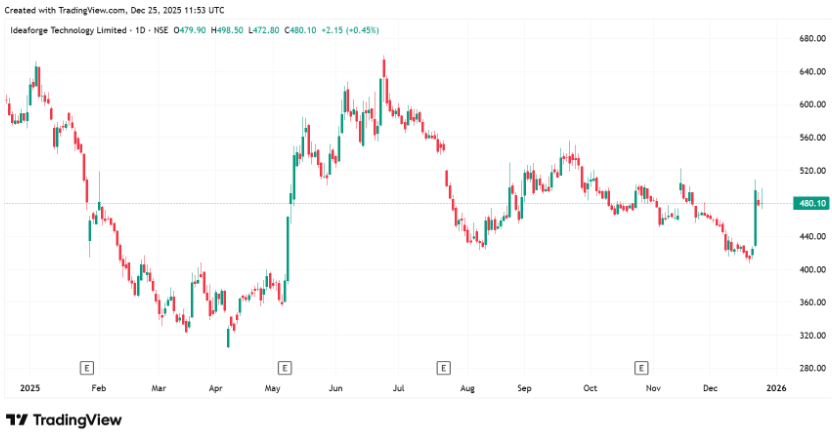
However, defence still accounts for about 59% of the company’s H1FY26 revenue. Revenue declined 56% year-on-year to ₹54 crore, driven by a broader industry slowdown. However, the gross margin increased by 2210 basis points to 52.8%, showing a better revenue mix.
But EBITDA loss widened from ₹1.5 crore to ₹23 crore due to a significant decline in operating margins. The net loss more than tripled from ₹13 crore in H1 FY25 to ₹44 crore.
As of 28 October 2025, IdeaForge’s order book stood at ₹238 crore, providing revenue visibility for a little over a year. The majority of these orders are expected to be executed within the next 12 months, with many slated for completion within FY26. Although the Indian drone industry remained quiet in FY25, IdeaForge expects demand to gradually pick up again.
It expects renewed emphasis by the Armed Forces on UAVs, and Emergency Procurement Cycle allocations provide a strong tailwind. Of the ₹40,000 crore allocated for defence, about ₹9,000 crore is directed toward the Indian Army, a portion of which is expected to target drones and counter-drone systems.
The Maryland Bridge: Reshoring to the US Defense Ecosystem
To capitalise on the opportunity, it has forged a joint venture (First Forge) in the U.S. to facilitate local manufacturing. This will help it navigate trade barriers and geopolitical uncertainties while accessing the U.S. defense ecosystem. Besides defence, the management expects the civil and geospatial information systems business to grow to ₹100 crore in the next 2-3 years.
Value Trap or Value Buy?
Zen, which has a stellar growth history, boasts leading return ratios, both Return on Capital Employed (RoCE) and Return on Equity (RoE). Paras’s profitability is quite volatile, resulting in lower return ratios. IdeaForge is still loss-making.
Valuation Assessment (X)
| Company | P/E | 3-Year Median P/E | RoCE (%) | RoE(%) |
| Zen | 50.8 | 72.2 | 37.2 | 26.1 |
| Paras | 76.9 | 83.8 | 15.6 | 11.5 |
| Industry Median | 60.8 | |||
From a valuation perspective, Zen’s valuation has come down after the recent correction following a growth slowdown. It is now trading below the industry median and its own 3-year median. Paras, however, trades at a premium to the industry but is slightly below the median.
Although Zen and Paras have diversified revenue-mix, IdeaForge’s dependence on the drone sector makes it vulnerable to sector downturns, as is currently the case.
Disclaimer:
Note: Throughout this article, we have relied on data from http://www.Screener.in and the company’s investor presentation. Only in cases where the data were not available have we used an alternate, widely used, and accepted source of information.
The purpose of this article is only to share interesting charts, data points, and thought-provoking opinions. It is NOT a recommendation. If you wish to consider an investment, you are strongly advised to consult your advisor. This article is strictly for educational purposes only.
About the Author: Madhvendra has been deeply immersed in the equity markets for over seven years, combining his passion for investing with his expertise in financial writing. With a knack for simplifying complex concepts, he enjoys sharing his honest perspectives on startups, listed Indian companies, and macroeconomic trends.
A dedicated reader and storyteller, Madhvendra thrives on uncovering insights that inspire his audience to deepen their understanding of the financial world.
Disclosure: The writer and his dependents do not hold the stocks discussed in this article.
The website managers, its employee(s), and contributors/writers/authors of articles have or may have an outstanding buy or sell position or holding in the securities, options on securities or other related investments of issuers and/or companies discussed therein. The articles’ content and data interpretation are solely the personal views of the contributors/ writers/authors. Investors must make their own investment decisions based on their specific objectives, resources, and only after consulting such independent advisors as may be necessary.