



Let’s start with a number: 200%.
That’s how much Robinhood’s stock gained in 2025. It tripled. It got added to the S&P 500. Analysts were calling it the closest fintech platform to achieving true “super app” status. The kids who used it to buy meme stocks during the pandemic had apparently built something serious.
Then 2026 arrived, and it all came apart.
Robinhood has fallen roughly 34% year-to-date. The culprit is simple: Bitcoin cratered, crypto trading volumes dried up, and cryptocurrency transaction revenue collapsed by 38% versus the same quarter a year ago. Crypto trading had been the rocket fuel behind all those incredible 2025 numbers. Without it, the engine stalled.
Here is the uncomfortable truth about Robinhood’s business model. When people are excited about crypto, they trade more. When they trade more, Robinhood makes more money. Cryptocurrency-related revenue rose by a staggering 300% in Q3 2025. That is a wonderful number until you remember what happened in the previous cycle, when crypto revenues fell 75% inside a single year.
Wall Street remembered. The stock got hit accordingly.
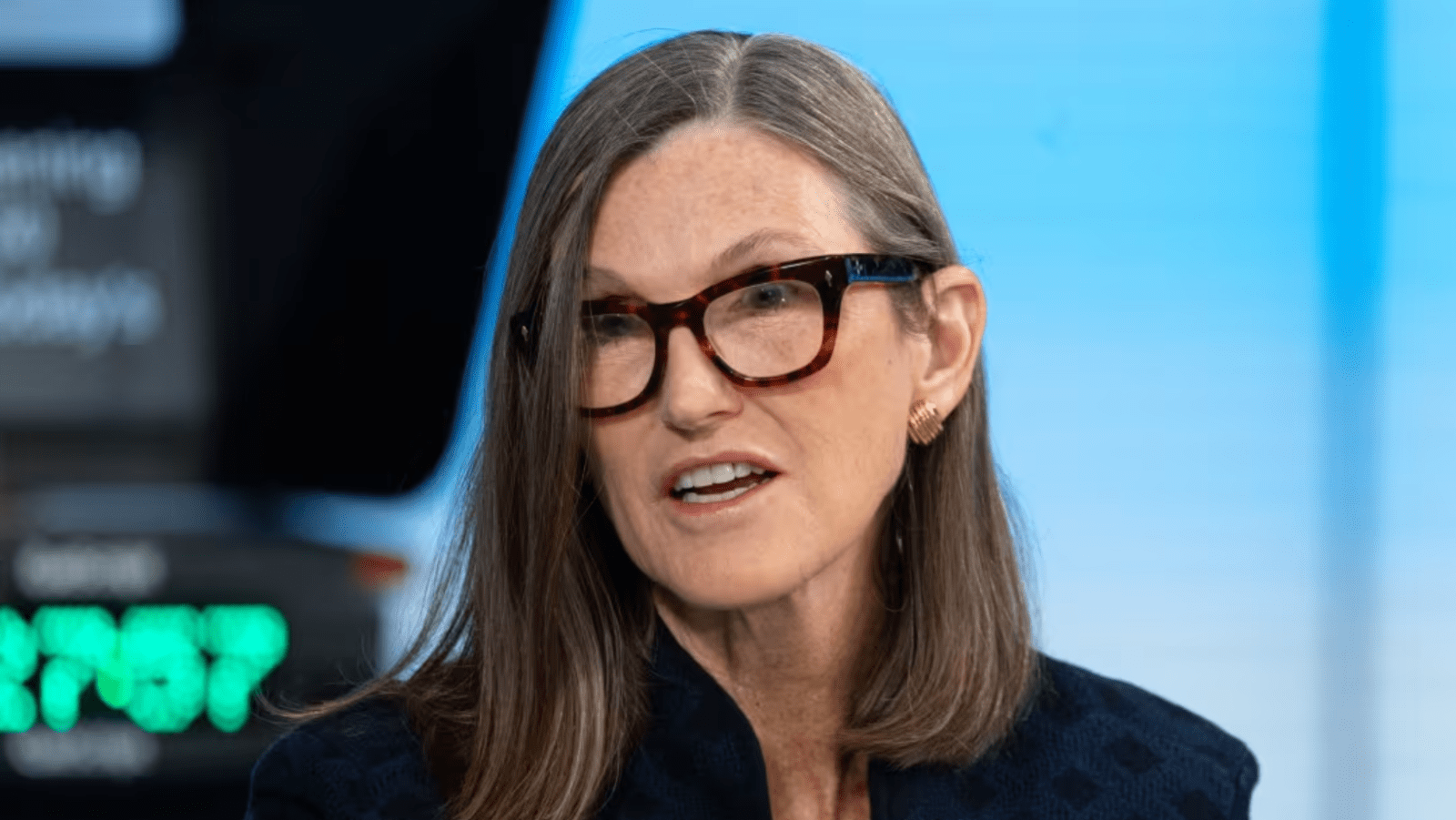
So why is Cathie Wood buying?
The bet within the bet
On March 3, with Robinhood down another 3.44% on the day, ARK Invest purchased 158,587 shares across ARKK, ARKW, and ARKF. At Robinhood’s closing price of $76, that is roughly $12 million in fresh exposure to a stock that most investors were actively fleeing.
This is not a random dip-buy. Wood has a specific thesis about what Robinhood is becoming, and it has nothing to do with meme stocks.
Robinhood is taking deliberate steps to shed its reputation as a casino-style trading app and become a high-margin, predictable financial powerhouse. The Robinhood Gold subscription at $5 per month is on track to hit roughly $250 million in annual recurring revenue. Subscribers get 5% interest on uninvested cash, a 3% IRA contribution match, and a credit card with 3% cashback on everything. To keep the IRA match, users must stay subscribed for at least a year. That is not a feature. That is a lock-in mechanism.
And then there is the bigger picture. Over the next two decades, an estimated $84 trillion is set to pass from Baby Boomers to Millennials and Gen Z, the exact cohorts that grew up on Robinhood. The company is positioning itself through retirement accounts and managed portfolios to be the default home for that inherited wealth. If it works, buying at $76 during a crypto panic will look very obvious in hindsight.
The other big buy nobody is talking about
Robinhood got the headlines, but the more interesting move might be buried deeper in the trade file.
ARK’s genomics fund loaded up on Generate Biomedicines, a company so new it had only gone public the week before. Generate raised $400 million at $16 per share, opened at $15, and by its second day of trading was sitting at $12.33. A 23% loss in 48 hours for a company that had not reported a single quarter of public earnings.
Wood bought on day one. Then bought again on day two.
What does Generate actually do? It uses machine learning to design proteins from scratch. Not to screen existing molecules, not to optimise known compounds, but to generate entirely novel proteins that have never existed in nature. One pipeline drug aims to treat severe asthma with a single injection every six months. If that sounds ambitious, it is because it is.
This is the Cathie Wood move that tends to age best. Not the high-profile buys of established names, but the small, weird, early-stage bets on companies doing things that sound like science fiction. ARK has been steadily leaning into early-stage biotech and genomics in 2026 while trimming consumer tech and legacy platforms. Generate Biomedicines, bleeding right out of the gate, fit that playbook perfectly.
What she sold tells you as much as what she bought
There is a version of this story that focuses only on the buys. That version is incomplete.
On the same day, ARK sold 245,458 shares of Roku, 257,609 shares of Pinterest, and trimmed its position in Taiwan Semiconductor. These are real, profitable businesses. The sells are not a verdict on those companies. They are a verdict on what Wood thinks the next decade looks like.
Roku competes in a crowded streaming market without an obvious AI tailwind. Pinterest is a discovery platform that has not cracked the monetisation problem. Taiwan Semiconductor makes the chips everyone else needs, but ARK wants to own the applications built on top, not the foundry supplying them.
Meanwhile, she added to CoreWeave, the AI cloud infrastructure company, and bought Amazon across three separate funds on the same day. The rotation is not subtle. Out with distribution, social platforms, and fabrication. In with AI compute, crypto financial rails, gene editing, and autonomous mobility.
The coiled spring argument
Wood’s 2026 outlook frames the US economy as a coiled spring, one where AI, robotics, genomics, and blockchain converge to push productivity to new highs and generate wealth at a scale not seen before. Either that is a genuinely visionary framework, or it is an elaborate rationalisation for a concentrated bet on money-losing companies. Your view probably depends on your time horizon.
What is harder to dismiss is the pattern. ARKK lost more than 75% from its 2021 peak. Then it came roaring back in 2025. Robinhood, down 34% from its highs, being written off as a crypto-dependent casino app, is exactly the setup Wood has leaned into before.
Sometimes she is early and eventually right. Sometimes she is just early.
The market will tell us which one this is. For now, she spent $16 million on Monday while everyone else was heading for the exit. That is, at minimum, a bet worth watching.
Sonia Boolchandani is a seasoned financial writer She has written for prominent firms like Vested Finance, and Finology, where she has crafted content that simplifies complex financial concepts for diverse audiences.
Disclosure: The writer and her his dependents do not hold the stocks discussed in this article. The website managers, its employee(s), and contributors/writers/authors of articles have or may have an outstanding buy or sell position or holding in the securities, options on securities or other related investments of issuers and/or companies discussed therein. The content of the articles and the interpretation of data are solely the personal views of the contributors/ writers/authors. Investors must make their own investment decisions based on their specific objectives, resources and only after consulting such independent advisors as may be necessary.