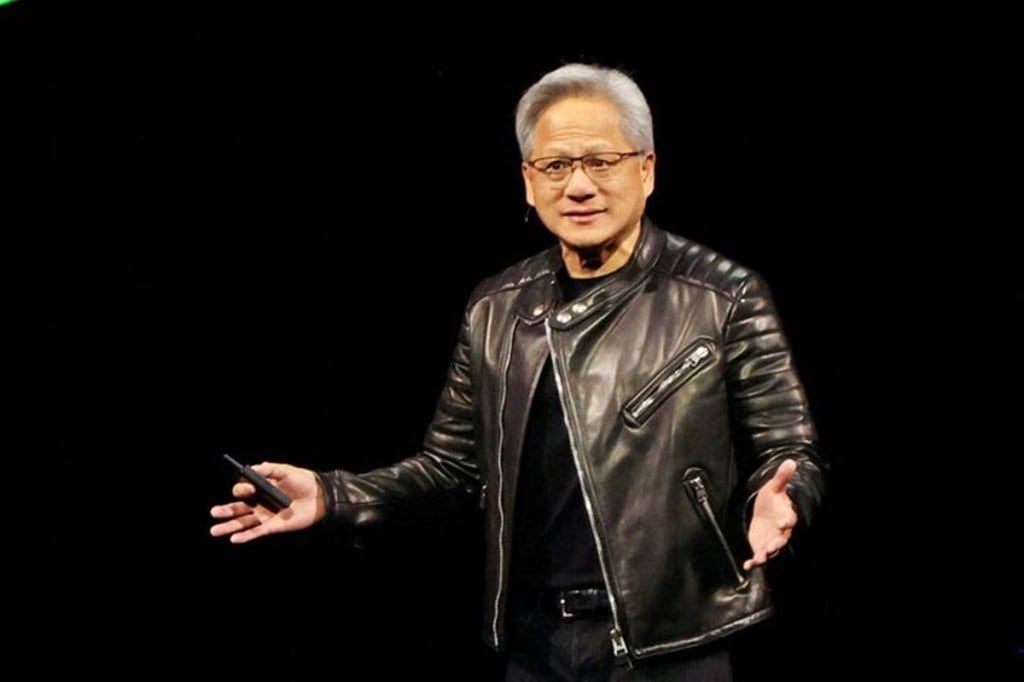
At the Consumer Electronics Show (CES) 2026 in Las Vegas, Nvidia CEO Jensen Huang delivered his vision for the future of artificial intelligence. During his speech, he emphasised the transition from digital to physical applications. Jensen Huang declared that “The ChatGPT moment for physical AI is here when machines begin to understand, reason, and act in the real world.” He highlighted robotaxis as one of the earliest beneficiaries of this breakthrough, signaling a shift toward AI that interacts directly with the physical environment.
Nvidia’s dominance in the chip market positions it at the forefront of this evolution, asserted Huang. The company is building on years of investment in what it calls ‘physical AI’ systems that go beyond software to interface with the real world.
Key announcements from Jensen at CES 2026
A major highlight was the introduction of Alpamayo, described by Jensen Huang as “the world’s first thinking, reasoning autonomous vehicle AI.” This model is trained end-to-end, “literally from camera-in to actuation-out,” enabling seamless perception and decision-making.
Huang also showcased Nvidia’s collaboration with Mercedes-Benz, announcing that the upcoming CLA model will incorporate the company’s driver assistance software in its “first entire stack endeavor.” A live demo demonstrated the vehicle navigating San Francisco streets, deftly avoiding pedestrians and handling turns.
On the hardware front, Nvidia unveiled the Rubin platform, comprising six advanced chips set for availability to partners in the second half of 2026.
Vision for robotics
Jensen Huang expressed unwavering confidence in the sector’s growth. “There’s no question in my mind now that this is going to be one of the largest robotics industries, and I’m so happy that we worked on it.” He outlined an ambitious future, stating, “Our vision is that someday every single car, every single truck will be autonomous.”
The presentation extended beyond vehicles, featuring demonstrations of Nvidia-powered robots, including Star Wars-inspired droids, Caterpillar construction equipment, and Agibot humanoid models.
Huang stated challenges and context
While optimistic at the moment, Jensen Huang’s roadmap acknowledges hurdles. Full autonomy still remains years away, with Nvidia’s own robotaxi testing planned for 2027. Potential job disruptions in driving professions and regulatory pushback also loom large.