



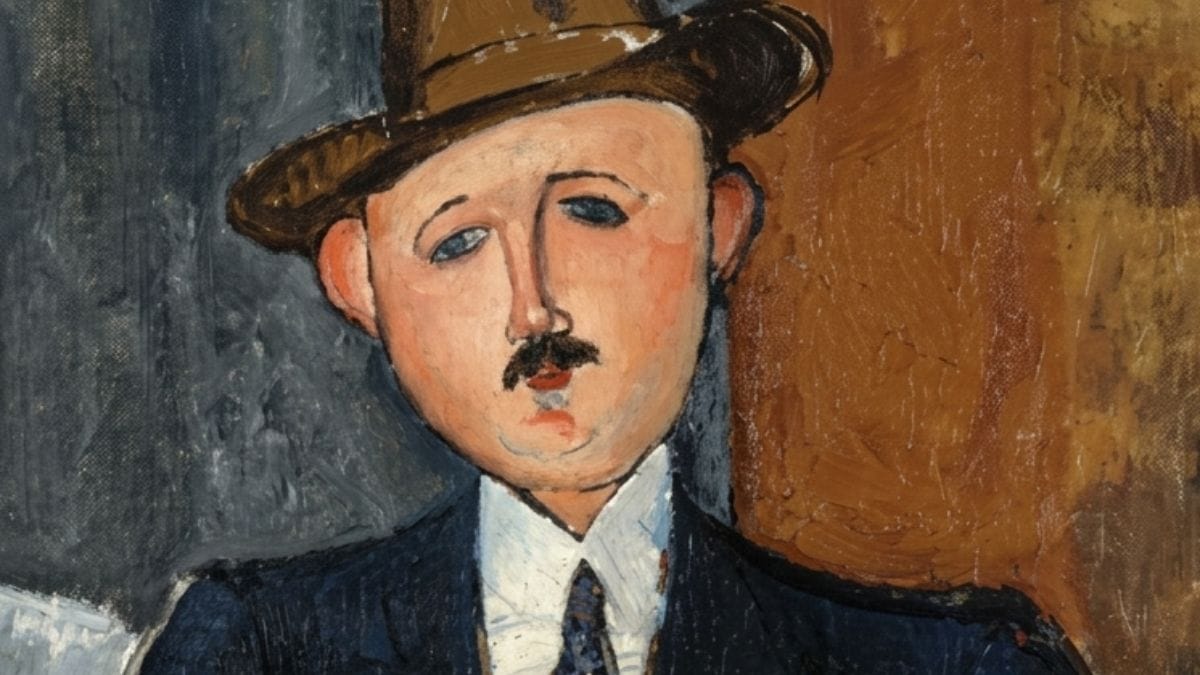
After more than a decade of legal battles, a New York court has ruled that a masterpiece looted by the Nazis during World War II must be returned to the family of its rightful Jewish owner – dealing a landmark defeat to one of the most powerful dynasties in the global art world.
New York Supreme Court Judge Joel M. Cohen ruled that Seated Man With a Cane, a 1918 oil portrait by Amedeo Modigliani depicting a well-dressed man in a hat and tie, belonged to Oscar Stettiner, a British Jewish dealer who ran a gallery in Paris, and was taken from him unlawfully during the German occupation of France. As reported by The New York Times, the painting has been appraised at approximately $25 million.
How the painting was stolen – and lost for decades
Stettiner fled Paris in 1939 as the German threat advanced, leaving the painting behind in his gallery. A man named Marcel Philippon, appointed by the Nazi authorities to dispose of Jewish-owned property, confiscated and sold the work.
After the war, Stettiner brought a claim before a French court, which in 1946 ordered the painting returned to him – but by then, it had already been sold on, and the man who had acquired it claimed to have resold it. Stettiner died in France in 1948.
According to court records, the painting resurfaced at auction in 1996, when a Nahmad holding company, International Art Center, purchased it and has held it ever since in storage in Switzerland.
For years, billionaire art dealer David Nahmad denied personal ownership, claiming it belonged to the offshore holding company. Reports indicate that when the firm’s documents were published in the Panama Papers leak of 2016, it was revealed that Nahmad was the sole owner of the company.
An 11-year fight for restitution
As per court filings, the ruling is a victory in a long campaign by Stettiner’s grandson, Philippe Maestracci, and Mondex, a company that specialises in recovering looted art, who began working to reclaim the painting years before filing the lawsuit in New York in 2015.
In his ruling, Judge Cohen stated that the defendants had “failed to raise any material issues of fact, and offer no evidence that identifies anyone other than Mr. Stettiner as the owner of the painting or that he voluntarily relinquished it.” He concluded: “The evidence shows a straightforward and persuasive chain of ownership/right of possession flowing directly from Mr. Stettiner to Nazi seizure to a forced sale.”
Nahmad maintained throughout that he had purchased the painting in good faith. According to The New York Times, he pointed to his 2004 loan of the work to the Jewish Museum in New York as evidence of his intentions. “If you had any doubt about looted art, would you really lend it to a Jewish museum?” he said in a 2016 interview.
A lawyer for the Stettiner estate, Phillip Landrigan, faulted the defendants, asserting they had dragged out the litigation “in hope the heir would be forced to give up” and ignored “the compelling evidence presented by Stettiner’s heir to the court.”
Mondex founder James Palmer told the Times that Maestracci was “overwhelmed with joy and the satisfaction that after so many years, the quest of his grandfather has finally been fulfilled.”