



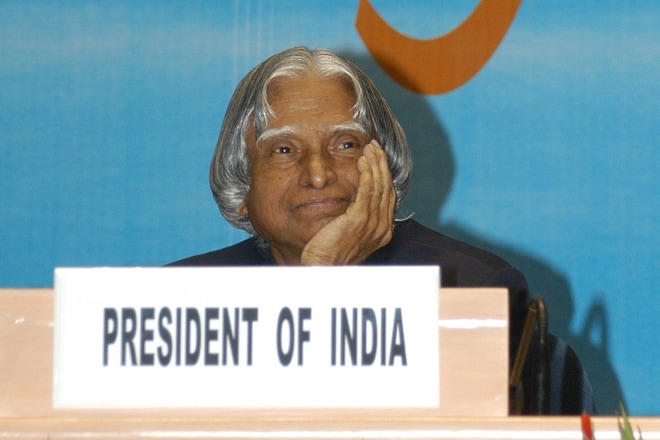
APJ Abdul Kalam birthday: Today is the 87th birth anniversary of India’s ‘Missile Man’ and 11th President APJ Abdul Kalam. Born on October 15, 1931, in Tamil Nadu’s Rameswaram, Kalam studied Physics and aerospace engineering and worked for decades as a scientist and science administrator at DRDO and ISRO. He is known for contributing immensely in developing India’s civilian space programme and military missile system, and is popularly known as the ‘Missile Man of India’.
Kalam had served as the President between 2002 and 2007. Prior to this, he had in 1998 played a pivotal role in the success of the Pokhran-II nuclear test that included five detonations — one fusion bomb and four fission bombs. This saw India becoming the sixth country in the world to have nuclear bombs and joining the nuclear club of the five world superpowers.
As the nation remembers its favourite scientist and President, we bring you 5 reasons why he is still relevant to India:
Kalam wanted to become a fighter pilot
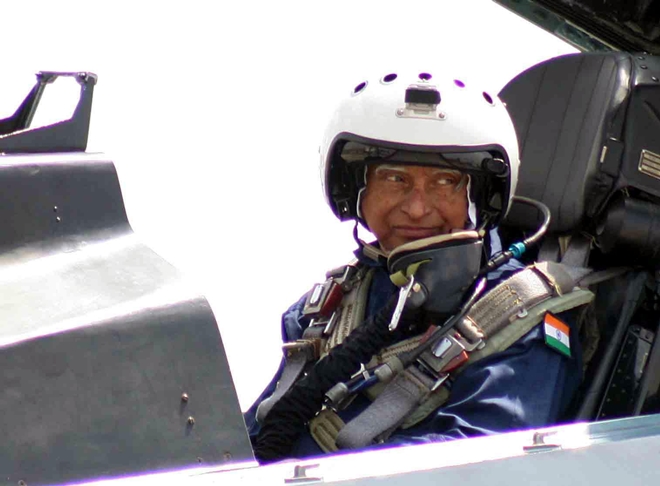
Kalam’s life is an inspiration to many in the country. Although he was born in a poor family, his dedication and commitment towards education made him accomplish his dream. His father was a boat rider in Rameswaram and used to ferry Hindu pilgrims from Rameswaram temple. His mother was a housewife. He was the youngest one in the siblings. In school, Kalam was an average student but he was described as a hardworking and a vibrant student. He graduated in physics in 1954. In 1995, he moved to Madras to study aerospace engineering at Madras Institute of Technology. Kalam wanted to become a fighter pilot but he failed to achieve the feat as he was ninth in qualifiers list and only eight positions were available in the Indian Air Force.
Pokhran-II under Kalam’s leadership
After completing his education, Kalam joined the Defence Research and Development Service (DRDS). In 1969, he was transferred to the ISRO. At the space agency, Kalam worked as the project director for the country’s first Satellite Launch Vehicle (SLV-III). He successfully deployed the Rohini satellite in near-Earth orbit in July 1980. During his four-decade career at the ISRO, Kalam also served as the Chief Scientific Adviser to the Prime Minister and Secretary of the DRDO between 1992 and 1999. In 1998, then PM Atal Bihari Vajpayee had asked Kalam to plan for a nuclear test. It was under Kalam’s leadership that India had successfully carried out four nuclear tests in the Pokhran range between May 11 and 13 in 1998. According to a famous story, after the success of the test, Kalam had dialled Vajpayee to inform him about the test and said: “Buddha is smiling again”. After this test, the world powers had imposed sanctions on India because of the nature of the mission. The entire mission was planned and executed in such a manner that no one came to know about it and it was known only after a declaration made by Vajpayee. His contribution to the country’s space programmes and strengthening the military mighty is well known to the world.
People’s President
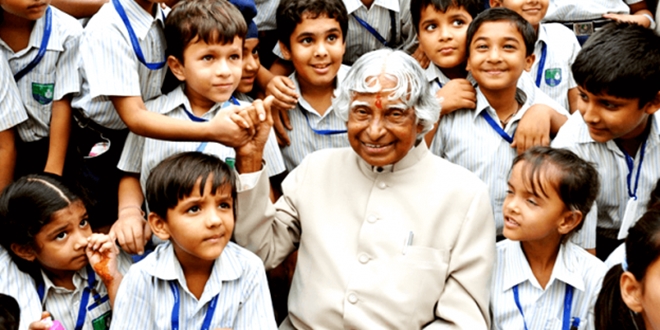
Kalam was made the 11th President of India in 2002 when BJP-led NDA was in power. Interestingly, both the ruling BJP and then opposition Congress had backed his candidature for the top constitutional post. He served as the President for a full five-year term between July 2002 and July 2007. He was widely referred to as the ‘People’s President’ for being easily accessible to the public. During his tenure as the President, Kalam always worked for providing a vibrant leadership to the country. When he was the President, during an interaction with children, he had asked the youth of the country to get involved in work they are remembered for.
Kalam’s fight against corruption
Another story that narrates why his stature is still relevant today is that after vacating the President’s office in 2007, he had not asked for any perks and left the Rashtrapati Bhavan with just two suitcases. After leaving office, he became a visiting professor at various institutes including the IIMs and IITs. Kalam was so concerned about corruption in the system that in 2012, he had launched a programme for the youth – ‘What Can I Give Movement’ with a central theme of defeating corruption.
When Kalam became ‘fighter pilot’
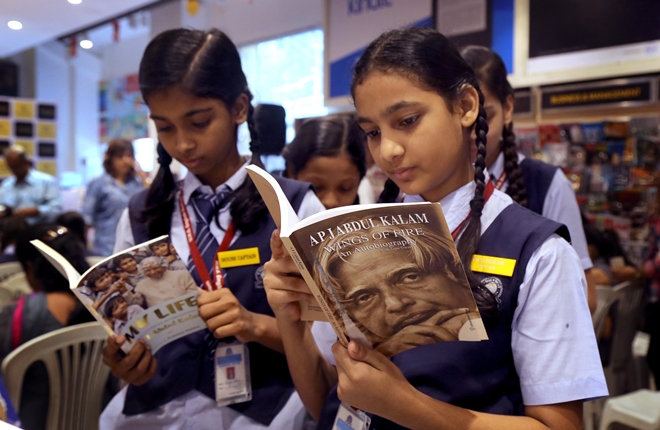
Kalam was not only interested in science, but his interest in philosophy, languages and literature saw the President receiving doctorates from universities all around the world. During his lifetime, Kalam penned 18 books including the ‘Wings of Fire’ that is still very popular among the youth. Besides, he also penned 22 poems during the lifetime. Kalam was a recipient of several prestigious awards including the country’s highest civilian honour Bharat Ratna in 1997. In 2006, as President, Kalam fulfiled his dream of flying fighter jet when he flew a Sukhoi fighter jet. He died on July 25 in 2015 in Shillong while delivering a lecture.