



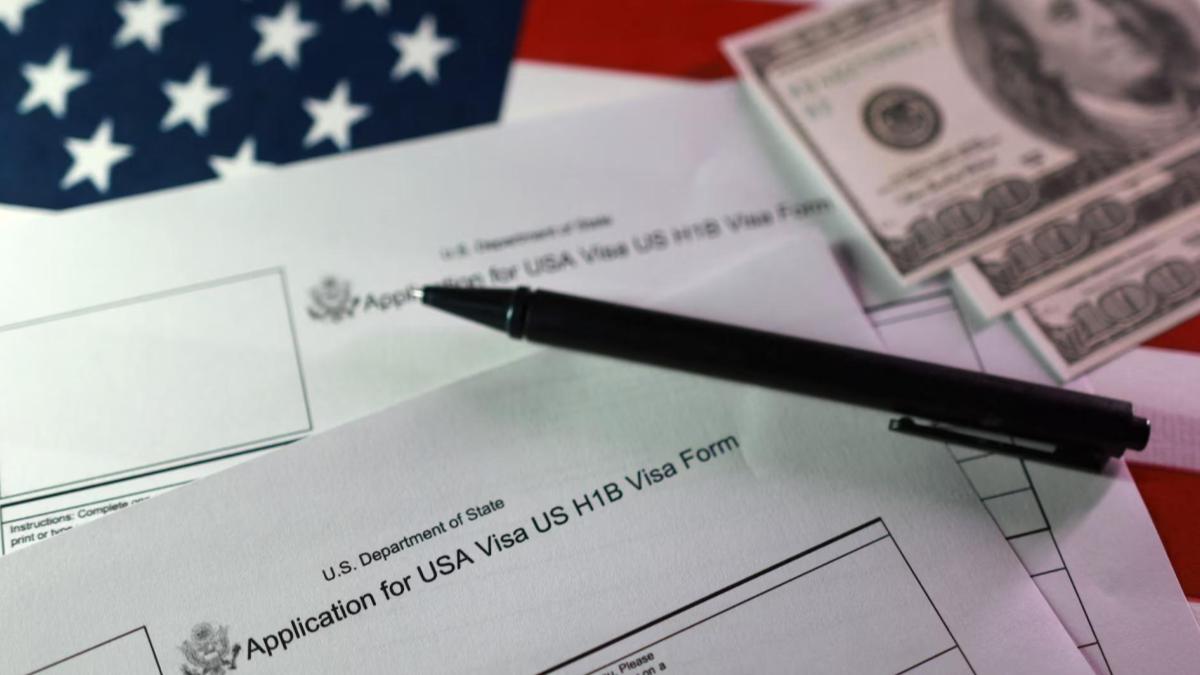
A US federal judge has ruled that President Donald Trump’s $100,000 fee on new H-1B visas for highly skilled foreign workers is unlawful and must be invalidated.
US District Judge Leo Sorokin in Boston issued the decision on Monday in a lawsuit brought by 20 Democratic state attorneys general. The states challenged the fee announced by the Trump administration in September, arguing that it dramatically increased the cost of obtaining H-1B visas and exceeded the administration’s authority.
The ruling comes just days after Department of Homeland Security Secretary Markwayne Mullin told a Senate panel that more than 200,000 applicants seeking H-1B visas in fiscal year 2026 had paid the $100,000 charge for expedited processing.
The court’s decision is a setback for the Trump administration’s immigration policy and could have significant implications for employers and foreign professionals who rely on the H-1B programme.
In striking down the $100,000 fee on new H-1B visas, the judge said that the charge amounted to a tax that lacked congressional authorisation.
The H-1B programme issues 65,000 visas annually, along with an additional 20,000 visas for foreign workers holding advanced degrees. Before Trump’s proclamation, employers generally paid between $2,000 and $5,000 in fees to sponsor a foreign worker under the programme.
According to court filings, the steep increase in costs discouraged H-1B applications, Reuters reported. The Trump administration disclosed in a March filing that, as of February 15, US Citizenship and Immigration Services had received only 85 payments of the $100,000 fee.
The administration argued that the charge was a monetary penalty that the president was authorised to impose under federal immigration law to restrict the entry of certain foreign nationals.
However, Judge Sorokin rejected that argument. In his ruling, Sorokin, an appointee of former President Barack Obama, said the payment functioned as a tax rather than a penalty and that the president lacked authority from Congress to impose it, the Reuters report stated.
“Here, the substance and application of the $100,000 payment reveal that it is a tax, regardless of what the payment is called,” Sorokin wrote.