



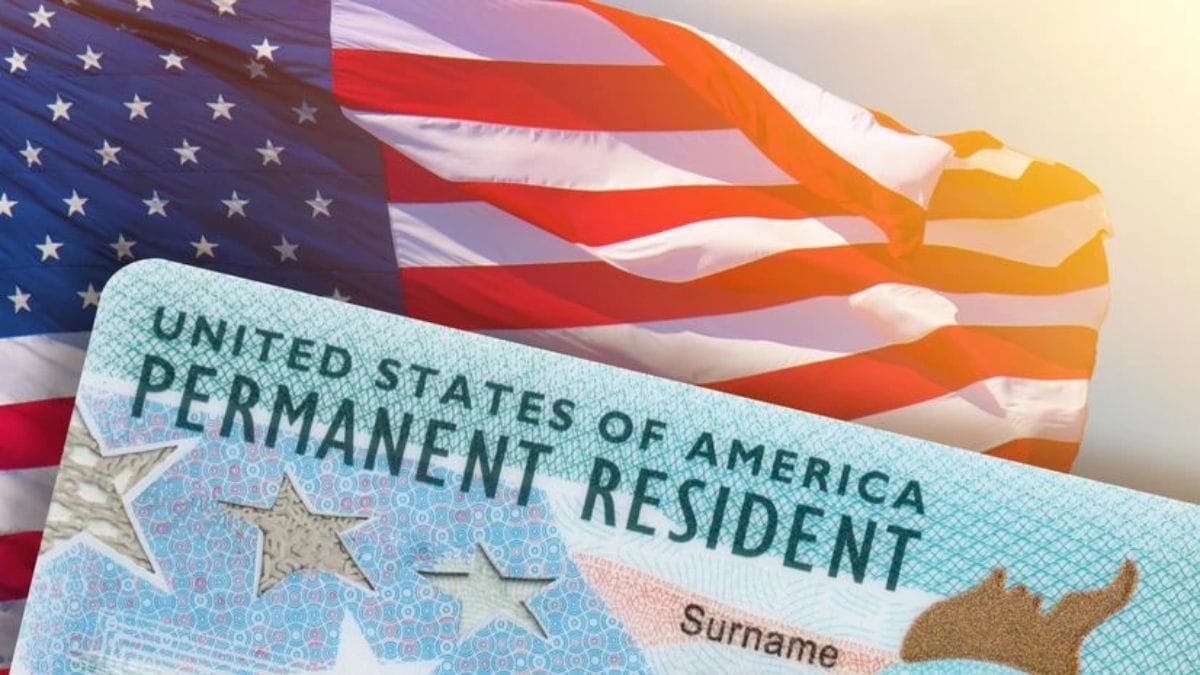
After the Donald Trump administration’s US Green Card memo caused a stir among immigrants seeking permanent residency, the Department of Homeland Security (DHS) clarified its stance, offering slight relief to many.
Outlining a major policy reform in a memo issued by the US Citizenship and Immigration Services (USCIS) last week, federal authorities stated that foreign nationals would be required to return to their home countries or countries of origin to apply for a Green Card. The decision could have potentially impacted a sizeable fraction of immigrants, including students, high-skilled workers, and spouses of US citizens living legally in the country on temporary visas while aspiring to secure permanent residency, which is one step away from US citizenship.
However, DHS’s clarification marks a consequential U-turn. Here’s what it means.
Did the Department of Homeland Security retract the new Green Card reform?
No. The DHS has not completely walked back its announcement from last week. The previously issued news release indicated that US authorities were swiftly reversing a longstanding policy that allowed immigrants to remain in the US during the Green Card application process.
While the recently changed rule ascertained that applicants would have to go back, the DHS has partially taken back what it initially stated.
In a new statement released Friday (US time), however, a DHS spokesperson said that the “return to home country” clause while applying for a Green Card was contingent on a “case-by-case basis,” instead of being mandated as a blanket reform. Pointing to people overstaying their temporary visas, the DHS official stated, “This was just a reminder to officers of their discretionary authority, which has always existed on a case-by-case basis,” as quoted by The New York Times.
What was the new Green Card policy memo about?
“We’re returning to the original intent of the law to ensure aliens navigate our nation’s immigration system properly. From now on, an alien who is in the US temporarily and wants a Green Card must return to their home country to apply, except in extraordinary circumstances,” USCIS Spokesman Zach Kahler said, according to the official news release issued last week. “This policy allows our immigration system to function as the law intended instead of incentivising loopholes. When aliens apply from their home country, it reduces the need to find and remove those who decide to slip into the shadows and remain in the U.S. illegally after being denied residency.”
USCIS further detailed that the agency would only grant Green Cards to immigrants inside the US in cases of “extraordinary circumstances.”
“Nonimmigrants, like students, temporary workers, or people on tourist visas, come to the U.S. for a short time and for a specific purpose. Our system is designed for them to leave when their visit is over. Their visit should not function as the first step in the Green Card process,” the statement added.
“Following the law allows the majority of these cases to be handled by the State Department at US consular offices abroad and frees up limited USCIS resources to focus on processing other cases that fall under its purview, including visas for victims of violent crime and human trafficking, naturalisation applications, and other priorities. The law was written this way for a reason, and despite the fact that it has been ignored for years, following it will help make our system fairer and more efficient.”
The Department of Homeland Security’s statement also aligns with what USCIS spokesperson Zach Kahler had said elsewhere. Highlighting that the “return to your home country” rule may not be evenly applied to all foreign nationals, the federal agency’s official said, “While we work to operationalize this, people who present applications that provide an economic benefit or otherwise are in the national interest will likely be able to continue on their current path while others may be asked to apply abroad depending on individualised circumstances,” as quoted by the Business Insider.
Despite the clarifications rolled out so far, the confusions tied to the shift are expected to persist. The Green Card reform is the latest addition to a series of efforts put in by the Trump administration to crack down on immigration, including legal pathways to the country.
Disclaimer: This article is for general informational purposes only and does not constitute legal, immigration, or tax advice. Immigration laws and government policies are subject to frequent change without notice. While we strive to provide accurate updates, readers are strongly advised to verify the latest requirements with the official embassy, consulate, or government portal of the respective country. Financial Express is not responsible for any decisions made based on this information. For personalised guidance, please consult a qualified immigration attorney or a certified professional advisor.