



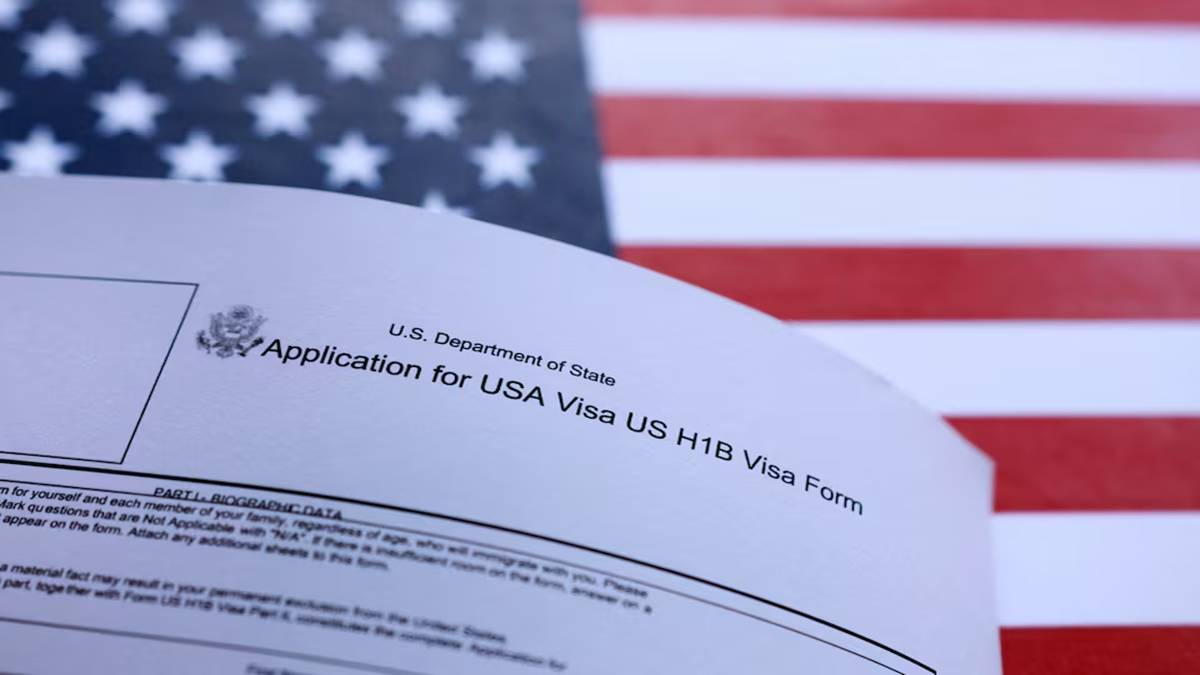
Thousands of foreign workers who were not selected in the H-1B visa lottery are now weighing their next move. Immigration attorney Rahul Reddy says while the disappointment is real, workers still have several legal options, but they need to be careful about the choices they make next.
Speaking in a recent YouTube livestream, Houston-based attorney Rahul Reddy and his law partner Emily Neumann discussed what rejected applicants should consider, and what mistakes could create long-term immigration trouble.
H-1B not selected? ‘A lot of options still exist’
According to the attorney, not getting picked in the H-1B lottery does not mean the end of the road. Workers may still have alternatives depending on their education, employer, nationality and family status. Emily Neumann said, “There are a lot of options… not everybody qualifies for them, so it can be a tough situation for sure.”
Enrolling in a new academic program to continue F-1 student status
One of the most common paths is going back to school. According to the attorneys, workers who are running out of OPT or STEM OPT time may consider enrolling in a new academic program to remain on F-1 student status. They said this can allow someone to continue studying, build new skills and legally remain in the US. However, they urged students to choose genuine academic programs and not rush into questionable shortcuts.
Finding a cap-exempt H-1B employer
Another route is finding a cap-exempt H-1B employer. Reddy explained that not all H-1B jobs require going through the annual lottery. Universities, colleges, nonprofit organisations tied to higher education institutions, teaching hospitals, and certain nonprofit research bodies can sponsor H-1B workers outside the cap. In some cases, a worker may even hold a concurrent role that lets them continue working with a private employer while staying in a valid status.
Moving overseas and later returning on an L-1 visa
For those employed by global companies, relocating abroad for a period may also help. The lawyers said moving to another country and working for a multinational employer for at least one year could later open the door to returning to the US on an L-1 visa. This category is often used for managers, executives or employees with specialised knowledge being transferred within the same company.
“Potentially, you could look into a J1 program for interns or trainees. Those are a little bit difficult for people who have already been in the US and got their education here. They might not qualify. There is an H3 visa for training. If your employer wants to provide some sort of training that’s not available in your home country, that can be for up to 18 months,” Reddy added.
Applying for O-1 visas for extraordinary ability workers
Highly accomplished professionals may have another option: the O-1 visa. Often referred to as the visa for individuals with extraordinary ability, it is meant for people who can show they are at the top of their field. That could include researchers, tech experts, artists, entrepreneurs or others with strong evidence of achievement. Reddy’s team said this route avoids the H-1B lottery entirely, but the standard is high.
TN visas for Canadians and Mexicans
They also pointed out nationality-based visa categories that many workers overlook. Citizens of Canada and Mexico may qualify for the TN visa if their profession falls under the approved list under USMCA rules. Australians, meanwhile, may be eligible for the E-3 visa, which is similar to the H-1B in many ways but is generally easier to access and has historically remained under its cap.
Family-based green card routes through marriage
For some people, family ties may create a more stable solution than employer sponsorship. The lawyers added that family-based green card options can arise through marriage to a US citizen or, in some cases, a lawful permanent resident. Timing, lawful status and filing strategy matter greatly here, so they advised careful planning.
E-3 visas for Australians
“E3 visa, which is very similar to an H-1B, but a lot easier to process and the cap is never reached there. Depending on your country of citizenship, if there’s a treaty between the US and that country that allows for an E1 or E2 visa for traders or investors, that might be an option,” Reddy explained.
Employment-based green card filing, depending on visa category and priority date
Finally, employment-based green cards may also help some workers stay in the US long term. Depending on a person’s visa category, country of birth and priority date, some may be able to move forward through PERM labour certification, I-140 immigrant petition filing and eventually adjustment of status. For workers from heavily backlogged countries, this can be slower, but for others it may offer a direct route to permanent residence.
Social media posts can now hurt H-1B cases
Reddy also warned H-1B workers to be cautious online, saying visa denials and extensions are being impacted by Instagram, Facebook and YouTube activity.
He said some applicants have posted videos showing themselves doing hair styling, cooking or side work that did not match their approved H-1B job.
Neumann explained the difference between hobbies and possible unauthorised work.She said, “It’s one thing to do that activity for yourself as a hobby… It’s another thing to do that for someone else.” She added that even unpaid activity could raise red flags if it looks like work someone would normally be paid for.