



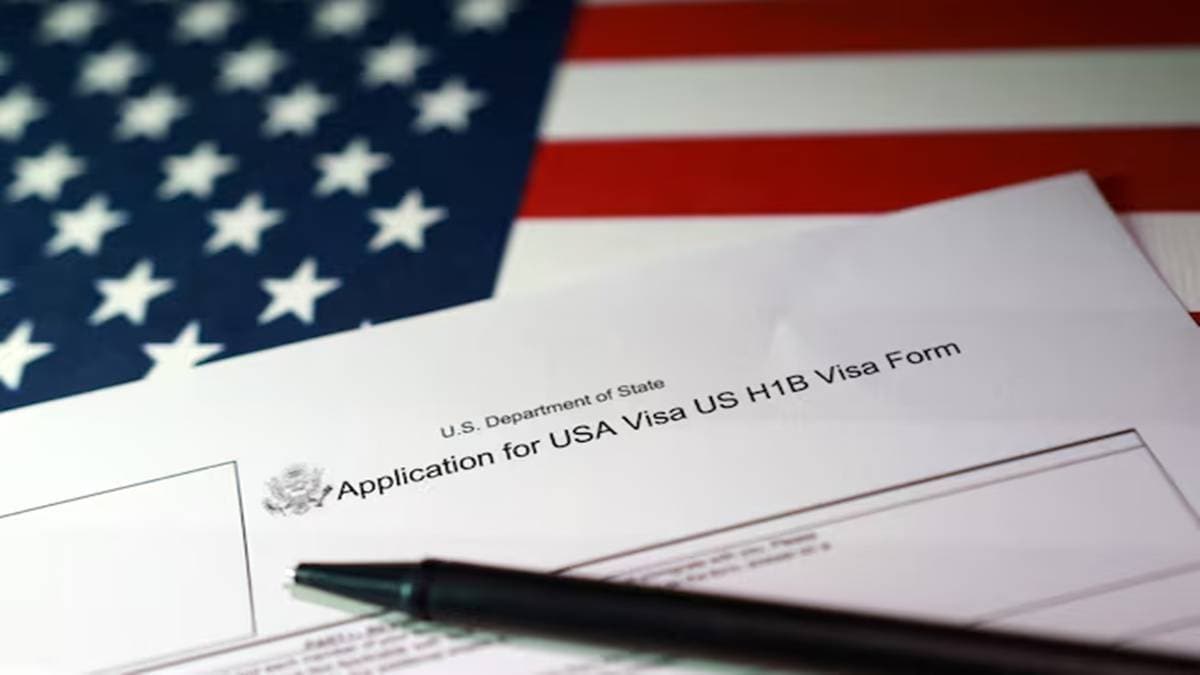
Attorney General Todd Rokita is leading a coalition of 13 states in support of a U.S. Department of Labor proposed rule to raise prevailing wage requirements for foreign workers in the H-1B, H-1B1, E-3, and PERM programs. The change aims to better protect American jobs, wages, and working conditions from the displacement and wage arbitrage caused by the current H-1B system.
A permanent labor certification (PERM) issued by the Department of Labor (DOL) allows an employer to hire a foreign worker to work permanently in the United States.
In most instances, before the U.S. employer can submit an immigration petition to the Department of Homeland Security’s U.S. Citizenship and Immigration Services (USCIS), the employer must obtain a certified labor certification application from the DOL’s Employment and Training Administration (ETA).
The DOL must certify to the USCIS that there are not sufficient U.S. workers able, willing, qualified, and available to accept the job opportunity in the area of intended employment and that employment of the foreign worker will not adversely affect the wages and working conditions of similarly employed U.S. workers.
The coalition states argue that the existing H-1B program too often enables employers to import cheap foreign labor, displacing U.S. workers and suppressing wages. Most employers are not even required to attempt to recruit American workers first before hiring H-1B workers, and enforcement of existing safeguards has been weak.
“We’re talking about changing a federal program that currently enables and, in many ways, almost encourages employers to replace American workers with low-cost foreign labor,” said Attorney General Rokita. “It’s difficult to imagine a more disastrous and harmful policy. I am proud to lead these states and stand with the Trump administration to fix it.”
Key problems with the current system
Worker Displacement: Companies have replaced American IT and tech employees with H-1B workers, sometimes requiring laid-off staff to train their replacements. Major firms have conducted large layoffs while simultaneously seeking thousands of H-1B approvals.
Impact on American Graduates: Universities, exempt from the annual H-1B cap, have used the program to fill jobs that could very likely be filled by their own U.S. graduates, even as recent college graduates face elevated unemployment.
Legal Deficiencies: The current wage methodology was implemented without proper notice-and-comment rulemaking and lacks a reasoned explanation tied to the requirements of the program’s authorizing statute.
The proposed rule would significantly increase the prevailing wages that employers must pay H-1B workers, making the program more consistent with its original purpose of allowing employers to fill genuine specialty occupation shortages with highly skilled workers — not serving as a tool to cut labor costs at the expense of American workers.
The attorneys general emphasize that raising wages is the single most impactful reform achievable through administrative action. Broader changes — such as requiring employers to recruit Americans first or overhauling or scrapping the H-1B program entirely — would require congressional action.
New Proposal by DOL
The U.S. Department of Labor (DOL) has already proposed a new rule that would significantly increase the wages employers must pay when hiring foreign workers, both for temporary and permanent positions. If adopted, this rule would push H-1B salaries considerably higher across all experience levels.
The rule would affect prevailing wages for employment opportunities that US employers seek to fill with foreign workers through certain EB-2 and EB-3 employment-based immigrant visas via the Permanent Labor Certification (PERM) program, or through H-1B, H-1B1, or E-3 nonimmigrant visas.
Here is how the proposed wage hikes break down across the four levels:
Level 1 — Entry: Biggest Jump. The proposed wage floor rises from the 17th percentile ($73,279) to the 34th percentile ($97,746) — a 33.39% increase, the steepest among all four levels. This means entry-level H-1B workers would need to be paid nearly $24,500 more annually under the new rule.
Level 2 — Qualified: Significant Hike. The threshold moves from the 34th percentile ($98,987) to the 52nd percentile ($123,212) — a 24.47% increase. Employers hiring qualified H-1B workers would need to budget over $24,000 more per hire per year.
Level 3 — Experienced: Moderate Rise. The prevailing wage benchmark shifts from the 50th percentile to the 70th percentile — a 20.79% increase, pushing experienced H-1B workers firmly into above-median wage territory.
Level 4 — Fully Competent: Substantial Increase. The wage floor moves from the 67th percentile to the 88th percentile — a 21.68% increase. Fully competent H-1B workers would already command near-top-tier wages, and this proposal pushes that requirement close to the 90th percentile threshold.
Disclaimer: The proposed rule is subject to the federal notice-and-comment rulemaking process and has not yet been adopted. This material is intended for informational purposes only.