



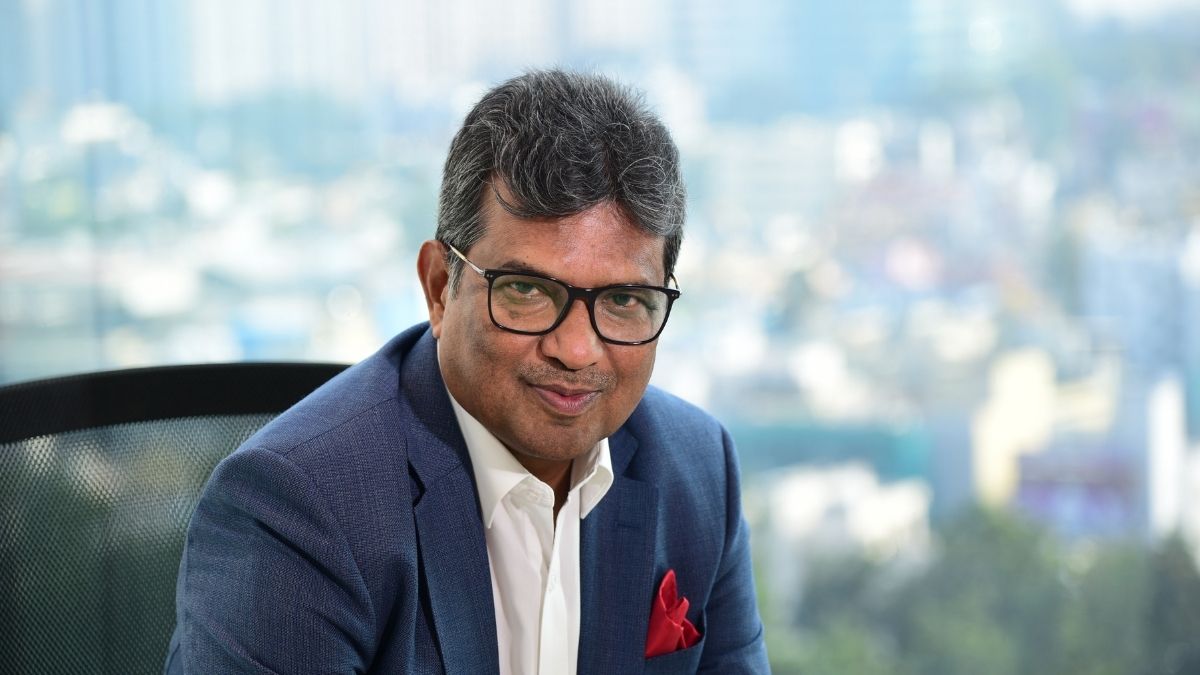
Hitachi Energy’s profit after tax jumped 84% YoY and revenues risen 46% in Q4FY26. The company’s board recently approved Rs 2000 crore capex to expand capacity including a new transformer facility in Gujrat. In an interview, N Venu, managing director and CEO , India & APAC, Hitachi Energy, speaks to Raghavendra Kamath about the upcoming opportunities and issues emerging from the West Asia conflict.
Hitachi Energy posted good set of revenue and profit numbers in Q4. Do you think that this kind of growth is sustainable in the coming quarters?
We have been consistently saying that if the market is growing at the X percentage rate and then we are taking a lot of initiatives, so we want to grow higher than the market. And we have been continuously growing higher than the market. If you see last several quarters and last year , and the last quarter results also, they are all testament to what we have been talking about. And we have almost close to Rs 29,000 crore of order backlog which will give a visibility of quite a quite a strong, almost 3.8x to our revenue. And based on that, we are very confident that, we will maintain the growth momentum going forward.
Your domestic order inflows were flat in Q4. So when do you expect that to pick up?
I do not see the domestic market was flat. It is about timing of your orders. You have to load the factory if your customers are looking for that particular slots. Whether you have manufacturing slots or not there, that’s a decision point today, and I don’t see there is any demand challenges in the domestic market as of now. In demand, there could be some challenges in between, delay in the award of this TBCB (tariff-based competitive bidding) projects, but I think that’s behind us now. I think now we see a lot of roller projects coming in.
In terms of High voltage direct current (HVDC) where you have 50% market share, there have been reports that Rs 1 lakh crore of HVDC pipeline is likely to be awarded in the next three years. So how much of that you are looking to capture?
If you look at the HVDC, 9 out of the 18 HVDC links in India, which includes the new projects which are under construction, are running through our technology. So this technology has been, pioneered by us, invented by us 70 years ago, and we continue to invest in this technology.
And when it comes to the new project, so we have done a lot of localization in India. We are the first one probably in 2022. We set up our greenfield HVDC control and protection valve factory in Chennai. And now we are expanding our large power transformer unit. Basically, it will also produce HVDC converter transformers. So all these opportunities will make us highly competitive and we will be looking forward to bid these projects.
Power demand has risen very fast in the last couple of months. And so how is the company gearing up to meet the opportunities?
Domestic power demand has gone up, as in in some days of May the peak demand surpassed its own record. So definitely that will add more opportunities for our company’s portfolio including beta products, systems, services, software. We are doing two or three things. First of all, we are expanding our portfolios right now across all the businesses to cater to the additional demand.
And second one, we are also bringing the new product portfolio within our things. If I give you one example in the data center, till now we are concentrating on the grid connections and the dry type transformer inside, as well as the load flow studies, automation, and so on, But now we are launching new products. We just launched a new product, what we call the grid to rack. So, with grid to rack is that, addressable market is expanding.
What kind of price escalation you have seen in insurance costs and raw material costs, etc due to this West Asia conflict?
I think that the crisis is creating a lot of opportunities for sure . I used the word opportunity because we have so much dependence on the fuel. So, if you start further increasing your penetration of the renewable, then our dependency on the non-fossil will come down. That’s a different topic. Yes, the crisis has elevated inflation, elevated commodity prices, and also sometimes shipping costs. Even if you pay higher shipping cost, sometimes even you’re not able to confirm the deliveries, time slots of the ships, etc.
We are a global company. So we have all of our functional teams around the world, the transport logistics and other people are working around the clock to ensure and see that we mitigate many of those things. So going forward, if these things continue further, we will continue to monitor much more, so that how this impact can be either mitigated or impact can be minimised. But as I said, many of our contracts do have a price escalation clause built in, especially on raw materisls such as aluminum, copper, steel, and so on, including some of the contracts do have oil.
What are the steps you have taken to mitigate the supply issues.
Wherever shipping lines are not possible, so we have rerouted in alternative shipping lines, so that we are able to serve our customers both imports and exports.. And some of the components where prices are going up, we have ordered upfront and we are able to manage those things, even though slightly higher inventory levels, we’re still able to do that. So like that, there are several actions we have taken to mitigate the impact..