



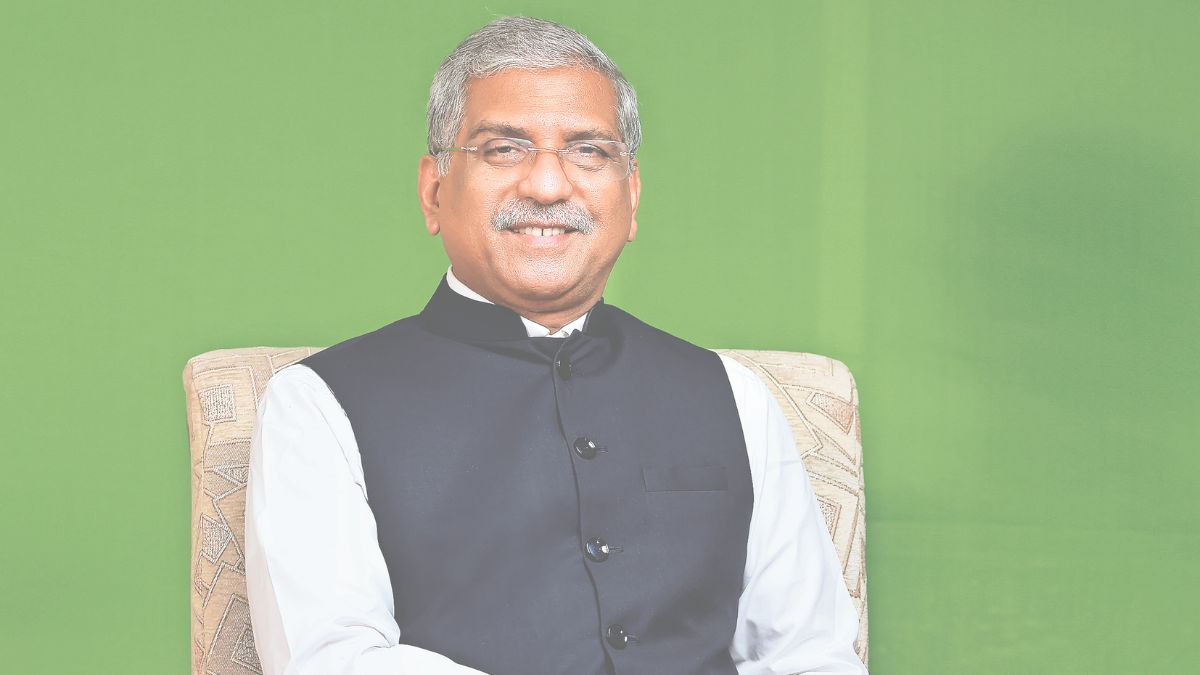
ESAF Small Finance Bank is sharpening its focus on secured products aimed at the lower- and middle-income (LMI) segment as it charts its next phase of growth. MD & CEO K Paul Thomas tells Narayanan V that the lender has nearly halved its unsecured book to around 35% over the past year, expanded its loan offerings, and also about the current lending scenario in the microfinance segment. Excerpts:
How is the stress situation in the microfinance segment?
Things are clearly improving on the ground. The two guardrails implemented by the industry have worked well, and almost all entities including banks, small finance banks (SFBs) and microfinance institutions (MFIs) are seeing better collections. However, one concern is that a large number of microfinance customers have moved out of the segment. I am also the chairman of Sa-Dhan, a self-regulatory organisation for MFIs, and we are studying how these borrowers can be brought back into the formal system. In the MFI segment, once a borrower slips into a non-performing asset category, it becomes very difficult to regularise the account and close the loan. They do not get fresh loans. What generally happens, from what I have seen, is that they move to the informal sector to meet their immediate needs.
ESAF’s microloans book have shrunk 24% y-o-y to ₹7,583 crore in Q3.
Our focus on the microfinance segment has not reduced at all. Since our non-microfinance loans are growing at a faster pace, growth in microfinance appears muted. Even today, we have around ₹7,500–8,000 crore of microloans outstanding. We are also offering other products such as micro enterprise loans and trade loans to the same segment, as borrowers are graduating to the next level. Our next phase of focus will be to offer savings as a service to this segment. Our ‘Dabba Savings Account’ campaign was a big hit, and we are also focussing in a big way by encouraging borrowers to enrol for pension products like Atal Pension Yojana. There is a huge need to promote life and health insurance products for this segment, and we are working on that. So it’s no longer about loans, but all financial products relevant to the LMI (low and moderate income) segment will be our next big focus area.
How do you plan to increase the secured loan book?
We have significantly reduced the share of unsecured loans to around 30–37% from 60–65% a year ago. We want to maintain the unsecured loan share at around 30–35%. Our retail and other loans grew 58% to ₹13,097 crore in the third quarter, and the share of secured loans has increased to 65% from 43% over the past year. This growth has largely come from gold loans, agriculture loans and mortgage loans. Demand for gold loans remains very high as it is the easiest product for people in this segment to quickly monetise their assets.
We have also developed products such as micro enterprise loans ranging from ₹1 lakh to ₹10 lakh. For small traders, we offer a product called Vyapar Vikas Yojana, which provides loans based on transactions in the QR-linked bank account. Around 70% of our branches are located in rural and semi-urban areas, where a lot of economic activity is taking place. The MSME segment is active, with small-scale activities such as food processing being particularly strong in rural areas. Those are our focus areas.
Are you facing funding crunch like MFIs?
We are a deposit-taking, scheduled SFB, so we have not faced any funding challenges. Our deposits grew 7% year-on-year to ₹24,006 crore during the quarter, while CASA deposits increased 8% to ₹6,030 crore. We also have multiple funding options available, including NRI deposits.
As chairman of Sa-Dhan, I am working on the funding challenges faced by smaller MFIs. The Sa-Dhan CEO recently met the SIDBI chairman and is also engaging with large banks. We have also requested the government to provide a guarantee to banks for lending to smaller MFIs, as they play an important role in serving microfinance customers in remote locations. This work is happening at the sectoral level. At the bank level, however, we do not face any liquidity challenges.