



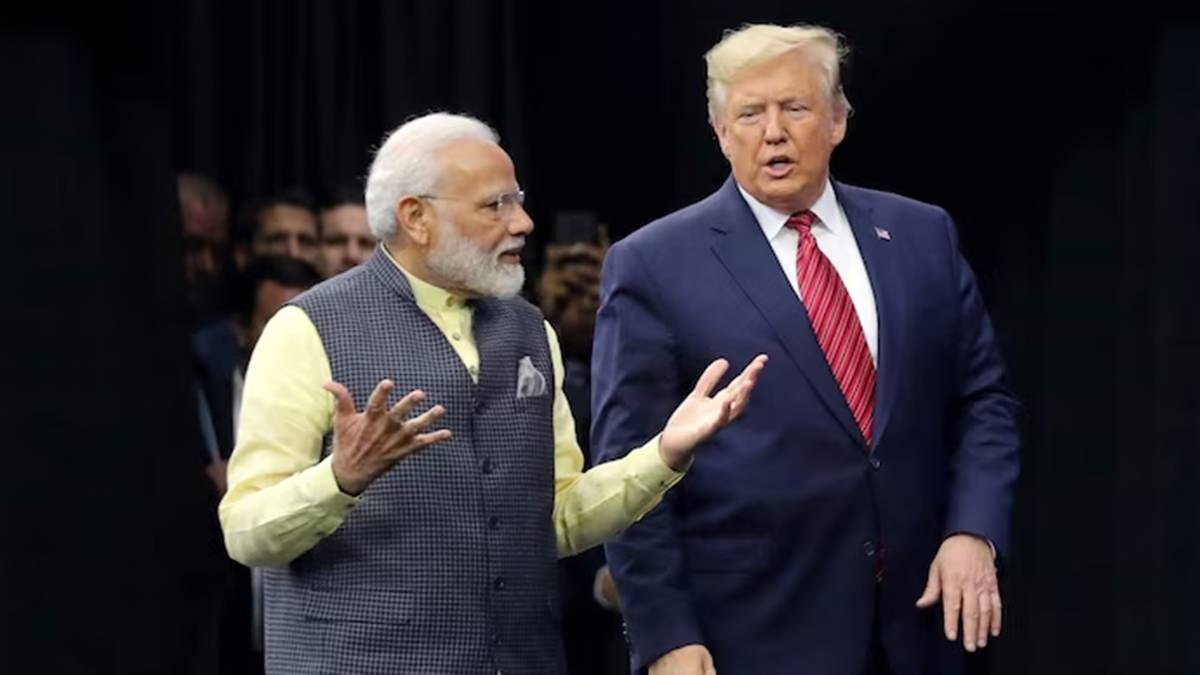
India and the US decided to postpone a scheduled three-day meeting of their chief trade negotiators at the last minute because the US Supreme Court’s abrogation of country-specific reciprocal tariffs and subsequent developments required both sides to re-evaluate their options.
The Indian team was scheduled to start on February 23 in the US.
“With regards to the visit of the Indian team of negotiators to the US for the India-US trade deal, the two sides are of the view that the proposed visit of the Indian Chief Negotiator and the team be scheduled after each side has had the time to evaluate the latest developments and their implications. The meeting will be rescheduled for a mutually convenient date,” Commerce Ministry sources said on Sunday.
Immediately after the court order, using the powers under Section 122 of the Trade Act of 1974, Trump imposed 10% extra tariff on all imports over MFN rates, and a few hours later, he raised it to 15%, the maximum allowed under the law.
What does the recent US Supreme court order mean for India?
For India, the changed circumstances present an opportunity to renegotiate the framework of an interim deal with the US, for which both sides issued a joint statement on February 7. Many experts have felt that the framework was heavily skewed in favour of the US, and upended the established multilateral trade principle that allowed developing cpountriues to maintain relatively higher tariffs than the developed ones.
“The joint statement mentions that if either country changes the agreed-upon tariffs, the US and India agree that the other country may modify its commitments. Now that US tariffs have changed, India should use this clause to either opt out of the deal or delay negotiations or seek fresh terms, so that the trade deal looks equitable,” founder of Global Trade Research Initiative Ajay Srivastava said.
Trump Administration’s reponse to court ruling
The court ruling and the Trump Administration’s reponse to it have made the whole issue even more volatile. Since the “Liberation Day” tariff proclamations by Trump last April, the world trade scene has been marred by uncertainties. Trump continues to insist that he would turn to other laws to press ahead with his tariffs, and that these “great alternatives” would be “a lot stronger.”
The 18% tariff for India, that was mentioned in the India-US Joint Statement, had yet to take effect. The two sides were targetting the interim deal’s roll-out in April, as the new developments complicated the situation.
The Indian team for the latest round of talks with the US was to be led by Darpan Jain, the joint secretary in the Department of Commerce and the chief negotiator from the Indian side. Their meetings were scheduled to go on till Thursday to finalise the legal text of the interim trade agreement based on a joint statement issued by both sides on February 7.
As per the joint statement, the US had agreed to bring down additional tariffs on Indian exports to 18% from 50%. This was to be done through complete scrapping of 25% penal tariffs of 25% for buying Russian oil and bringing down reciprocal tariffs to 18% from 25%.
The oil-related tariffs were removed immediately and executive order on reduction of reciprocal tariffs was awaited before the US Supreme Court verdict came.
The 15% tariff is in addition to the Most Favoured Nation (MFN) tariffs the US charges on products from all geographies. The MFN tariffs range from 8-12% for apparel and textiles, 5-10% on leather and footwear, 0-6% for gems and jewellery and 0-3% for handicraft. After the trade deal hopes were raised of US buyers coming back. “The prevailing uncertainty has again led to buyers watching the situation on the sidelines,” CEO and Director General of Federation of Indian Export Organisations (FIEO) Ajay Sahai said.
US Trade Representative Jamieson Greer has said that the administration would continue to implement its trade policy that aims to reduce trade deficit by bringing strict reciprocity in trade with partners. The Section 122 tariffs is one part of the plan. The US also intends to initiate investigation under Section 301 of the Trade Act against major trade partners to detect discrimination in trade through additional tariffs.
As the Trump Administration evaluates options, India should reassess its position in the negotiations as some concerns were raised after the joint statement regarding issues around the farm sector, Russian oil purchases and digital issues, distinguished professor at Council of Social Development Biswajit Dhar said. One thing going for India is that it has not signed any formal agreement so there is a space for getting India’s concerns addressed even while negotiating the legal text of the interim deal, he added.
Some other experts questioned the wisdom of agreeing to a wider Bilateral Trade Agreement with the US, arguing that it opens up subjects beyond just trade where the US can impose conditions. “These modern trade agreements go beyond just tariffs to include areas like competition, investment, standards on labour and gender, service sector concessions and other policy areas which sometimes limit local policy making,” an expert said.
Sahai, however, is of the view that negotiations should continue on the BTA as these go beyond tariffs adjustments. “Through BTA India can aim to bring down even the Most Favoured Nation tariffs,” he added.
The US Supreme Court ruled that the reciporacl tariffs imposed by Trump on nations around the world were illegal and that the president had exceeded his authority when he imposed the sweeping levies by using the International Emergency Economic Powers Act of 1977.