



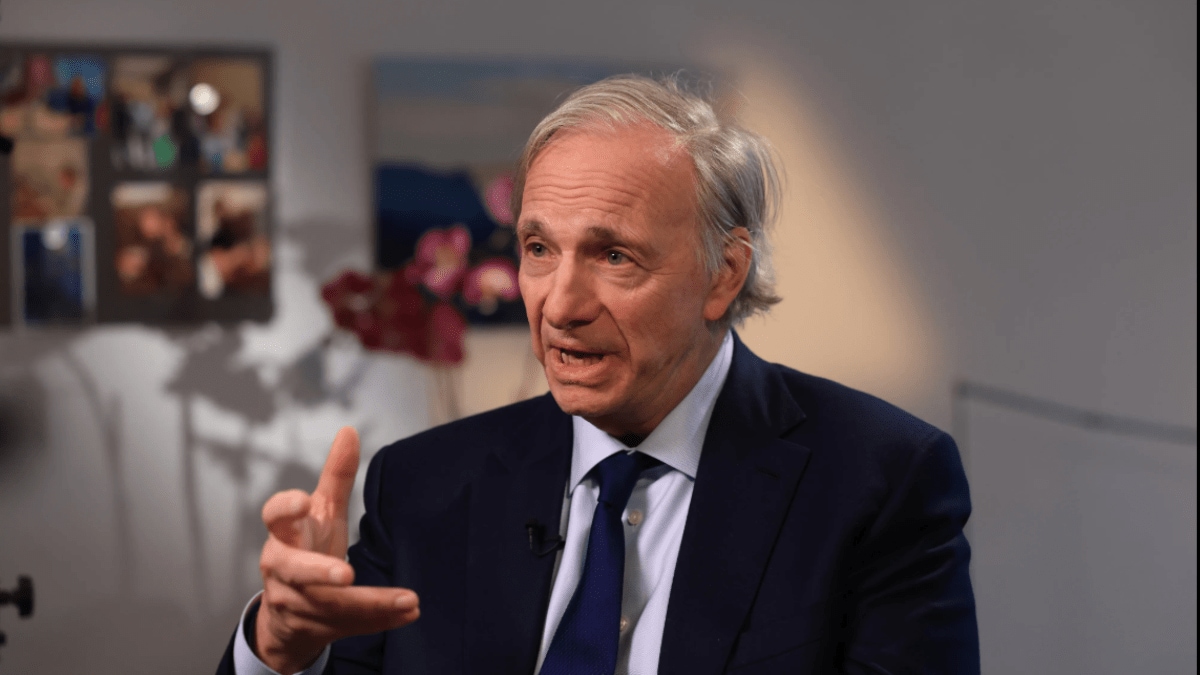
Artificial intelligence has become the defining investment story of the past two years, lifting stock markets, creating trillion-dollar companies and driving unprecedented demand for advanced chips. However, billionaire investor Ray Dalio believes the excitement surrounding AI is also showing familiar signs of a market bubble.
The founder of Bridgewater Associates said while speaking to Bloomberg Television on Wednesday that investors should be careful not to confuse belief in the technology with belief in the stocks tied to it. His warning comes at a time when AI-related companies are among the biggest winners on Wall Street, with investors pouring billions of dollars into chipmakers, data-centre operators and AI infrastructure firms.
Every great technology creates a bubble, says Dalio
Dalio claimed that history shows major technological breakthroughs often trigger periods of excessive optimism and speculation. “All great technology changes produce bubbles,” Dalio told Bloomberg TV. “Nobody can get it exactly right.”
According to him, AI is following a pattern that has appeared repeatedly throughout history. New technologies create enormous opportunities, attract massive amounts of capital and encourage companies to spend aggressively in pursuit of growth. Eventually, however, markets begin asking tougher questions about profits and returns. Dalio considers AI as a “wonderful technology” but cautioned that current market behaviour resembles previous technology-driven booms.
The costly race for AI dominance
One of the biggest challenges facing companies in the AI sector, Dalio said, is deciding how much money to spend to stay competitive. “You have to either spend a ton of money to capture your market share and don’t worry about whether it’s too much or not, or you don’t spend enough money and you lose your market share,” he told Bloomberg TV.
The competition to dominate AI has pushed companies to invest heavily in computing infrastructure, research, talent and data centres. For many firms, the pressure to move quickly is intense because falling behind rivals could mean losing future opportunities. According to Dalio, this dynamic leads to excessive spending, inflated valuations and eventually market corrections.
Companies are effectively forced to choose between overspending in an effort to secure leadership or risking irrelevance by investing too little. Dalio stressed that believing in AI’s future does not automatically mean AI-related stocks are good investments.
“People bet on the technology, which, I’ll bet on the technology, but they think that buying the stocks is betting on the technology, which is a different thing, because the stocks can be expensive,” the Bridgewater Associates founder said. While AI may transform industries and economies, Dalio suggested that technological success and investment success do not always go hand in hand.
Turning wealth into money
Dalio believes bubbles do not burst simply because asset prices become expensive. Instead, trouble begins when investors need cash and start converting their investments into money. “You cannot spend wealth. You have to sell wealth to get money, because you can only spend money,” Dalio said. He described this moment as the key pressure point for every bubble. “The pricking is the converting of wealth into money,” he said.
In practical terms, investors eventually stop focusing on future promises and begin demanding proof that businesses can generate real earnings, cash flow and sustainable profits. That question remains particularly important for parts of the AI industry where companies are spending enormous amounts on infrastructure and development while profitability remains uncertain.
- AI’s immense impact on markets
Dalio’s comments arrive as artificial intelligence continues to be one of the strongest forces driving global equity markets. Chipmakers and AI infrastructure companies have led Wall Street’s gains over the past two years. The rapid expansion of AI applications has created soaring demand for advanced semiconductors used in data centres, helping many technology companies reach record valuations.
Investors have poured billions into businesses viewed as beneficiaries of the AI boom, helping major US stock indices climb to new highs. The rally has also reignited debate over whether stock valuations have become disconnected from the earnings potential of the companies involved.
A different view from Jensen Huang
Dalio’s warning comes just days after Nvidia CEO Jensen Huang pushed back against concerns that the AI boom may be overheating. Earlier this week, Huang argued that investors funding AI infrastructure are generating “insane” returns, suggesting that the massive spending underway is already producing significant benefits. Dalio, however, offered a more cautious perspective.
While he agrees that AI is likely to be a revolutionary technology, he believes investors should pay close attention to valuation levels and the ability of companies to convert spending into profits. Regardless of his concerns, Dalio did not advocate panic selling. Instead, he suggested investors should be prepared for the possibility that future returns may be lower than those generated during the early stages of the AI boom.