



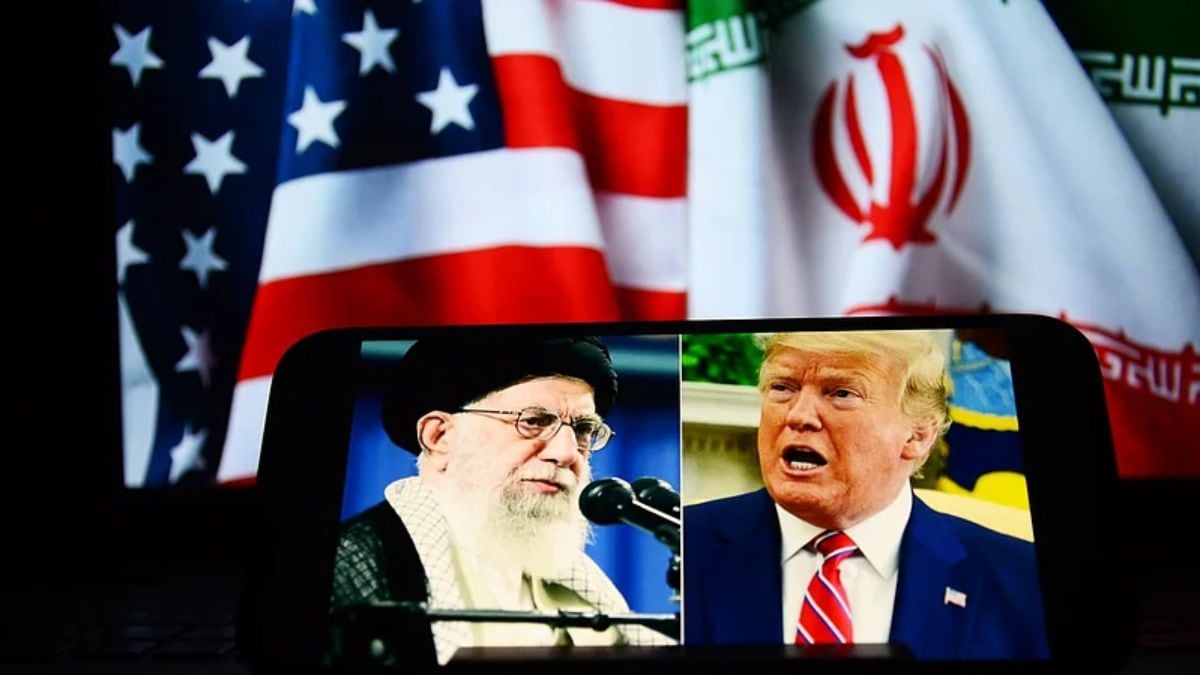
Shortly before the US President Donald Trump announced a 25% additional tariff on countries trading with Iran, India’s shipments of rice and tea to the West Asian country fell to a trickle. Basmati rice and tea have remained items that India continued to export in substantial quantities to Iran, after the November 2018 imposition of Office of Foreign Assets Control (OFAC) sanctions.
The OFAC sanctions regime included a waiver on “humanitarian grounds” for trade in food and medicines, among other essentials.
Civil unrest in Iran and the imminence of additional US sanctions have caused delays in payment settlements for rice and tea exporters and fall in domestic mandi prices of several varieties of basmati rice, trade circles said, adding that as a precautionary measure, shipments have been “temporarily halted.”
Exporters said the crisis extends beyond direct trade with Iran as transit trade through Iran, particularly via the strategic Bandar Abbas port serving the routes to Afghanistan, Turkey, and Russia, has also been impacted.
However, officials here said trade between India and Iran is “fully compliant” with the earlier (OFAC) sanctions regime. There is no clarity on whether the remaining trade in food and pharma would be covered by the new announcement by President Donald Trump, they added.
OFAC sanctions
The OFAC sanctions of the US Department of Treasury brought down bilateral trade between India and Iran sharply from 2019. India’s total merchandise trade peaked with Iran at $17 billion in FY19, with imports of $13.5 billion, dominated by petroleum products, and exports of $3.5 billion, mostly rice and tea.
“Indian companies and banks are in full and demonstrable compliance with OFAC sanctions on Iran, engaging exclusively in clearly permitted humanitarian trade, mainly in food and pharmaceuticals. There is, therefore, no basis to anticipate any adverse impact on India,” director general and CEO of Federation of Indian Export Organisations Ajay Sahai said.
That said, an explicit clarification would conclusively remove any residual ambiguity and provide complete assurance to all stakeholders, he added.
In a social media post on Monday, Trump announced the 25% tariff on “any and all business with the US” for countries doing business with Iran. No Executive Order or notification detailing the scope of the new restrictions has since been issued.
India stopped buying petroleum crude oil from Iran and its exports got confined to humanitarian goods after OFAC sanctions. India’s imports from Iran are confined to dry fruits, chemicals and glassware.
Total trade between the two countries $ 1.68 billion in 2025-26 with India’s exports at $ 1.24 billion and imports at $ 441 million. Of the total India’s exports to Iran in the last financial year, $ 757 million was accounted for by rice.
In April-November of the current financial year India’s exports to Iran were $ 764 million and imports were $ 224 million.
Iran was once the third biggest source of petroleum crude before that trade came to a grinding halt after OFAC sanctions. OFAC sanctions take various forms, from blocking the property of specific individuals and entities to broadly prohibiting transactions involving an entire country or geographic region, such as through a trade embargo or prohibitions related to particular sectors of a country’s economy. There are currently 13 countries on the OFAC list.
The ongoing unrest in Iran has forced the suspension of shipments through the region, further straining global supply chains. “With the rapidly deteriorating situation in Iran, the Indian basmati rice exports are facing one of most serious disruptions in recent years,” Ranjit Singh Jossan, vice president, the Basmati Rice Millers and Exporters Association, Punjab, told FE.
Singh said “for the past five to six days, all channels of communication with Iranian buyers have remained completely shut—be it internet services, mobile networks—making it impossible for exporters to coordinate shipments or receive payment confirmations,”
What do exporters say?
Iran has been among the largest importers of the aromatic long-grain rice for several years, along with Saudi Arabia, Iraq and the United Arab Emirates. According to the latest data, India’s basmati rice exports to Iran during April-November 2025–26 stood at $ 468.1 million, with volumes reaching around 0.6 million tonne (MT). “Uncertainity looms over India’s basmati rice exports as Iran’s political unrest leaves consignments stuck at ports, payments frozen, impacting prices,” Suraj Agarwal, CEO at Ricevilla Group, said.
“We were exporting around 0.25 million tonne of basmati rice to Iran earlier. However, over the years, sanctions and increased market restrictions have considerably impacted our business,” Akshay Gupta, head-bulk exports, KRBL, which ships basmati rice to over 90 countries under ‘India Gate’ brand, said. Gupta said at present the company’s exports of basmati rice to Iran is around $ 8-10 millon.
Prem Garg, national president, Indian Rice Exporters Federation (IREF), said “the current internal turmoil has disrupted trade channels, slowed payments, and dented buyer confidence. The immediate fallout is evident in Indian mandis, where Basmati prices have softened sharply within days,” According to a IREF, the domestic mandi price of 1121 variety of basmati rice has declined to Rs 80/kg from Rs 85/kg a week ago, while other aromatic long grain rice variety has declined to Rs 65/kg from Rs 70/kg prevailed a week back.
Garg said that exporters must exercise heightened caution, particularly with respect to credit exposure and shipment timelines. “Importers (in Iran) have conveyed their inability to honour existing commitments and remit payments to India, creating heightened uncertainty for exporters,” he said.
Iran has traditionally been a strong market for Indian orthodox tea. The US tariffs could exacerbate the situation with exporters already facing problems in Pakistan and Russia, which were once large markets for Indian tea. “We exported 80 million kgs of orthodox tea in FY25, out of which shipment to Iran was around 45 million kgs,” Vicky Tambi, Ceo, Asian Tea Company, said.
A leading rice exporter from Haryana said “its a complex process to get payments for basmati rice exports to Iran,” Sources said importers in Iran till now were settling payments using traders’ accounts based in Dubai and other channels”.
“The 25% tariff effectively raises the tariff burden on Indian exporters to nearly 75% in the US, creating serious anxiety across global markets”, an exporter said.
Saudi Arabia (20.25%), Iraq (14.3%), Iran (12.67%), United Arab Emirates (6.13%) and Yemen (6.03%) accounted for 60% of India’s total basmati exports in 2024-25.
India has been the world’s biggest rice exporter in the last decade and with a market share of around 35% to 40% in rice trade. The country has removed all the restrictions imposed on rice shipments in 2024.
China, Iran’s biggest trading partner accounting for 7% of West Asian country’s oil exports in 2024, has threatened to retaliate against the new Trump tariff. Liu Pengyu, the spokesperson for the Chinese embassy in Washington, said Beijing would “take all necessary measures to safeguard its legitimate rights and interests.”