



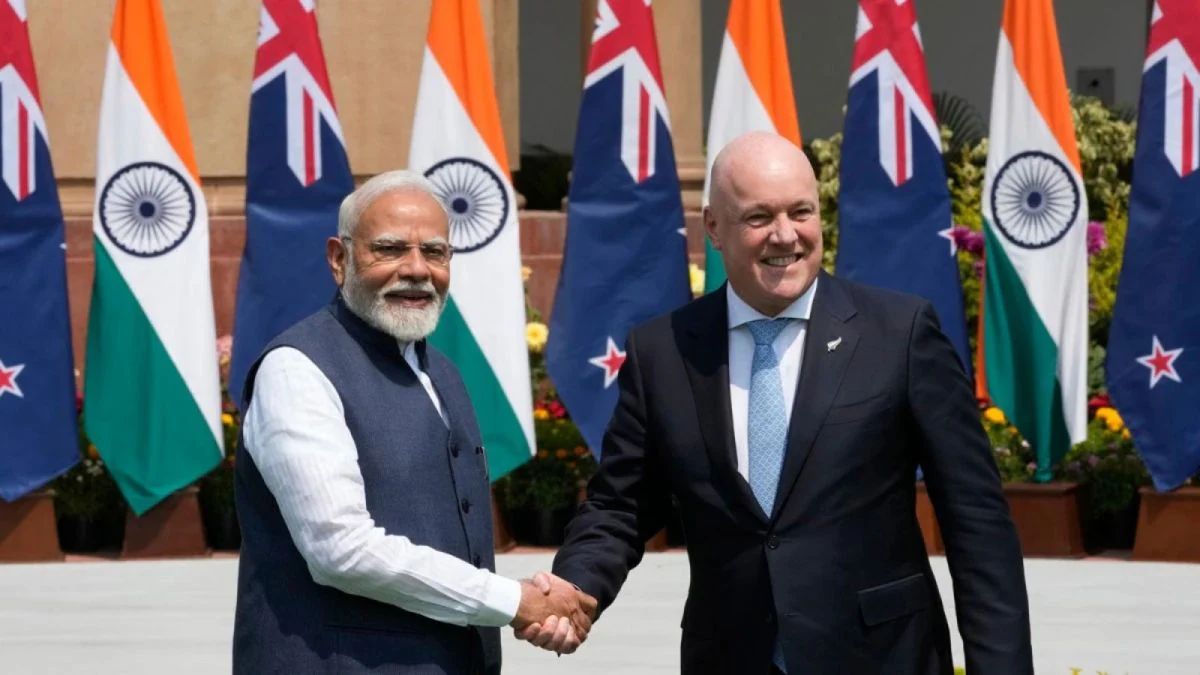
The India-New Zealand Free Trade Agreement (FTA) to be signed today involves deep tariff cuts, easing of standards and dispute settlement and a commitment from the island country to invest $20 billion in India over 15 years. The pact could only be concluded on the second attempt. The first comprised 10 rounds of negotiations between 2010 and 2015, but was abandoned over the issue of opening up India’s dairy sector.
India’s gains
New Zealand to eliminate duties on imports from India as soon as the FTA becomes operational. At present, it maintains duties of around 10% on 450 items of Indian exports like textile and apparel products, leather, ceramics, carpets, automotive components and vehicle assembly. Agriculture and plantation products like tea, coffee and spices also to benefit.
India’s offer to New Zealand
India has offered market access in 70% of the tariff lines while excluding 30%. Immediate elimination on 30%, phased reduction in 35.6%, tariff reduction in 4.4% and Tariff Rate Quotas or limits on the quantity that can be imported at lower duties has been offered for a smal number of tariff lines.
Key products under Tariff Rate Quotas
Apples, kiwifruit and manuka honey are under TRQs. New Zealand will also help India in improving productivity and quality of these crops, with cooperation in the establishment of Centres of Excellence, improved planting material and training growers.
Products excluded
Dairy items like milk, cream, whey, yoghurt and cheese are kept out. Animal products other than sheep meat, vegetable products, sugar, artificial honey, animal, vegetable or microbial fats and oils, gems and jewellery, copper and its articles, aluminium and its products are also excluded.
Services liberalisation for India
New Zealand has offered to open up 118 services sectors and sub-sectors and give Most Favoured nation treatment in 139 services sectors and sub-sectors.
Services liberalisation for New Zealand
India to open up 106 services sectors and sub-sectors and provide MFN treatment in 45 services sectors and sub-sectors.
Mobility
No numerical cap on number of students from India. Post-study work visas for students of science, technology and mathematics. Quota of 5,000 visas at any time for Indians in skilled occupations for stay up to 3 years in the sectors like IT, engineering, healthcare, education, and construction, AYUSH practitioners, yoga instructors, Indian chefs, and music teachers.
Process left
The FTA will have to be ratified by both countries before it can be implemented. In India it is an executive process while in New Zealand it will require the approval of Parliament. Coalition partner of New Zealand Prime Minister Christopher Luxon’s New Zealand National Party – New Zealand First – has opposed the deal. Luxon has, however, managed to get the support of the Labour Party for the deal.Ratification process can go on for up to a year.