



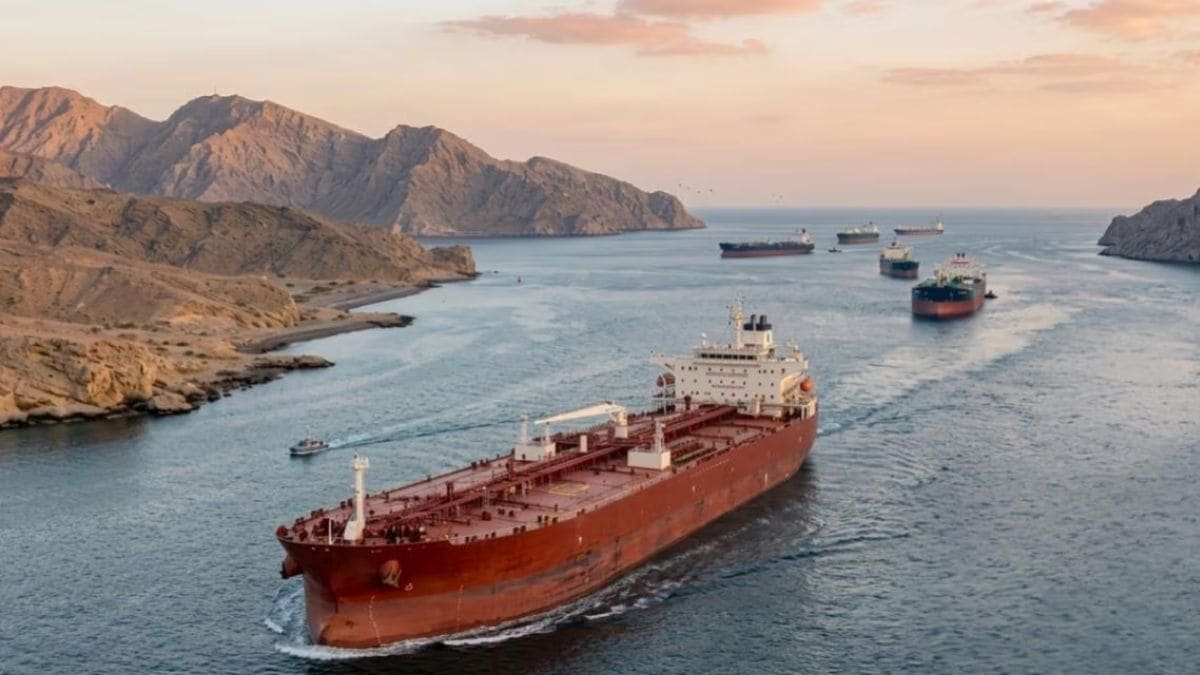
Traffic through the Strait of Hormuz has collapsed by more than 90% from pre-war levels, with over 800 vessels stranded in the Middle East Gulf, raising concerns that disruptions to a route carrying nearly 20% of global oil supply could continue well into late 2026, according to a white paper by S&P Global Commodity Insights.
Before the outbreak of the US-Israel conflict with Iran on February 28, more than 100 vessels carrying around 20 million barrels of crude oil and refined products transited the Strait every day, equivalent to nearly one-fifth of global oil supply. The waterway also handled around 30% of global LPG trade, 20% of LNG, 16% of alumina and 14% of global fertiliser shipments, highlighting its central role in global commodity flows.
However, S&P Global’s latest assessment shows the Strait remains far from normal despite discussions around reopening.
“Markets differentiate between a technical re-opening of Hormuz and a commercial re-opening, which is based on restored confidence of cleared mines, eased insurance and safe passage. With more than 800 vessels still stranded in the Middle East Gulf, our Commodities at Sea clearance modelling suggests the world’s most watched energy artery is poised to keep pulsing below normal for months — into late 2026,” said Rahul Kapoor, Head of Shipping & Metals at S&P Global Commodity Insights.
According to Commodities at Sea (CAS) and MINT data cited in the report, the Strait witnessed an average of 135 vessel transits per day in February, including about 54 oil, chemical and LPG tankers and six LNG carriers daily.
By late May, however, total traffic had fallen to an average of just 11 vessels per day and fewer than two tankers daily, leaving throughput more than 90% below pre-conflict norms.
The disruption deepened in March when vessel traffic fell further to only seven vessels per day. A modest recovery followed in April, when traffic increased to 14 vessels daily, including around four tankers, but shipping activity remained fragile amid continuing attacks and geopolitical uncertainty.
The report noted that commercial operators largely withdrew from the route during the crisis. US-sanctioned vessels accounted for 45% of all transits in March and 29% in April, underscoring the increasingly restricted nature of shipping activity.
Adding to the disruption, a US blockade introduced in the Gulf of Oman in mid-April further constrained vessel movements. While 30-40 vessels crossed the blockade line daily, only a small fraction successfully transited the Strait. S&P data showed 14 vessels were turned back, while others called at ports outside the Strait but within the blockade zone.
The report said market participants have identified five conditions for a meaningful commercial reopening of Hormuz, including recovery of vessel traffic to 50-90% of pre-war levels, an incident-free observation period of 30-45 days, wider availability of war-risk insurance, improved maritime security and restoration of normal fleet deployment patterns.
“A complex picture emerges regarding the conditions that should be met for the market at large to consider the Strait viably open for sustainable, consistent traffic, under stable and acceptable conditions,” the report said.
The findings indicate that even if hostilities ease, the restoration of normal energy and shipping flows through the world’s most critical oil chokepoint could take considerably longer than the end of the conflict itself.