



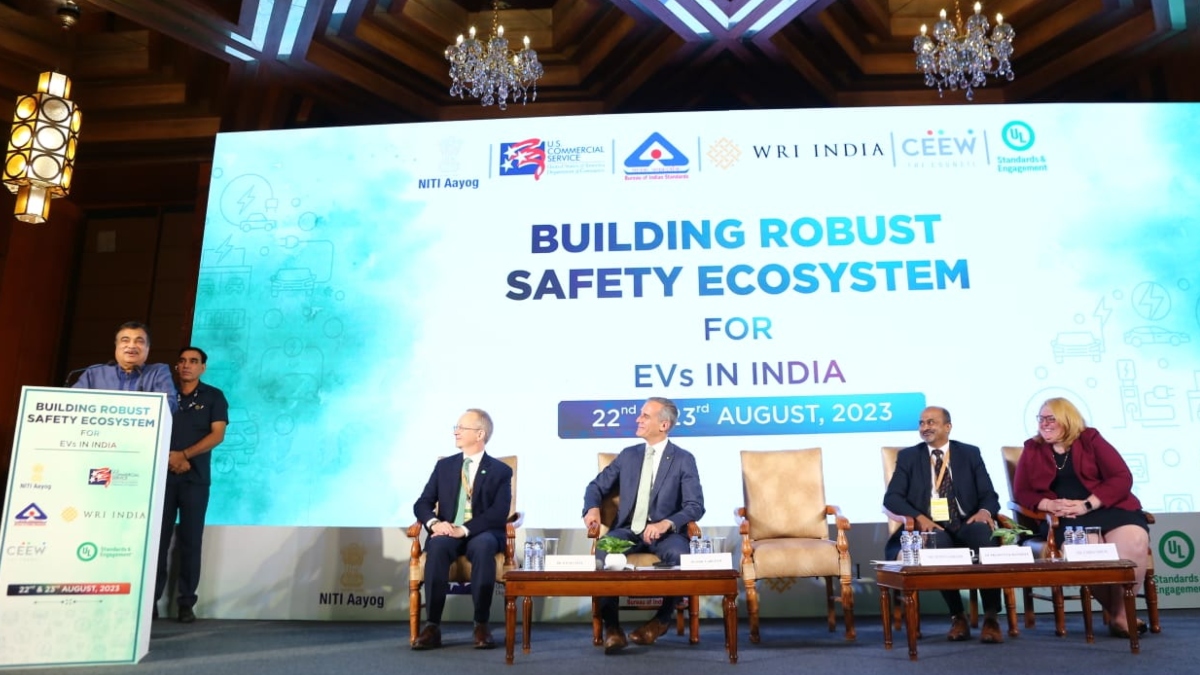
This week UL Standards & Engagement conducted the ‘Constructing a Resilient Electric Vehicle Safety Ecosystem in India’ conference. it was convened in collaboration with the U/S. commercial service, Bureau of Indian Standards, WRI India, NITI Aayog, and the Council on Energy, Environment and Water (CEEW). The main issue of concern at the event was the solutions to address safety concerns for the growing Electric Vehicles market in India
With the surge in electric vehicle sales, India’s EV industry is poised for substantial growth in the coming years. However, recent incidents of EV-related fires have raised concerns, underscoring the urgent need for prompt safety measures.
Stakeholders proposed strategies for establishing a safer, more secure, and sustainable EV ecosystem in India. Participants also discussed challenges faced by the country’s EV sector, including adapting electric vehicles to tropical climates, developing a supporting infrastructure, and ensuring competence across the entire supply chain, from raw materials to maintenance.
The importance of adopting global best practices and investing in research and development was highlighted as a critical component to effectively address these challenges. The conference also ensured the pivotal role in steering towards the future of electric vehicles in India that is safe, secure, and environmentally conscious. The importance of establishing a strong quality framework for EVs, building consumer confidence and the necessity for a skilled workforce was underscored during the two-day session.
Nitin Gadkari, Minister of Road Transport and Highways of India, stated, “The automotive industry is a vital contributor to our country’s economy. With the increased adoption of electric vehicles in India, it’s evident that we must take steps to support their development, including charging infrastructure and hydrogen filling stations, alongside greater investments in EVs.”
Eric Garcetti, United States Ambassador to India added, “Amidst this transformative era, where climate concerns are significant, we are not merely engaged in engineering vehicles; we are dedicated to making people’s lives better. We’re working hard to set standards and accelerate this change during a time of significant shifts due to climate concerns.”
Sudhendu Sinha, Advisor – Infrastructure Connectivity – Transport & Electric Mobility, NITI Aayog, stated, “In our ongoing journey, it’s crucial to identify safety gaps. Through establishing and enforcing standards, we guarantee consistent safety measures. With numerous Indian states aspiring to elevate manufacturing and mobility, we strive to foster an environment of innovation and progress.”
David Steel, Executive Director of UL Standards & Engagement, expressed, “The collective expertise shared over the last few days moves India closer to a safe, reliable, and sustainable electric vehicle ecosystem for future generations. The potential of EVs is inextricably linked to safety. Standards are critical to capitalizing on that potential, allowing for greater global sustainability in concert with safety.”
Madhav Pai, CEO, WRI India, added, “For creating a safe and robust EV ecosystem in India, we need a collaborative approach among government, industry, and academia. There is a huge opportunity to encourage innovation and bring in new battery chemistry, technologies and startups into the mainstream.”