


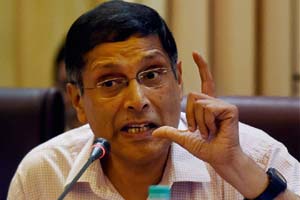

The government will do well to pay heed to chief economic adviser (CEA) Arvind Subramanian’s advice that India recalibrate its climate change stance—as reported by Business Standard—before the United Nations Climate Change Conference in Paris in December. Subramanian suggests a complete rowback from the stance so far, saying India needs to drop the demand that advanced countries pay developing nations for adoption of green measures and provide the requisite technology. Doing this, of course, would mean greater reliance on domestically-developed green technology and financing their adoption through a carbon tax, for instance. While there is a Rs 200/tonne clean energy cess on coal, and fuel prices have been maintained at pre-crude decline rates, the government must come up with new ways to increase carbon tax mop up.
The CEA also advises that India align with coal-bearing nations like the US, Australia, instead of poor and developing nations who have been allies so far in negotiations with advanced countries. This would be a sound move because India is likely to remain largely dependent on coal-based power rather than turning to renewable power.
Though solar power costs have fallen drastically, with the lowest price discovered still at R5.05/unit, it is still costlier than coal-fired power—recently, in 25-year power purchase agreements with Andhra Pradesh discoms, power producers quoted a weighted average tariff of R4.57/unit for the first year. Given coal production has been freed up in the country, the outlook on coal availability and prices are encouraging for thermal generation, too. This means it would be difficult for India to commit to emission cuts, one of Subramanian’s key recommendations. It would be better instead to encourage use of clean coal technologies like pre- and post- combustion capture, oxy-fuel combustion, etc, while spurring adoption of green technology at the individual level by promoting roof-top solar generation, electric vehicles, etc.