


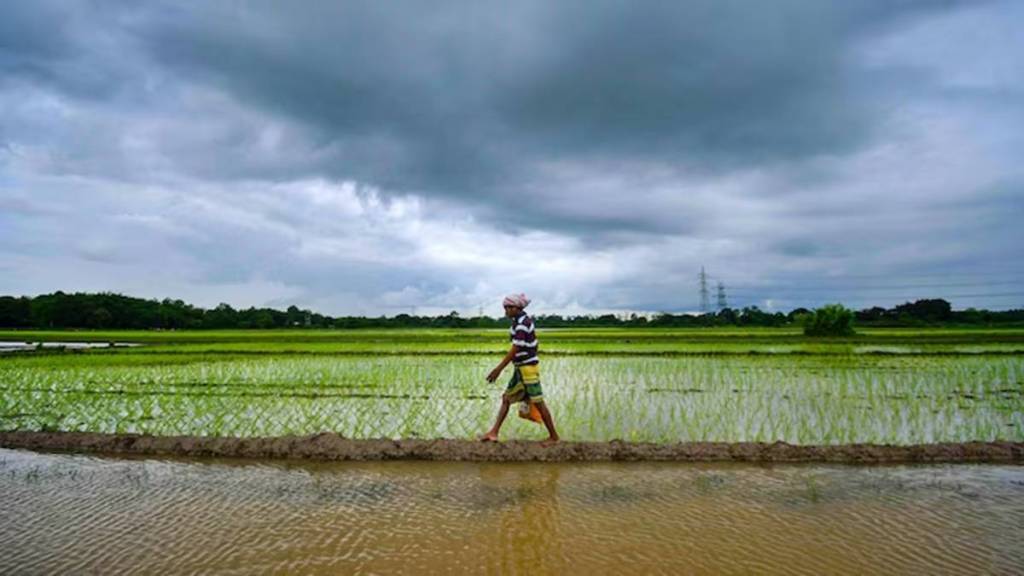

India is staring at the fallout of El Niño-induced deficient seasonal rainfall as the southwest monsoon has begun withdrawing from the country. This process commenced from western Rajasthan and is currently progressing towards northwest and central India. Later it will retreat from the south and east. The complete withdrawal is expected by October 15, days ahead of the normal onset of the northeast monsoon.
The cumulative seasonal rainfall so far has been 15% below the long period average. Fourteen states have registered a shortfall of more than 20%. With below-normal rainfall also in September, it is highly probable that the season will have an overall deficiency of 13 to 16% of the long period average, according to Global Weather Climate Analytics. This prospect is somewhat reminiscent of two back-to-back years, 2014 and 2015, which registered El Niño-driven rainfall shortfall of 12 and 14% respectively.
As a deficiency in precipitation of this magnitude entails widespread drought, it is surprising that only Karnataka and Maharashtra have so far declared that they have been hit. Maharashtra initiated formal crop-loss assessments for accessing central disaster funds. But after the chief minister visited some affected areas, 74% of the area of the state was declared as drought-hit. Timely declaration of drought conditions is necessary to ensure immediate welfare measures.
As agriculture depends on rain-fed systems, the spectre of drought is ever present due to fluctuations in precipitation although the risk is not uniform across the countryside and varies considerably based on geographies. So even if currently there is no nationwide drought, 25% of all districts show drought-like conditions based on recent rainfall trends. Interestingly, there has also been a pari passu rise in the number of districts that have experienced wet conditions.
The monsoon’s dry run and uneven spatial and temporal spread is bound to impact kharif production, although overall sown area is down year-on-year by only 1.3%. The season began on a weak note for kharif sowing with 36.5% below-normal rainfall in June. But cultivation subsequently picked up with good rains in July and early August. Southern peninsular India has shown the largest shortfall of 28%, followed by east and northeast India of 25%.
The acreage of the premier kharif crop, paddy, is down by 3.7% but yields might be hit due to water availability concerns during sowing and transplantation in southern states due to rainfall deficiency. Soya bean acreage is a tad lower but a dry spell in Maharashtra has left soya bean fields under severe moisture stress. Farmers are reportedly running tractors over their standing failed crop instead of harvesting it.
All of this underscores the critical need for region-specific strategies to mitigate drought risks due to a shortfall in rains. The government earlier had identified around 111 districts — including 20 in Maharashtra — as the most vulnerable to kharif crop damage due to El Niño-driven rainfall deficiency and drew up contingency plans.
Officials are optimistic of addressing these challenges as a lot of improvements have taken place since 2014 and 2015: more irrigation facilities, improved water management, and adoption of advanced technologies, including the growing use of climate-resistant seeds which has become a priority for agri-research and development. Progress in this regard must be stepped up considerably to insulate the vast majority of small and marginal farmers who cultivate rain-fed crops and bear the full brunt of wayward monsoons and El Niño-induced rainfall deficiency.