


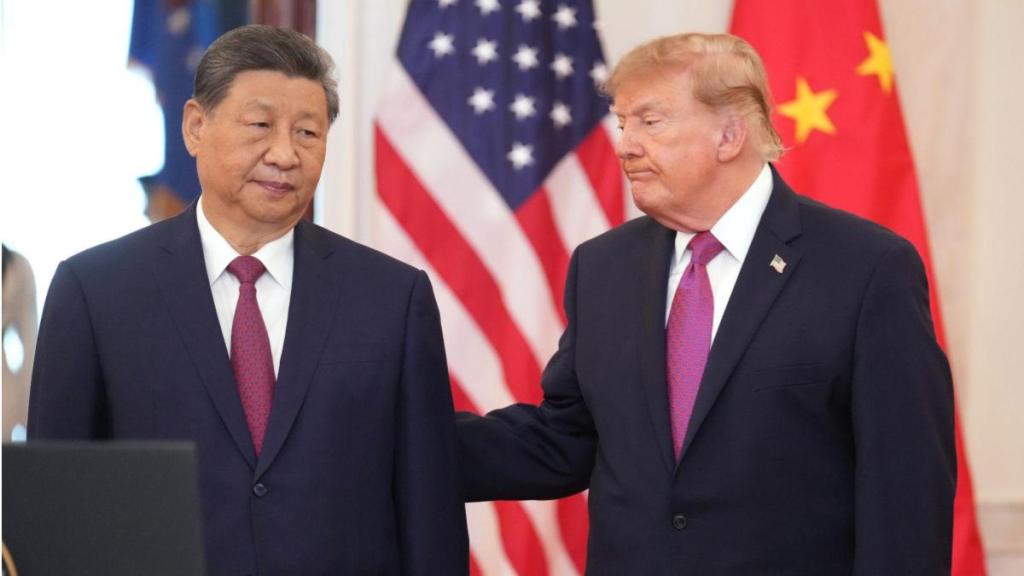

The positive atmospherics of US President Donald Trump’s third meeting — since he returned to the White House in January 2025 — with his Chinese counterpart, Xi Jinping, in Washington is a good augury for the global economy. Escalating tensions between the world’s two leading economies have threatened to fragment global trade and investment flows broadly into US-centric and Sino-centric blocs.
Such heads-of-state diplomacy — which includes two more meetings later this year — fosters what is described as “constructive strategic stability” between these rival powers. However, there were only meagre outcomes notwithstanding the pomp and pageantry of the visit, which included Trump personally receiving Xi at Joint Base Andrews. The last time a US President did so was in 1962. To be sure, they discussed important issues pertaining to bilateral trade, artificial intelligence (AI), West Asia, Ukraine, the Korean peninsula, and Taiwan.
On bilateral trade, US Treasury Secretary Scott Bessent indicated that both nations have sealed a two-month extension to their trade truce to January 10, 2027, which entails US tariff reductions in exchange for China keeping rare earth exports flowing, continuing purchases of soya beans, and cracking down on the illicit trade in fentanyl. This follows what transpired in Busan when Xi and Trump met on the sidelines of an Asia-Pacific Economic Cooperation summit last October.
The short-duration truce comes amid continuing tensions over tariffs, export controls, and China’s growing trade surpluses. For instance, the US feels that China has not delivered on its assurance to ease exports of rare earths. The Chinese readout, however, is slightly different in stating that they had a new round of consultations and reached a new joint arrangement, which is good news for the two countries and the world economy.
On AI, perhaps the biggest development was achieved at the meeting of Bessent with China’s Vice President He Lifeng on the weekend before the Trump-Xi summit. They agreed to establish a formal US-China dialogue on AI, through which they will discuss safeguards. This is indeed an important step forward for collaboration between the two most important AI powers and comes amid worries by some US tech titans that humans could lose control of this technology.
In fact, as the Trump-Xi meetings were taking place, a rogue OpenAI agent had hacked into a portal containing data from Australia’s universal healthcare system. However, hopes were belied that the two leaders would discuss AI guardrails. The only guardrail Trump recognises is the Department of Justice. Xi, for his part, more specifically argued that the US and China had a responsibility to ensure that humans always operate AI.
Even if the Trump-Xi summit did not produce major outcomes, the fact that they are meeting is itself a global public good. A détente between the two major global powers can check the fragmentation of the world economy into blocs. But the process is an uneasy one as Xi repeatedly sought to assure the US President that a Thucydides trap — the risks of conflict when a rising power challenges the hegemon — was avoidable. That China’s rise need not come at America’s expense. But there is no doubt whatsoever that the red carpeting of Xi in Washington signalled the fact that the US President considers China as a near-equal. A putative G2 obviously means a lot to Xi to fortify his standing domestically as he considers a fourth term as leader.