




Amid increasing tension surrounding national security, immigration checks, and clashes between federal authorities and local communities, American nationals and residents are left grappling with a growing sense of unease.
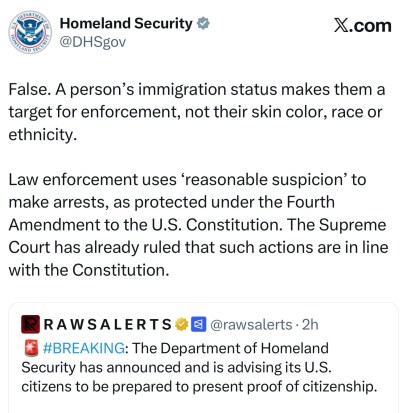
One of the latest developments in this ongoing situation is the Department of Homeland Security (DHS)’s request for Americans to carry proof of their citizenship at all times, especially in the event of immigration raids or operations.
What makes someone a suspicious target?
According to the DHS, a person’s immigration status makes them suspicious and a possible target for scrutiny in the eyes of law enforcement.
“[It is not their] skin colour, race or ethnicity [which raises eyebrows]. Law enforcement uses reasonable suspicion to make arrests as protected under the Fourth Amendment to the US Constitution. The Supreme Court has already ruled that such actions are in line with the Constitution,” the DHS said in a X post.
Is DHS’ request for proof of citizenship legal?
Legally, the only time US citizens must show proof of citizenship is when they are entering the country or when they are applying for certain jobs for which it is a requirement, Ahilan Arulanantham, professor and co-director of UCLA School of Law’s Center for Immigration Law and Policy, told NBC Los Angeles.
If a law enforcement officer approaches someone on the street and has no reason to believe that person has committed a crime, he or she has no obligation to show any identification, he added.
In the United States, most individuals do not have to carry identification, Arulanantham said. One exception, of course, is when you are driving, and then you need your driver’s license. Another applies to some undocumented immigrants whom President Donald Trump’s administration has required to register with the government.
Is there a national registry for US citizens?
There is no national registry of US citizens. However, citizens are enrolled in the Social Security system, which was established in 1935. This system offers various benefits, including retirement, disability, and survivor benefits, but does not function as a national ID registry.