



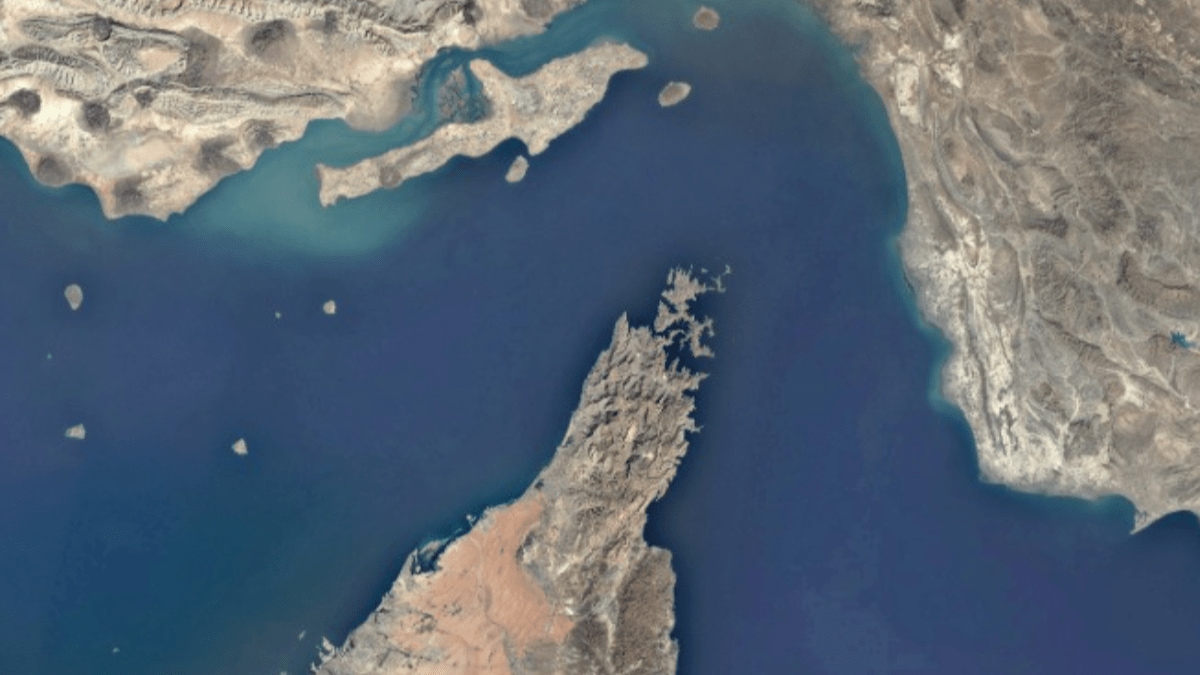
As Iran holds “make-or-break” talks with the US, senior officials in the Islamic Republic face a peculiar problem: the mines laid to choke the Strait of Hormuz have gone “missing.”
According to the New York Times, US officials report that poor mapping and drifting devices have made a quick return to normal shipping unlikely. This complication is a primary reason the Iranian regime has struggled to comply with the Trump administration’s demands for an immediate reopening of the waterway.
The mines were deployed via small boats last month, shortly after the conflict between the United States, Israel, and Iran began. This haphazard mining has reduced vessel traffic to a trickle, driving oil prices above the $100 mark and providing Iran with significant, albeit dangerous, leverage.
The development has slowed the number of oil tankers and other vessels passing through the strait to a trickle, driving up energy prices and providing Iran with its best leverage in the war. The development of the narrow mouth of the Persian Gulf, through which 20% of all oil and natural gas traded once passed, pushed oil prices above the $100-mark.
Iran shares map of sea mines in Hormuz amid ceasefire
Earlier this week, the chart of the Strait of Hormuz released by the ISNA news agency, as well as Tasnim, which is believed to be close to the Guard showed a large circle marked “danger zone” in Farsi over the Traffic Separation Scheme – a route ships take through the strait.
The chart suggested travel further north through waters closer to Iran’s mainland near Larak Island. Notably, some ships were observed to be taking this route during the war.
Iran is learnt to have mined the strait haphazardly, and even the Islamic Revolutionary Guards Corps is not clear where it put every mine. Some of the mapped mines have drifted, making it further difficult for officials to locate them.
As per New York Times report, the US military lacks robust mine removal capabilities, and relies on littoral combat ships equipped with mine sweeping capabilities. Iran, on the other hand, does not have the capability of quickly removing mines, even the ones it planted.
Strait of Hormuz Traffic for 10 – 11 April; Iran's proposed traffic scheme; US Destroyer Appearance? pic.twitter.com/15ewjWFzkN
— Sal Mercogliano (WGOW Shipping) 🚢⚓🐪🚒🏴☠️ (@mercoglianos) April 11, 2026
This became clear when Iranian foreign minister Abbas Araghchi referred to “technical limitations” while reacting to US President Donald Trump‘s Truth Social post calling for “COMPLETE, IMMEDIATE, and SAFE OPENING” of the Strait of Hormuz.
The issue is most likely to be discussed as Araghchi holds ceasefire talks with US Vice President JD Vance in Islamabad.
First India-flagged LPG tanker crosses Strait of Hormuz since ceasefire
The Hormuz disruption has proved extremely challenging for India, which, as the world’s third-largest energy consumer and fourth-largest gas user, imports about 88 per cent of its crude oil, around half of its natural gas needs and nearly 60 per cent of its liquefied petroleum gas (LPG) requirement, underscoring its dependence on overseas supplies.
Even though the government has arranged oil and gas from other export markets like Russia to meet the energy demands in the country, the conflict in West Asia, through which about 40 per cent of gas and up to 85-90 per cent of LPG shipments come from Gulf countries, has put pressure on the government reserves amid oil price volatility.
Despite the pressure, India-bound ships have been making way through the strait with Iranian assistance at regular intervals.
The India-flagged LPG vessel Jag Vikram has safely crossed the Strait of Hormuz today. The vessel is carrying approximately 20,400 MT of LPG cargo with 24 seafarers onboard. It is expected to arrive at Mumbai on 15 April 2026: @PetroleumMin pic.twitter.com/V78YG2jslo
— DD News (@DDNewslive) April 11, 2026
On Saturday, India-flagged liquefied petroleum gas (LPG) tanker, Jag Vikram, crossed the Strait, marking the first such transit by an Indian vessel since a temporary two-week ceasefire was announced, according to ship-tracking data.
The tanker moved through the strategic waterway between Friday night and Saturday morning and was located in the Gulf of Oman, east of the Strait on Saturday afternoon, proceeding eastwards.
Jag Vikram is the ninth Indian vessel to exit the Persian Gulf since early March, while about 15 India-flagged ships remain in the region, awaiting passage.
Owned by Mumbai-based Great Eastern Shipping Company, Jag Vikram is a mid-sized gas carrier with a deadweight capacity of over 26,000 tonnes. Trade sources estimate it could be carrying around 20,000 tonnes of LPG.