



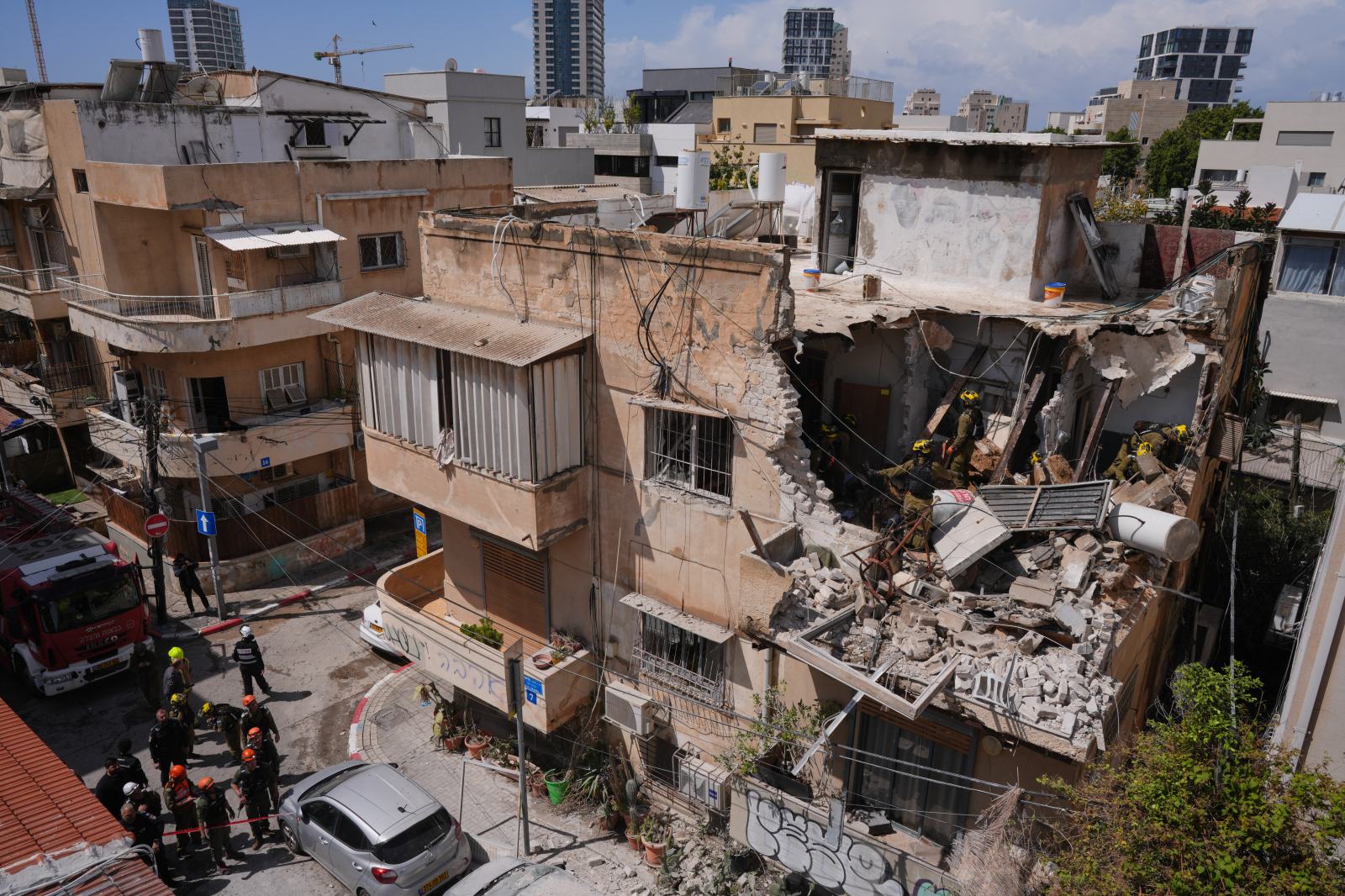
Air raid sirens have rung repeatedly across Israel over the past few hours amid a barrage of Iranian missile strikes. Nearly 200 people were left injured on Saturday night as Tehran hit areas close to the country’s main nuclear research centre. Subsequent strikes have left sirens blaring every few minutes — with a top Iranian official insisting that Israeli skies were now “defenceless”.
“If the Israeli regime fails to intercept the missiles in the highly protected Dimona area, it is operationally a sign of entering a new phase of the battle: Israel’s skies are defenceless. As a result, it seems the time has come to implement the next pre-designed plans,” Iranian Parliament Speaker Mohammad Bagher Ghalibaf wrote on X.
The incident has raised questions about “saturation” tactics and the depletion of interceptor stockpiles as the war enters its fourth week. The Israeli military has since launched an investigation to understand why its air defence systems failed to intercept the missiles. The Home Front Command launched a parallel inquiry into the circumstances of the impact.
“The air defence systems operated but did not intercept the missile. We will investigate the incident and learn from it. This is not a special or unfamiliar type of munition,” the IDF spokesperson Brig Gen Effie Defrin posted on X.
Posts shared by the military on X indicate the air defence systems currently working to intercept multiple waves of Iranian missiles. But officials confirmed that strikes and casualties have been reported from north and central Israel on Sunday afternoon.
Are Israeli missile interceptions failing?
Multiple theories have circulated about the strikes in Dimona and Arad — with many wondering if air defences across the Middle East were being depleted in the face of relentless strikes from Iran. According to reports, Tehran has been using drone ‘swarms’ to exhaust air defence batteries before firing heavy ballistic missiles. The strategy creates asymmetric attrition by pitting relatively low-cost missiles against the sophisticated air defence systems used by the United States and its regional allies. An unsustainable ‘burn rate’ can lead to economic strain and deplete crucial interceptor stockpiles.
Israeli authorities have insisted that the two strikes on Sunday night were unrelated technical errors that just happened to occur in the same geographic area. The Air Force has denied a ‘systemic failure’ but continues to probe the matter.
Iran has increasingly begun outfitting its ballistic missiles with cluster munitions in a bid to pierce Israel’s sophisticated air defences. Such weapons have long been a part of the Israeli arsenal but a relatively new feature for Tehran. Cluster munitions are significantly harder to intercept and cause more widespread shrapnel damage. One of Israel’s leading missile defence experts — Dr Uzi Rubin — recently told The Media Line that a ballistic missile carrying a cluster warhead must be intercepted before the payload opens to release its submunitions.
“It’s a bomb which contains, instead of one big barrel of explosive, it contains a lot of small bomblets. They can contain anywhere from 20-30 bomblets to 70-80 bomblets, depending on the type of missile. After the cluster has opened, it’s too late. But anyway, even if there’s not a cluster, a unitary bombhead, a barrel, below a certain altitude, you cannot intercept it anymore. It’s too late,” he said.