



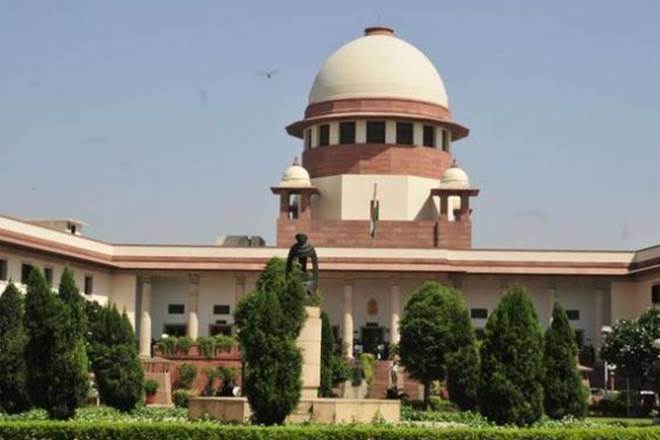
The Centre on Thursday told the Supreme Court that Parliament can bring in an amendment to “clarify its real intention” if it finds that the apex court’s decision does not reflect its original intention regarding certain provisions in the Arbitration and Conciliation Act 1996.
The apex court, which reserved its judgment on the issue on Thursday, was hearing three petitions which alleged that Section 87 of the Act was in conflict with the Insolvency and Bankruptcy Code 2016. Opposing various petitions, including one by Hindustan Construction Company (HCC), challenging the government’s decision to bring in an amendment by inserting Section 87 in the Act, Attorney General KK Venugopal told a Bench led by Justice RF Nariman that there is no substance to the claim that the provision inserted by the 2019 Amendment Act was arbitrary as it created two classes. According to Venugopal, the insertion of Section 87 clarified the true intention of Parliament.
Section 87 provides that for all arbitral proceedings which commenced prior to October 23, 2015, there shall be an automatic stay of the arbitral awards when challenged under Section 34 of the 1996 Act. Citing the SC’s judgment in the Goa Foundation case, the AG contended that where the judgment is purely declaratory the courts will lean in support of the legislative power to remove the basis of the judgment even retrospectively, paving the way for a “restoration of the status quo ante”.
“It is open to Parliament, if it finds that a view expressed by the apex court does not reflect its original intention, to clarify its real intention through an amendment to the Act. Again, in such a case, no question arises of passing a validating Act to neutralise any action or law which had earlier been set aside by a court,” the government said, while emphasising that Section 87 must be held to be constitutionally valid.
The AG further argued that the fixation of cut-off date is inevitable in every case, he added. The stand came in response to the Bench’s earlier observation that the government has “put the clock back” as the new provision nullified the effect of its earlier judgment (BCCI v. Kochi Cricket) that decided the prospective application of automatic stay provision in the Arbitration Act.
“…The world over this 2019 Act is being criticised. India cannot become a hub of arbitration if you go like this,” Justice Nariman had observed during one of the hearings. The SC had asked the Centre and NHAI as to why they should not be asked to pay arbitration award dues of Rs 6,070 crore to Ajit Gulabchand-led HCC, which is
facing insolvency proceedings before the National Company Law Tribunal.
Senior counsel AM Singhvi, appearing for HCC, argued that due to automatic stay, the award holder may become insolvent by defaulting on its payments to its suppliers. The judgment debtor who obtains automatic stay may become insolvent under IBC, and the award holder being an operational creditor would be deprived of the fruits of the award forever resulting in its insolvency, he added, while alleging that the retrospective resurrection of automatic stay is “absurd” and “arbitrary”.
This amendment “clearly creates an imbalance” and the arbitration Act and IBC need to be harmoniously construed to protect the rights of a company which is facing the wrath of inconsistent enactments that is leading to divergent and devastating outcomes, Gammon Engineers & Contractors, one of the petitioners, had argued.