



I have known Vivek Rau since we were boys. One of the recurring experiences of knowing him is watching the broader industry slowly rediscover conclusions he reached years earlier. And it does, but slowly, partially, and with considerable confusion about what it has found.
A decade before the artificial intelligence (AI) industry convinced itself that it had invented the problem of human-machine division of labour, Rau sat down and wrote something quietly radical. His contribution was Chapter 5 of Google’s Site Reliability Engineering book, published in 2016 and titled, without drama, Eliminating Toil . It is the shortest chapter in the book. I heard recently that it has been more influential than I ever knew. This is entirely consistent with how Rau has always operated: saying the precise thing, once, and moving on.
Rau’s argument, stripped to its spine, is this: if a human operator needs to touch your system during normal operations, you have a bug. The repetitive, manual, automatable work that accumulates around any production system — he called it toil — is not merely inefficient. It is a category error. The fix is to engineer the toil away and redirect human capability upstream, into design, architecture, and the kind of judgement that machines cannot replicate.
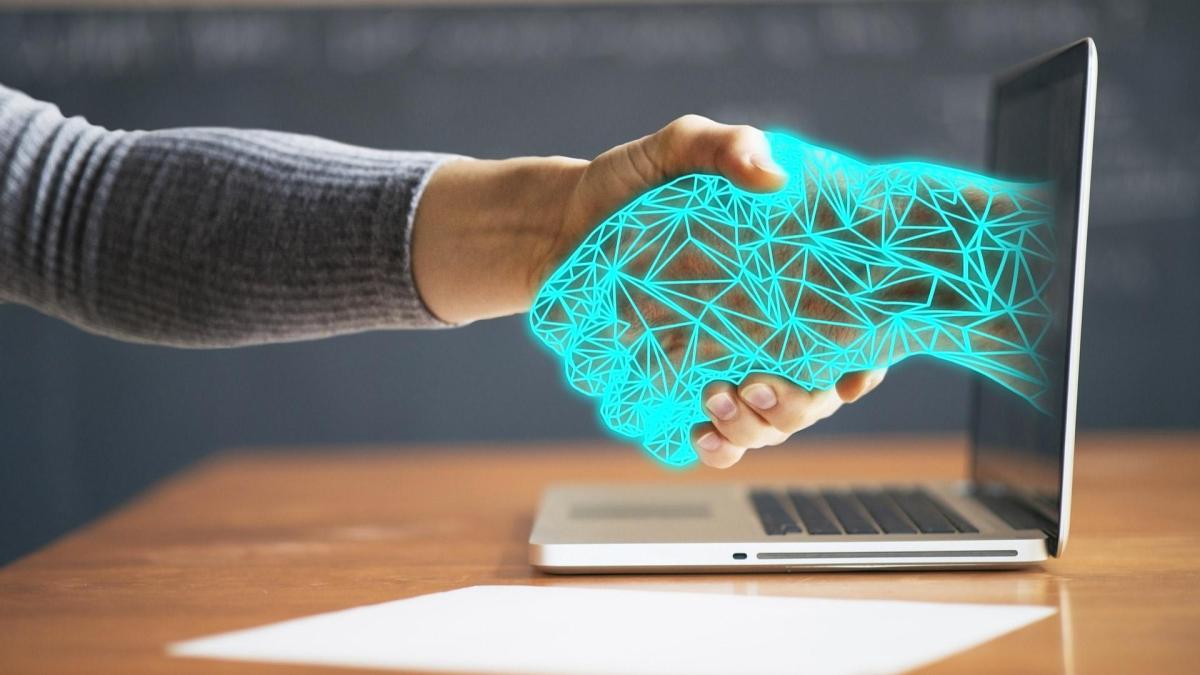
I have been writing about trust, accountability, and the changing architecture of economic systems for some time now. Reading Rau — and I confess I read him with the slight unfairness of someone who has known him since childhood — I find that he arrived, from a very different direction, at precisely the same destination. In what I have called the shift from soft to hard trust — where we move from trusting humans to trusting AI algorithms — the central move is identical to Rau’s. Execution becomes automated. Judgement migrates upstream. Rau framed this as an engineering discipline. I have been tracking it as an economic phenomenon. The underlying logic is the same.
Gaps in the Machine
Where it gets uncomfortable is in the gaps that Rau’s original framework did not need to address in 2016, but that have become impossible to ignore now.
The first is what I have elsewhere called the expertise paradox. Rau’s model assumes a capable engineer at the top of the chain: someone who can identify toil, design the automation correctly, and verify the system behaves as intended. This assumption is load-bearing. But as AI proliferates and the scope of automation expands far beyond trained reliability engineers, the assumption quietly fails. Take a product manager who uses a generative agent to draft a clause: if the model invents a non-existent GST exception and the manager lacks legal or tax training, the clause can be accepted wholesale. The automation executes and the error travels. We will have automation, but we are not reliably reproducing the expertise.
Then there is accountability. Rau worked within Google, where the question of who answers when something goes wrong had a clear answer. This is also true of countless other corporations in today’s world where accountability was built into the hierarchy even as execution was automated. But the Decentralized Automated Organization or DAO, the autonomous agent, the smart contract — these structures have inherited the automation without inheriting the accountability. The Beanstalk attack drained $182 million from a decentralised protocol using nothing but its own governance rules. The code worked as designed. There was just no one accountable when it failed.
Hollowing the Pyramid
The third problem most directly threatens the one industry built on the opposite of Rau’s logic. Generative AI is hollowing out the base of Indian IT’s delivery pyramid — the large cohort of junior engineers doing work that is, in Rau’s precise taxonomy, manual, repetitive, automatable, and devoid of enduring value. Rau would have automated it without hesitation.
But the pyramid was not only a delivery mechanism. It was a training ground. Remove the toil, and you remove the apprenticeship. Remove the apprenticeship, and you remove the masters. You cannot replace a thousand junior engineers with a model and expect the senior judgement to reproduce itself a decade later when there were no juniors to grow into seniors to begin with.
None of this diminishes what Rau built. Toil is one of the more useful analytical categories the technology industry has produced, correctly identifying where human capability is most valuable: not in execution but in design, not in repetition but in judgement. Rau identified this cleanly, a decade before it became the central anxiety of the industry. He saw the load-bearing structure of a problem. Others are still arguing about the furniture.
The problem is that insight, like most good ideas, will be generalised beyond its conditions. We will take up the automation and leave the expertise as optional. We will keep the toil elimination and discard the accountability structure. Rau’s formulation was precise: if a human operator needs to touch your system during normal operations, you have a bug. But the necessary corollary is that someone still needs to be able to find the bug. And without expertise, no one will, even if they are diligently looking.
We have built the capacity for large-scale automation. But we have not yet made sure the understanding stays secure. In that gap lies most of what will go wrong in the next decade. Rau saw the first half clearly. The second half is the harder problem, and it is the one we are only beginning to see.