



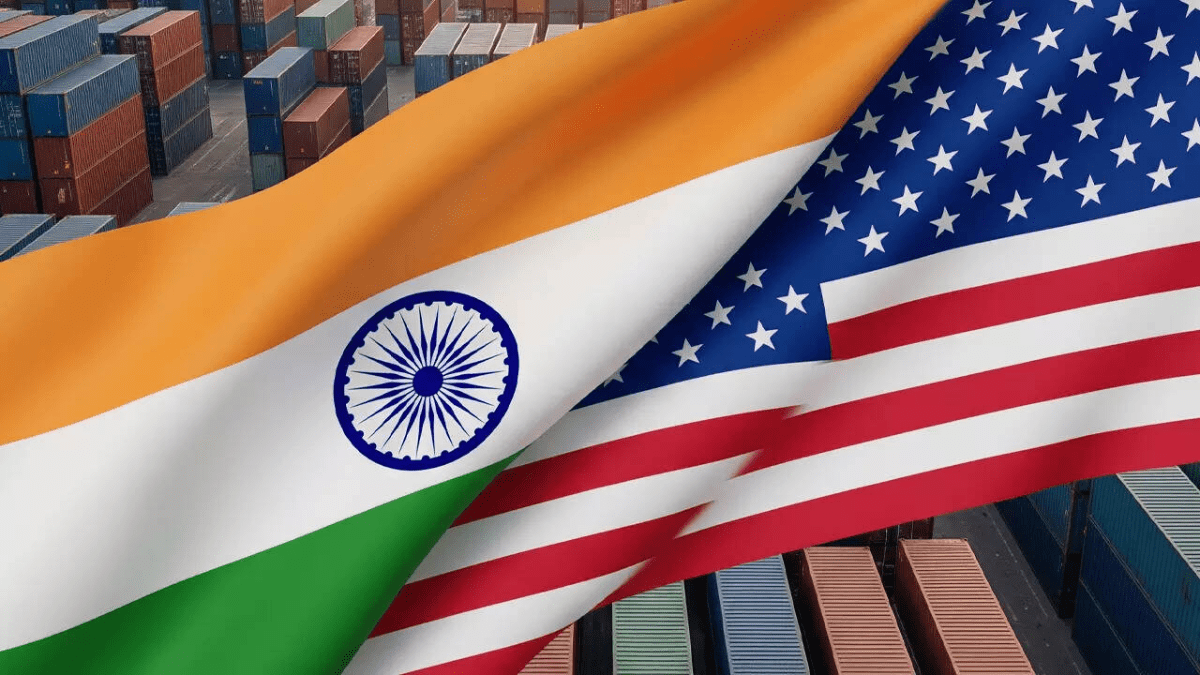
An interim Indo-US trade deal still appears a work in progress although there is optimism on both sides that it is within a single percentage point of being finalised and that only “small issues, commas, and full stops” — to borrow an expression of Commerce and Industry Minister Piyush Goyal — remain to be addressed.
US President Donald Trump, too, has expressed confidence that the US and India would reach an agreement even as he reaffirmed his friendship with Prime Minister Narendra Modi. Both sides wrapped up the second in-person round of “constructive and positive” discussions to clinch the deal but critical gaps still need to be bridged. Goyal, however, is bullish that this deal will be among the nine trade pacts that the ruling dispensation has negotiated since 2014 that will come into effect over the next nine to 10 months.
From India’s standpoint, the tariff architecture of the putative deal is the gap that needs to be bridged. Trump slapped one of the highest reciprocal plus penal tariffs (25% + 25%) on India for buying Russian oil. But in a framework agreement on February 2, the US agreed to reduce reciprocal tariffs from 25% to 18% and remove the penal rate for buying Russian oil.
In return, India undertook to reduce tariffs on US industrial and agricultural products with firm red lines on not allowing genetically modified maize and soya bean and dairy items. Later in February, Trump’s reciprocal levies were invalidated by the US Supreme Court. He then imposed a 150-day uniform tariff of 10%, which expires on July 24. To retain leverage in trade negotiations, the United States Trade Representative (USTR) has launched investigations under Section 301 of the Trade Act of 1974.
Statutory Moving Target
Uncertainties on tariffs surfaced despite the US’s reported pressure on India to accept a package locking in levies that were agreed to in a framework deal on February 2. While the bilateral trade talks were underway, the USTR proposed an additional 12.5% duty on India and 43 other countries on the grounds that their exports contain inputs produced by forced labour. India contests the legal basis of these investigations although it remains engaged with the US on this matter as part of Section 301 proceedings. There is also a second investigation on excess capacities. Clinching an early interim trade deal with 18% tariffs might have been acceptable to us if there were assurances that penalties will not be added after Section 301 investigations. Indications are this was not forthcoming as also addressing India’s concerns for a relative tariff advantage over its Asian competitors.
$500 Billion Prize
Bridging the gaps should be possible in the weeks ahead considering the optimism on both sides to clinch the trade deal. After the agreement kicks in, doubling bilateral trade to $500 billion by 2030 can easily be achieved. There is a vast upside as current two-way flows of goods and services at $241.5 billion constitute just 3.1% of the US’s global trade. So, too, on the investment front as US investments in India at $58.5 billion are just 0.8% of its global investments. Trade flows are bound to surge with America’s deepening engagement with India on investments and technology. In the post-World War II era, Japan, South Korea, and China prospered by exporting to America. India must go all in to ensure a similar outcome as it has ambitions to become a more developed nation.