



By Ashok Gulati, Distinguished Professor, ICRIER
The world heaved a sigh of relief as a two-week ceasefire was announced by President Donald Trump just hours before his deadline threat of “A whole civilization will die tonight, never to be brought back again.” One can only hope that there is a lasting solution to the deadly conflict between Iran and Israel-US and civilians are spared from death and destruction.
What is the learning for India from this conflict, as well as the one between Russia and Ukraine? The world is heading towards greater uncertainty and more instability. Against this backdrop, the first and foremost task for the Indian government is to ensure food security; but that cannot be achieved unless India secures its fertiliser supplies. Natural farming, though desirable as a niche market, cannot feed India.
High Cost of Dependence
India’s import dependence for chemical fertilisers (including their feedstocks) is roughly to the tune of 70%. Take for example the case of urea. India consumes roughly 40 million tonnes (MT) of urea, of which about 10MT is imported. But even the 30MT produced domestically is dependent on imported gas to the tune of almost 85%. During this 40-day war, global urea prices were up by almost 65%, up from $482/tonne towards the end of February to $795/tonne in the first week of April.
Similarly, gas prices (Liquified Natural Gas, LNG) went up from $12/Metric Million British Thermal Unit (MMBtu) to $19.5/MMBtu over the same period—an increase of 63%. This is the biggest hit to India, on top of not getting enough supplies from the Strait of Hormuz. Realising this, the Cabinet has already approved higher subsidy on urea, indicating that its price may not be increased for the farmers.
Even prices of phosphatic fertilisers are increasing, although not to the same extent as prices of urea and LNG are. Diammonium phosphate (DAP) rice, for example, has gone up from $627/tonne to $720/tonne—an increase of about 15%. But getting DAP, phosphate rock, or phosphoric acid from the Gulf countries, especially Saudi Arabia, is becoming increasingly difficult.
Beyond Subsidies
What should Indian policy makers do? Union Minister for chemicals and fertilisers JP Nadda has been on record stating that it is known that farmers need two bags of urea for their crops, but are availing of four. It clearly indicates that the government is aware that urea is being overused when compared to phosphatic and potassic fertilisers, and/or there is significant diversion of urea for non-agricultural uses or even to neighbouring countries.
Given that urea in the country is being sold at less than $70/tonne to the farmers when global prices are touching almost $795/tonne, it leads to inefficient use and opens up opportunities for large arbitrage in diversion. Why can’t the government indicate that given the difficulty in procuring gas and urea as well as the major increase in their import prices, there will be a cut of 10-15% in supplies for each state? States can be asked to work out the modalities—how they want to allocate restricted supplies to farmers based on their land records, crops grown, previous sales, and recommended doses by state agriculture universities. This quantitative rationing of urea under the Essential Commodities Act is very much possible and desirable to ensure better utilisation of nitrogenous fertilisers. This exercise needs to be conducted jointly by the Centre and the states.
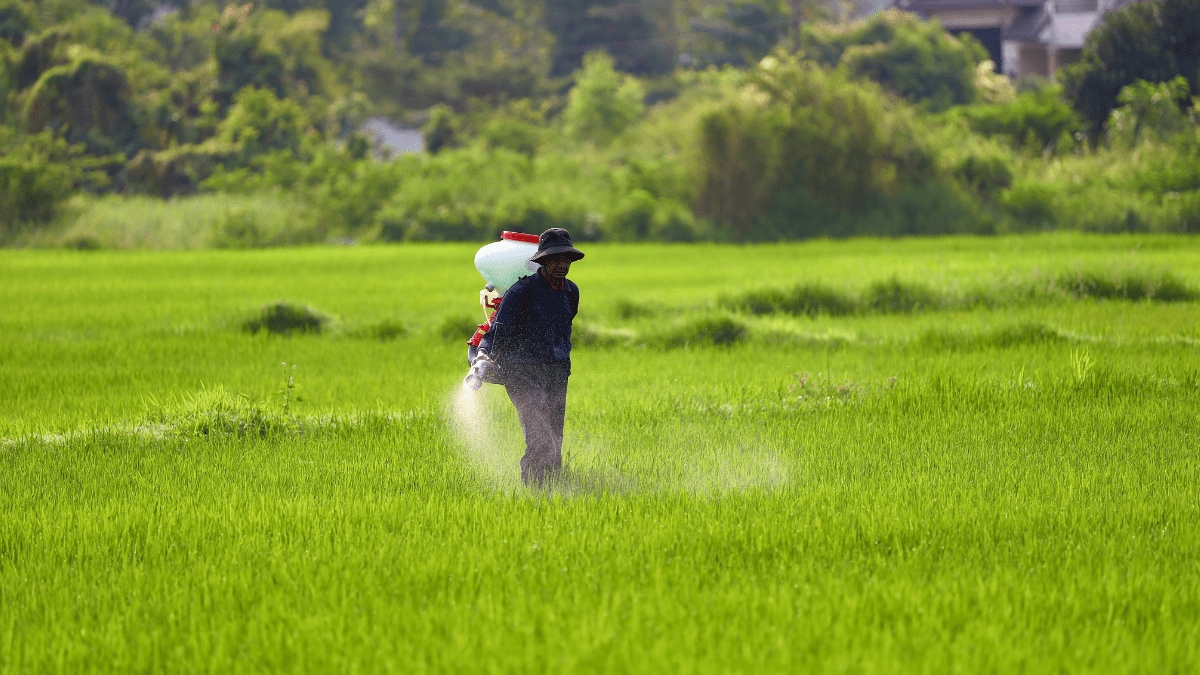
It may be noted that granular urea, the way it is being applied in India, has a very low Nutrient Use Efficiency (NUE), roughly 35-40%. The plant does not consume more than 40% of nitrogen being applied. The rest is going in the environment as nitrous oxide, which is 273 times the carbon dioxide, or leeching into groundwater and increasing its nitrate content, causing blue baby syndrome, thyroid, or even diabetes. It is ironic that liquid urea (N) is not subsidised, even as its NUE is almost 90% through drip irrigation (fertigation). This indicates a highly irrational urea pricing policy. The prime minister’s efforts to promote natural farming cannot really scale up unless fertiliser pricing or quantities are rationalised.
Union Minister for agriculture and farmers’ welfare Shivraj Singh Chouhan has stated that direct cash transfers to farmers equivalent to fertiliser subsidy would be preferrable. But when will this happen, and how will the issue of tenants vis-a-vis cash transfers be resolved? The PM-KISAN scheme suffers from this lacuna and the most vulnerable section of peasantry—the tenants—remains devoid of this scheme. Why not consider clubbing the PM-KISAN money and fertiliser subsidy and directly giving that to farmers (landowners and tenants) on a per acre basis, freeing up prices of fertilisers? It can be done and would be most desirable. But it needs due preparation to identify real cultivators. The PM needs to prioritise this issue as the gains would be very significant.
DAP supply is another issue. If India is already using urea (N) in excess in relation to phosphorus (P) and potassium fertilisers, why put 18% N even in DAP, which has 46% P? Why not simply use Triple Super Phosphate (TSP) with 46% P? We have no plant in the country producing TSP, but we have more than 100 plants producing Single Super Phosphate (SSP) with only 16% P. Why not incentivise the production of TSP at home or in collaboration with phosphate-rich countries? The bottom line is that we need to increase consumption of P in relation to N, and the best product for that would be TSP in place of DAP. It will also help the government to save at least 18% N while also cutting down the subsidy bill on urea.
To sum up, the government needs to reform the fertiliser policies either through the direct benefit transfer route or by rationing quantities. Only then it can reduce its misuse and diversion as well as ensure food security.