



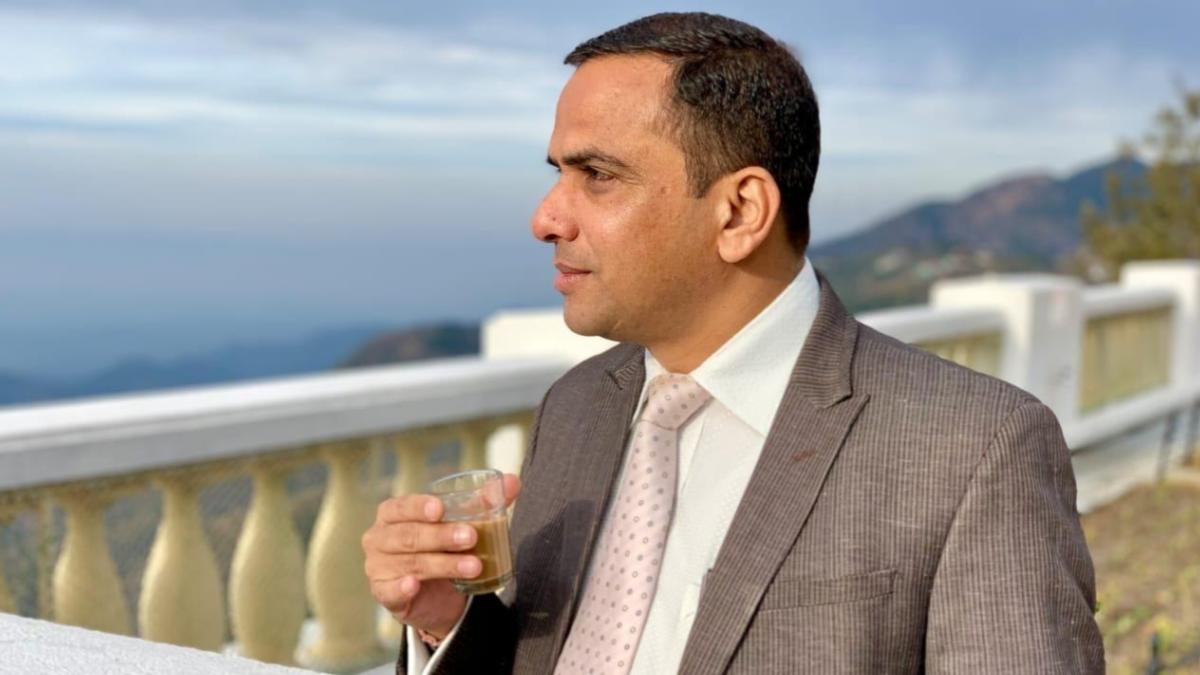
Recently, I shared the story of Naresh, a man who never touched the stock market directly and still built a Rs 3 crore retirement. Grijesh Agal is his mirror image. He went all in on equity mutual funds. He made the classic mistake almost every investor makes. But he got wealthy anyway by just being disciplined.
Not because he timed anything right. He did not. In 2008, with his portfolio down sharply, he panicked and stopped his SIPs. It took him three years to find his way back.
What happened after that comeback is the real story. Since restarting his SIPs in December 2011, Grijesh has not redeemed a single rupee. Today his mutual fund investments of about Rs 1.34 crore have grown to nearly Rs 2.78 crore, a gain of around Rs 1.44 crore at roughly 14% CAGR by his own account. Add three Ahmedabad flats valued at around Rs 2.4 crore, direct stocks of about Rs 38 lakh, roughly 200 grams of gold worth around Rs 25 lakh at current prices, and his LIC, PPF, NPS and fixed deposits, and his total assets comfortably cross Rs 6 crore.
The most expensive thing he ever did was stop. The most profitable thing he ever did was refuse to stop again.
From Udaipur to Ahmedabad: The cultivation of a financial mindset
Grijesh grew up in Salumbar, a tehsil in Rajasthan’s Udaipur district, one of four siblings in what he called a humble middle-class family with struggling finances, when he spoke to the Financial Express Digital exclusively. Both parents were government school teachers. Money was saved, never invested, and rarely discussed.
Armed with a B.Pharma degree and later an MBA in sales and marketing, he cleared a walk-in interview and started as a medical representative in Udaipur. He started in June 1998, at a salary of Rs 2,500 a month. Nothing in that beginning suggested crores. But wait for it…
The city that rewired his money mindset
The turning point according to Grijesh was not a stock tip. It was his wedding and a relocation. Grijesh married in 2001, and since his wife was building her career in Ahmedabad, he moved there in 2004 after taking up a new pharma sales role in the city.
Ahmedabad did to him what no classroom could. Surrounded by businessmen, doctors and senior managers who spoke about equity the way others spoke about cricket, he heard something for the first time. “Stocks mein paisa banta hai,” he recalled with a laugh. He also learnt, to his surprise, that buying shares needed something called a demat account.
His first taste of investing was a lump sum of Rs 50,000, routed through a local Ahmedabad investment firm. Until then, his only investment was an LIC Jeevan Shree policy bought in 2002. That changed in 2006, when a former pharma colleague, Ankit Ajmera, quit his job to become a mutual fund distributor and explained SIPs to him in one simple pitch. Small monthly amounts. Flexible. Historically better returns than a fixed deposit. And a rule of thumb he still follows: 100 minus your age should be your equity allocation.
The 47% commitment: Stress-testing a Rs 15,000 salary
Now this is the most important number for me at least, in the entire story. In 2006, Grijesh was earning Rs 15,000 a month. He put a Rs 20,000 lump sum into a mutual fund and started SIPs of Rs 7,000 a month. That is 47% of his gross salary going into equity funds, from a man with a home loan, a car loan and two small children.
Let me be honest, it was nothing short of brave on his part. It was also fragile, and 2008 crash exposed that. The Sensex lost more than half its value that year, and midcap funds fell even harder. Grijesh says his own investments were down by around 70% at the worst point.
“I already bought a flat and had two kids. My salary was less, and the EMIs and a growing family made me worrisome,” he says. He stopped every SIP. A mistake many Indians repeated in that crash, and again in 2020.
The step-up strategy: Tying SIP growth to career velocity
In 2009, Grijesh moved to Eris Lifesciences, then a newly launched pharma company, as a Regional Manager. His annual CTC jumped to Rs 6 lakh, and the monthly surplus gave him two clear priorities. To kill the debt and restart the investing.
He prepaid his home loan in October 2010 and closed his car loan soon after. In December 2011, debt-free, he called the same distributor and restarted the same Rs 7,000 SIP across three equity funds. Then, as promotions came, he did the one thing that separates good SIP investors from great ones. He stepped up.
| Year | Monthly SIP | What changed |
| 2006 | Rs 7,000 | Started SIPs; stopped during the 2008 market crash |
| 2011 | Rs 7,000 | Restarted SIPs after becoming debt-free |
| 2014 | Rs 15,000 | Promoted to Sales Manager |
| 2016 | Rs 30,000 | Promoted to National Sales Manager |
| 2019 | Rs 50,000 | Annual CTC crossed Rs 21 lakh |
| 2022 | Rs 57,000 | Foreclosed second home loan; redirected EMI towards SIP |
Look at what that ladder really did. His SIP grew eight times in eleven years, from Rs 7,000 to Rs 57,000, roughly tracking his income. Most investors set an SIP once and forget it for a decade. Grijesh treated every promotion as a trigger. The hike arrived, the SIP went up, and lifestyle got whatever was left. That sequencing, income first to investing and then to spending, is the same “invest first” rule the Oracle of Omaha Warren Buffett always advocated for.
Plugging the leak: Why idle cash is an investor’s worst enemy
By 2016, Grijesh was National Sales Manager at Eris, back in Ahmedabad. That year he sat down with his distributor for a detailed portfolio review after nearly five years. The news was sobering. His portfolio was compounding at only around 8%, partly the scar of that 2008 exit.
The bigger discovery was elsewhere. Nearly Rs 25 lakh was sitting idle in his savings account, earning next to nothing. On his adviser’s push, he deployed the entire amount as a lump sum into diversified equity funds, including DSP Midcap and what is today Mirae Asset Large Cap, and doubled his SIP to Rs 30,000. It is a trap most salaried Indians fall into. The SIP runs dutifully while lakhs sleep in the bank. Fixing that one leak changed the trajectory of Grijesh’s wealth.
Three flats, one method
His first property came in 2005 was a modest 2 BHK in Ahmedabad bought for Rs 5 lakh, funded with a Rs 4 lakh loan and an EMI of Rs 7,000. Notice that number. In 2006, his EMI was Rs 7,000 and so was his new SIP, on a Rs 15,000 salary. Nearly everything he earned was building something. He closed that loan by 2010, and he says the flat is worth around Rs 50 lakh today.
Real estate ran as a parallel track, handled with the same practicality. In 2015 he booked a 3 BHK at a prime Ahmedabad location with a 20% down payment of Rs 8 lakh, on an EMI-after-possession offer. When he moved in after possession in 2017, he rented out his first flat, and that rent covered half the new EMI. With home loan rates then around 9.4 to 10%, he prepaid the Rs 36 lakh loan aggressively every year. Expensive debt was attacked. Cheap compounding was left alone.
The third flat came full circle in February 2026: another 3 BHK, bought for Rs 88 lakh, this time without stretching.
The Covid-19 stress test: A lesson in emotional discipline
Then came a time we all remember. March 2020, which was a meeting for Grijesh with his own worst instinct. His portfolio of around Rs 90 lakh crashed to Rs 65 lakh in weeks. “I was tempted to withdraw all mutual funds and go into safe investments,” he admits. This time, he did nothing of the sort. The SIPs continued through the panic. Discipline drove him to do this.
He was in rare company. AMFI data shows monthly SIP contributions across India sank to Rs 7,302 crore in November 2020 as investors paused or stopped in large numbers. Grijesh had already paid the price of stopping once.
So, this time instead of selling, he used the uncertainty productively, foreclosing his second home loan of Rs 20 lakh in October 2020 from savings and a surrendered ULIP. The freed-up EMI went straight into a bigger SIP of Rs 57,000.
The enviable results
| Asset (as shared by Grijesh) | Value |
| Mutual funds (Rs 1.34 crore invested) | Rs 2.78 crore |
| Direct stocks | Around Rs 38 lakh |
| LIC Jeevan Shree (matures Feb 2027) | Around Rs 20 lakh |
| Fixed Deposit | Rs 12 lakh |
| PPF (since 2014) | Around Rs 8 lakh |
| NPS (since 2020) | Around Rs 4.75 lakh |
| Flat 1 – 2 BHK (bought in 2005 for Rs 5 lakh) | Around Rs 50 lakh |
| Flat 2 – 3 BHK (bought in 2015, possession in 2017, for Rs 50.5 lakh) | Around Rs 1 crore |
| Flat 3 – 3 BHK (bought in Feb 2026) | Rs 88 lakh |
| Gold (around 200 grams) | Roughly Rs 25 lakh (current value) |
Put together, the assets Grijesh has disclosed add up to over Rs 6 crore.
The family maths is planned with the same discipline. His elder son, a B.Tech from a private engineering college in Chennai that cost about Rs 7 lakh a year, is already working as a software engineer. The younger one is still studying. Two of the three flats are earmarked, one for each son. His wife restarted her career in 2014. In 2021, Grijesh left Eris to build his own pharma business, and he plans to keep his SIPs running till 58, targeting a corpus of Rs 7.5 to 10 crore.
Opportunity costs: The Rs 1.4 crore road not taken
Grijesh is candid about the cost of his choices. Prepaying his first home loan meant putting Rs 20 lakh upfront, and that cash crunch forced him to pass up ESOPs at Eris Lifesciences. By his estimate, those options would be worth around Rs 1.4 crore today. But he calmly says that he does not lose sleep over it. Debt-free peace of mind was the trade, and he would make it again. But he shared the number honestly, because every financial journey has a road not taken.
The multi-crore secret: The power of uninterrupted compounding
Grijesh’s story now sits inside a much larger Indian one. AMFI data shows monthly SIP contributions hit a record Rs 31,781 crore in June 2026, with about 9.78 crore contributing accounts and total industry assets of Rs 82.2 lakh crore. Nine years ago, monthly SIP flows were nearer Rs 3,100 crore. Crores of Indians are now running the same experiment Grijesh started in 2006.
Most of them will face their own 2008. When it comes to Grijesh, his journey offers one sentence worth remembering: he has not redeemed a single rupee since December 2011. Not through Covid. Not through any correction since. The 8% CAGR of his interrupted years became 14% in his uninterrupted ones. Same funds, same adviser, same investor. The only thing that changed was that he stopped stopping.
Ask him what held it all together and he does not point to any fund. He points to his desk. “I always remained productive and target-oriented in my professional job. That helped me continue my disciplined investing journey,” he said. The career funded the SIPs. The SIPs, in turn, gave the career its freedom, including the confidence to walk out of a senior role at 46 and build his own business.
“My relationship with money has empowered me to feel financially secure, healthy and stress-free,” Grijesh says. It took a Rs 2,500 salary in 1998, one panic and twenty years of monthly deposits to earn that sentence.
Disclaimer: This article is based on the personal financial journey, disclosures and projections shared by the individual eatured in the story. Future corpus estimates, pension calculations and retirement projections are based on the assumptions provided by the individual, including expected investment returns, prevailing tax laws and current NPS/PPF rules, all of which are subject to change. Pension amounts will depend on the final corpus, annuity rates available at the time of retirement and applicable tax rules. The PPF interest rate is notified by the government every quarter and may change over time.
This article is intended solely for informational purposes and should not be construed as investment, tax or financial planning advice, or as an endorsement of any investment strategy. Readers should assess their own financial goals, risk appetite and consult a qualified financial or tax adviser before making investment or retirement planning decisions.
Every financial journey has a turning point. What’s yours?
Financial Express is launching a new series highlighting real experiences with money, investments, and the taxman. Did a sudden tax rule catch you off guard? Did a piece of financial advice change your life? Your story could provide invaluable, practical lessons for thousands of fellow taxpayers. Share your experience with us. We respect your privacy: no stories will be featured without a direct conversation and your full consent. Thank you.