



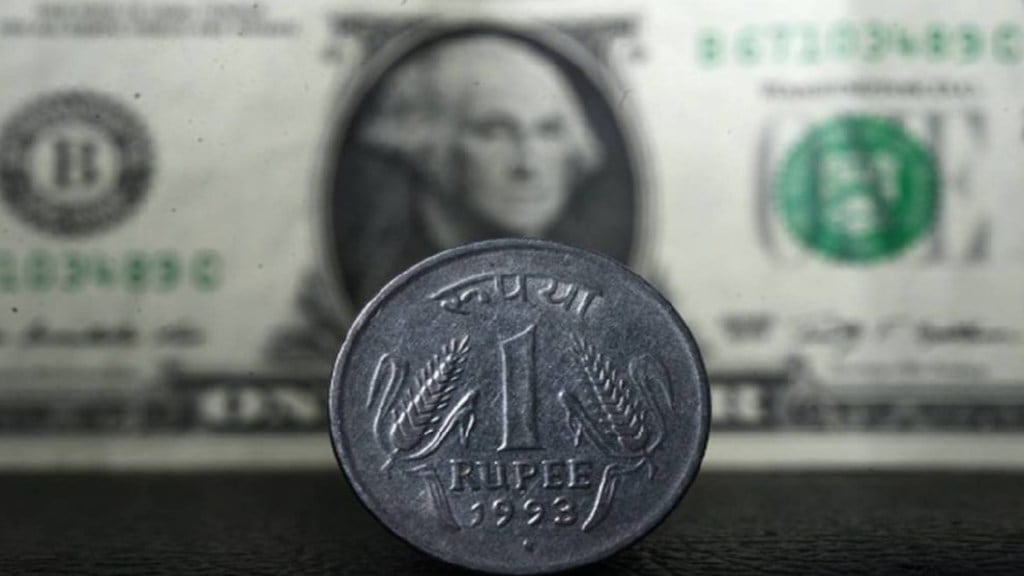
The Indian rupee on Monday continues its slumps, hitting a record low of 90.75 in mid-session against the US Dollar. The local currency in the early Asian trade had hit a record low 90.56 and has now depreciated further. The local currency opened at a record low of 90.45 against the dollar, down 0.1% from Friday’s historic-low close of 90.42.
On Friday, the rupee had touched a historic low of 90.55 against the dollar in early Asian trade. The Indian currency has been one of the worst-performing Asian currencies, having fallen nearly 6% year-to-date against the US Dollar.
Factors leading to rupee depreciation
Lack of India–US trade deal
Markets are awaiting clarity on a trade deal between India and the US. Analysts have warned that the rupee could breach the 91-per-dollar level this month if the deal is not finalised.
“A major drag on the market continues to be the elusive US-India trade deal, which is impacting India’s exports to the US, widening the trade deficit and contributing to the continuous depreciation of the rupee,” said Dr VK Vijayakumar, Chief Investment Strategist at Geojit Investments.
Moreover, remarks from India’s chief economic advisor that a trade deal may materialise by March have impacted the market sentiment. Additionally, Bloomberg News on Friday reported that it is unlikely that India and the European Union would strike a trade deal by this year’s end, which could have also weighed on the investor sentiment.
- Dollar supply pressures
A widening trade deficit, along with limited dollar inflows into the Indian economy, has added to downward pressure on the currency. According to a Reuters report, the rupee’s depreciation has encouraged importers to step up hedging activity, while exporters remain reluctant to add dollar supply.
- Limited central bank intervention
As per media reports, the Reserve Bank of India (RBI) has stepped in to prevent steeper losses in the rupee. However, its intervention has been mild, and the central bank is not targeting any specific level for the currency.
- FPI outflows
“USD-INR is under pressure from continued FPI outflows across both bonds and equities. With global yields climbing, Indian bonds are facing stress from the unwinding of USD and JPY carry trades,” said Anindya Banerjee, Head of Currency and Commodity at Kotak Securities.
As per provisional data for December 12 available on the NSE, foreign institutional investors (FIIs) were net sellers of equities worth Rs 1,114 crore, while domestic institutional investors (DIIs) were net buyers worth Rs 3,868 crore.
Outlook for the rupee
“The next support (for rupee) is at 90.80, after which we could see a crossover of 91 towards 92. RBI has clearly let the market to determine the price and has been intervening only to control any excessive volatility,” Reuters quoted Anil Bhansali, head of treasury at Finrex Treasury Advisors.
“There are incremental positives around the India–US trade deal that could provide intermittent relief to the rupee. Overall, we expect a broad trading range of 89.50–91.00 on spot,” Banerjee added.
Market focus will also be on the widely expected rate cut by the Bank of Japan, as investors await a quarter-point reduction by the central bank, which could have implications for the Indian currency.