



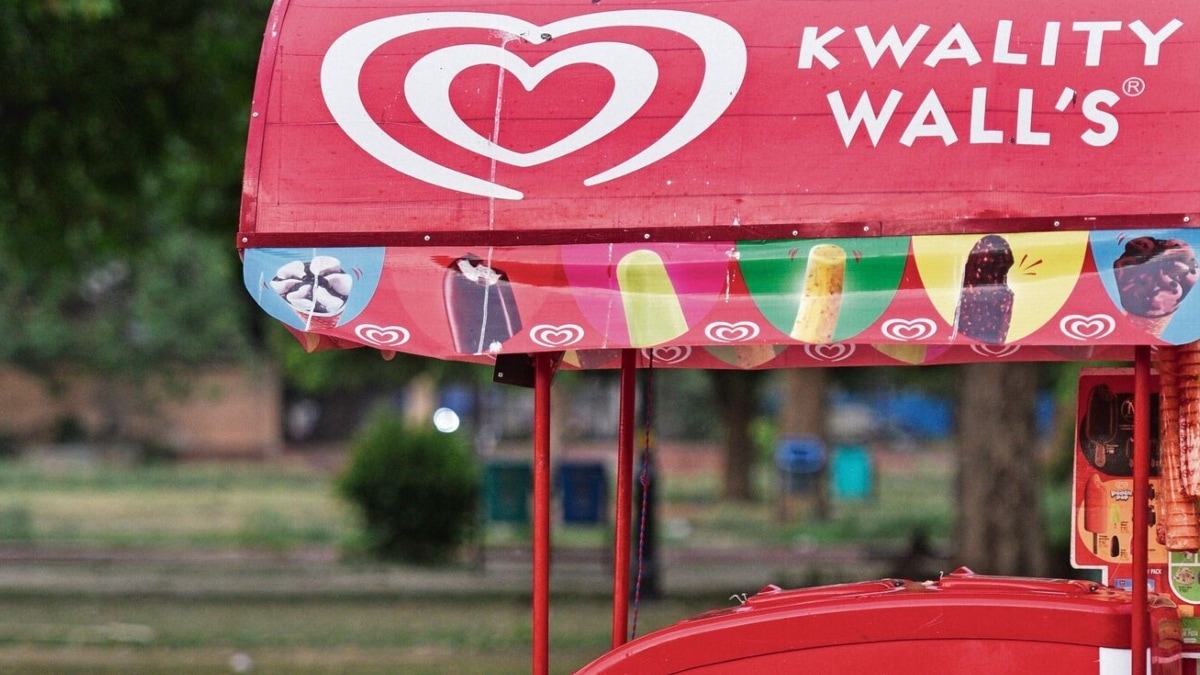
Kwality Wall’s India (KWIL), the demerged ice-cream arm of Hindustan Unilever (HUL), began trading on Monday, listing at Rs 29.8 a share on the BSE, a discount of 26% to its indicative price of Rs 40.2 apiece.
The listing marks the culmination of the separation process that first kicked off in November 2024, when HUL’s board had approved the demerger in line with parent Unilever’s strategy. Best-known for Cornetto, Kwality Wall’s and Magnum, the ice-cream business is Rs 1,800 crore in size, 3% of HUL’s Rs 60,000-crore turnover.
HUL shares had begun trading ex-ice-cream business effective December 5 last year as part of the demerger process. Shareholders received one equity share of KWIL for every one share held in HUL. Currently, 61.9% of KWIL is held by Unilever PLC and its group entities, while HUL shareholders hold the rest (38.1%). Unilever’s shares however will be transferred to subsidiary The Magnum Ice Cream Company (TMICC) as part of the demerger process. TMICC will make a mandatory open offer to KWIL’s public shareholders as part of SEBI guidelines, executives said.
With the listing now complete, attention will shift to the growth prospects of KWIL. In a conversation with FE, deputy managing director Chritank Goel and CFO Prashant Premrajka said that the standalone entity was betting on deeper distribution, sharper price positioning and regional supply-chain efficiencies to unlock growth. The company also plans to introduce the Ben & Jerry’s ice-cream brand in the future as “demand signals and scale economics” grow. Also, KWIL would not be constrained by funding needs, with capital expenditure plans locked for the next 18 months, the executives said.
A key strategic shift for KWIL would be adopting a “region-for-region” supply-chain model, which will focus on leaner, localised manufacturing and shorter cold-chain routes. Producing closer to demand centres could improve cost efficiency and responsiveness, helping KWIL compete more effectively with dairy cooperatives and regional players that dominate the market, the executives said.
Pricing would also play a central role in the next chapter of growth. While the category has historically leaned toward premium offerings, KWIL now aims to compete more aggressively in the Rs 10–30 price band, where beverages, chocolates and wafers dominate consumer spending.
“India’s per capita ice cream consumption stands at 500–600 ml annually, significantly below several comparable markets. Of the country’s 13 million FMCG outlets, ice cream is present in only about 1 million. Kwality Wall’s directly services 200,000 outlets through its freezer network,” Goel said.
“The category is very attractive and we believe that we are uniquely positioned to capture this growth,” Premrajka said, adding that the company had a strong heritage, known brands and access to 1,000 patents from the Unilever stable.
The company has already doubled the pace of cabinet additions in recent years and sees scope to add around 50,000 outlets annually. Over the next three years, the company would expand its reach by at least 100,000 outlets through its freezer network, supported by investments in supply chain and front-end execution.
Digital channels are emerging as another growth driver for the firm. Quick commerce now contributes a high double-digit teen share within online sales and continues to expand, fuelled by impulse purchases, late-night consumption and rising in-home occasions, the executives said.
Although impulse formats remain dominant, the company sees increasing potential in family packs as e-commerce platforms improve cold-chain reliability for home deliveries and office get-togethers. The company also proposes to keep its eye on improving overall logistics infrastructure, ensuring cold-chain temperatures are maintained between -18°C and -22°C.