



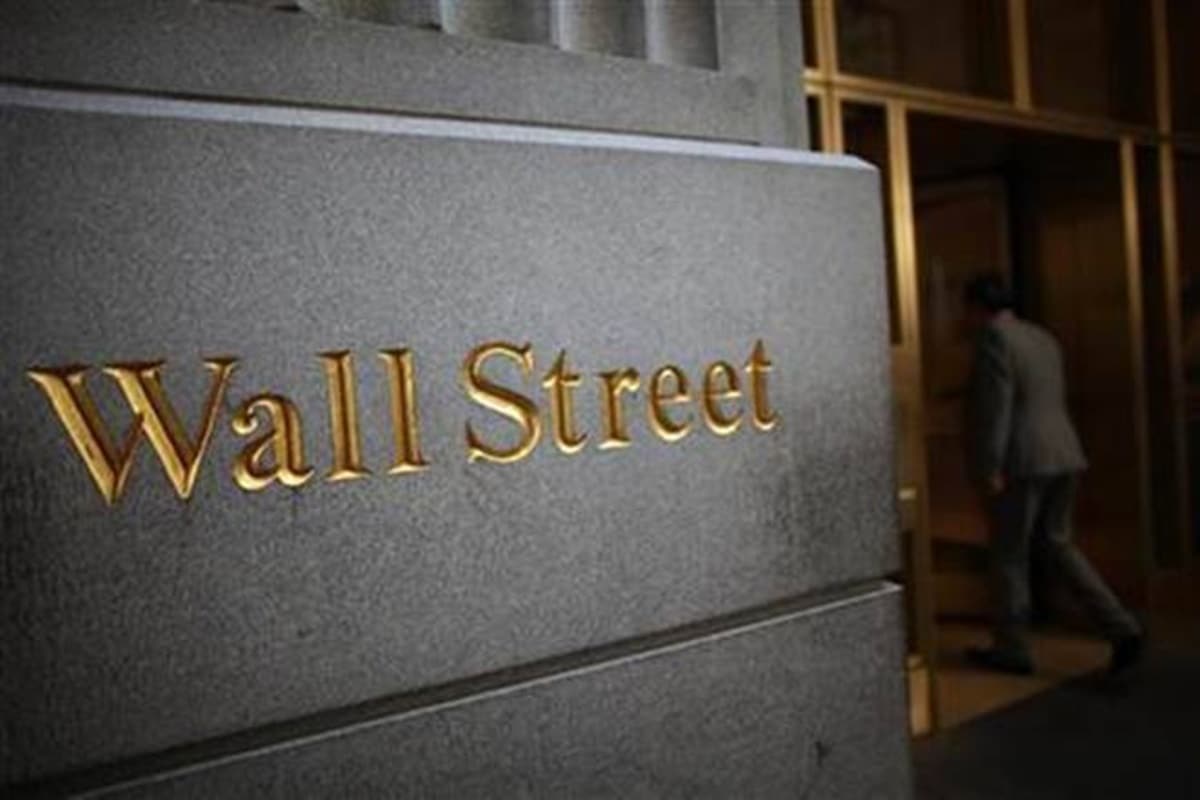
Major global markets were mostly higher on Wednesday after worries over the pandemic snapped a four-day winning streak on Wall Street.
Shares rose in Paris, London, Tokyo and Hong Kong.
Rising coronavirus counts in many countries are raising the urgency to develop vaccines and treatments and setbacks in that process tend to discourage investors.
On Tuesday, independent monitors paused enrollment in a study testing the COVID-19 antiviral drug remdesivir plus an experimental antibody therapy being developed by Eli Lilly.
The company said the study was paused out of an abundance of caution.
The news followed a disclosure late Monday by Johnson & Johnson, which said it had to temporarily pause a late-stage study of a potential COVID-19 vaccine due to an unexplained illness in a study participant.
In early European trading, Germany’s DAX gained 0.3 per cent to 13,052.76 and the CAC 40 in Paris climbed 0.3 per cent to 4,962.95.
Britain’s FTSE 100 picked up 0.4 per cent to 5,995.46. Wall Street looked poised for gains, with the future contracts for the S&P 500 and the Dow industrials both up 0.5 per cent.
In Europe, investors were awaiting earnings reports and a speech by the European Central Bank chief, Christine Lagarde.
Meanwhile, uncertainty about the prospects for more stimulus for the economy from Washington continues to hang over markets.
As US case counts heads north into October, the market is evidently still very much sensitive to the twist and turns of the vaccine development and perhaps now more than ever still lacking another fiscal injection to plug the gap into the year-end,” Jingyi Pan of IG said in a commentary.
Japan’s Nikkei 225 erased early losses to gain 0.1 per cent to 23,626.73, while the Hang Seng in Hong Kong eked out a late gain of 0.1 per cent, at 24,667.09.
South Korea’s Kospi lost 0.9 per cent to 2,380.48 and the S&P/ASX 200 in Australia declined 0.3 per cent to 6,179.20. The Shanghai Composite index shed 0.6 per cent to 3,340.78.
The Bank of Korea opted to keep its benchmark interest rate unchanged, as did Singapore’s Monetary Authority.
Overnight, the S&P 500 lost 0.6 per cent to 3,511.93, giving back some of its gains from a day earlier.
The Dow Jones Industrial Average dropped 0.6 per cent to 28,679.81 and the Nasdaq composite gave up an early gain, slipping 0.1 per cent to 11,863.90. The Russell 2000 index of small-cap stocks fell 0.7 per cent, to 1,636.85.
US Senate Majority Leader Mitch McConnell said Tuesday that he’s scheduling a vote on a scaled-back GOP coronavirus relief bill for October 19.
Democrats filibustered a GOP-drafted aid bill last month and recent talks on a larger deal with House Speaker Nancy Pelosi, D-Calif., fell apart this past weekend.
In a letter to colleagues Tuesday, Pelosi called the White House’s latest proposal insufficient and said significant changes are needed.
The cold reality that markets have refused to countenance is that even if an agreement was reached, its chances of being enacted before the November election are about zero,” said Jeffrey Halley of Oanda.
Still, this is 2020, the year where markets never let reality get in the way of a good story.” In other trading Wednesday, the yield on the 10-year Treasury was steady at 0.73 per cent, up from 0.72per cent late Tuesday.
Benchmark US crude oil lost 16 cents to USD 40.04 per barrel in electronic trading on the New York Mercantile Exchange.
It gained 77 cents to USD 40.20 per barrel on Tuesday. Brent crude, the international standard, shed 14 cents to USD 42.31.
The U.S. dollar weakened to 105.45 Japanese yen from 105.47 yen. The euro slipped to USD 1.1745 from USD 1.1748.