



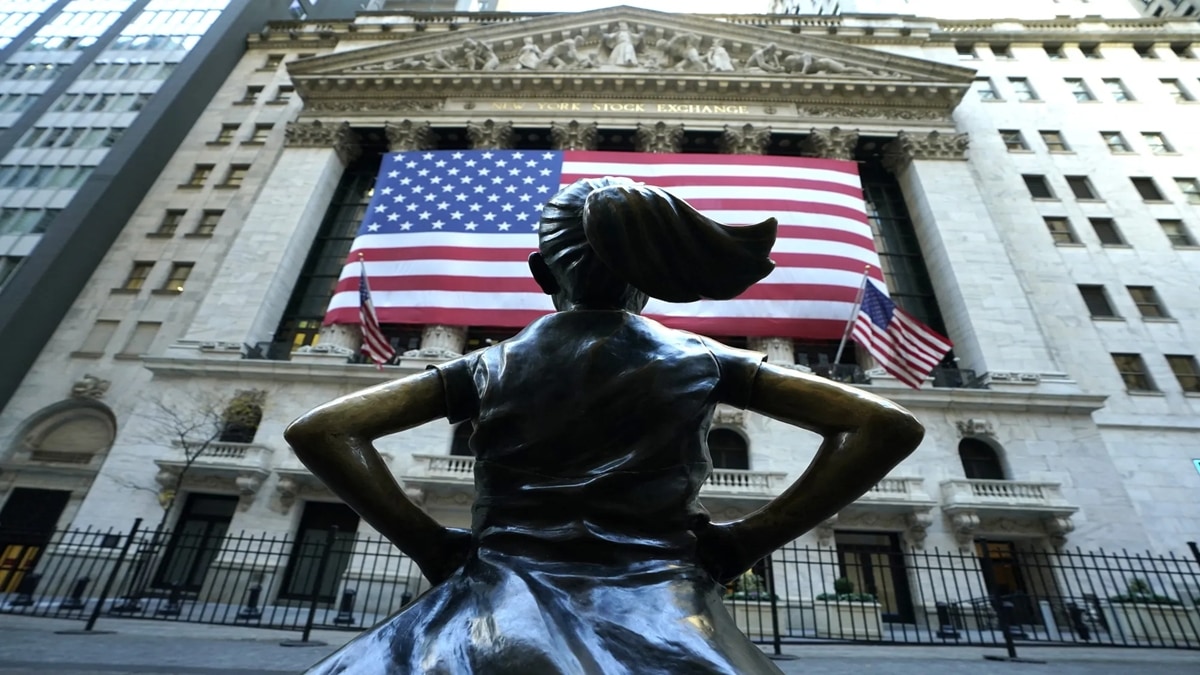
US stock markets moved higher as investors tried to recover from last week’s losses linked to tensions around the Iran conflict. At 10:05 AM ET on March 17, 2026, the Dow Jones Industrial Average was at 47,178.74, up 232.33 points or 0.49% from its previous close. S&P 500 stood at 6,735.07, rising 35.69 points or 0.53%. The Nasdaq Composite reached 22,498.60, gaining 124.62 points or 0.55%.
Focus shifts to Federal Reserve meeting
One of the main reasons for the market rise is the ongoing two-day Federal Reserve meeting. Investors expect that interest rates will stay unchanged for now.
Stable interest rates are good for markets because they support borrowing, spending, and overall business activity. Investors are also watching closely for updates on inflation and the job market, especially with global uncertainty still high.
“If the Iran conflict is contained in a few weeks’ time, we think there will likely be two to three cuts later this year,” Thornburg Investment Management portfolio manager Ali Hassan said to Investopedia. “If the conflict lasts two or three months, the Fed would likely remain on pause in a wait-and-see mode, and there may be no rate cuts. Energy is the worry.”
Oil prices ease after recent surge
Oil prices had risen sharply in the past week, with Brent crude going above $100 per barrel for the first time since 2022. This was mainly due to fears that the Iran conflict could disrupt global supply, especially through the Strait of Hormuz, an important shipping route.
However, prices came down as new updates emerged. US Treasury Secretary Scott Bessent said the US is allowing Iranian oil tankers to pass through the Strait. Reports also said the US may form a group of countries to protect ships.
Although President Donald Trump later said that such a coalition is not ready yet, oil prices still stayed lower during the day. This helped reduce worries about inflation and supported stock markets.
Markets react to ongoing geopolitical uncertainty
Geopolitical tensions are still a key concern. Tanker movement has already reduced after Iran’s threats, which has added volatility to oil prices.
The situation became more serious after Israel said Iran’s security chief, Ali Larijani, was killed in airstrikes. At the same time, Trump ordered strikes on Iranian military targets on Kharg Island, though oil facilities were not hit.
Regardless of all these reasons, markets are not reacting with panic. Investors seem to believe that the situation may stay under control or could be resolved over time.
“The market really feels that Trump has the market’s interest, I think, in his mind long term,” said David Krakauer, vice president of portfolio management at Mercer Advisors told CNBC. To be more specific, it “still is somewhat relying on thinking that he can end this if he really wants to if things start to get bad.”
Financial and tech stocks support the rally
Financial stocks helped push the market higher after recovering from earlier losses. Technology stocks also gained, which supported the Nasdaq.
Among individual stocks, airline companies rose even though fuel prices remain high. Delta Air Lines shares jumped 4% after it raised its revenue outlook. American Airlines and United Airlines also saw gains.
In the tech sector, most of the “Magnificent Seven” stocks moved up, though Nvidia slipped slightly. The company is hosting its AI conference, where CEO Jensen Huang said he expects strong future revenue from new AI systems.
Even with the gains, the rally is not very strong yet. Trading volumes are lower than usual, which shows that investors are still careful. “There is uncertainty. Things change quickly,” Krakauer said to CNBC. “In the fog of war, you sort of just stay put.”
Disclaimer: This article provides factual analysis only and is not, and should not be construed as, an offer, solicitation, or recommendation to buy or sell securities. Investors must conduct their own independent due diligence and seek advice from a registered financial advisor in the respective jurisdiction.