



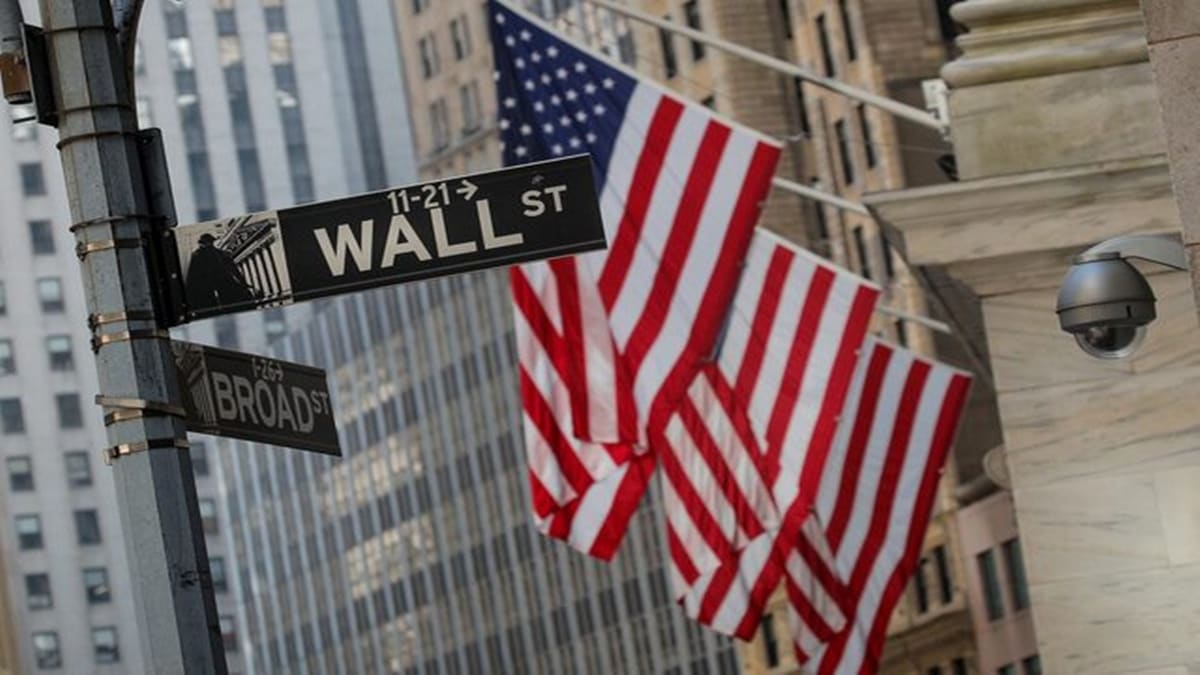
US stock market saw a big reversal when sentiment on Wall Street improved on hopes for a swift resolution to the Iran war. President Donald Trump’s statement regarding a potential end to the US military operation in Iran, coupled with plans to stabilize oil prices, led to a sudden reversal in sentiments.
In regular trading on Monday, all three leading indices opened lower but closed in green with significant gains. The Dow rose 0.5%, the S&P 500 gained 0.83%, and the Nasdaq Composite climbed 1.38%.
The shift in sentiment affected most global markets, including major indices in Japan, South Korea, and Hong Kong, which rebounded following prior caution linked to conflict fears. On Tuesday, US stock futures are in green with the Dow up over 150 points.
However, the volatility still appears to be strong, with news flow dictating the direction of stock prices. “Despite uncertainty remaining elevated – particularly regarding the duration of the war, and, of course, the situation regarding the Strait of Hormuz – the VIX pulled back from its 30.19 high to around 23,” says Aaron Hill Cheif Market Analyst at FP Markets.
Thanks to algorithmic trading systems and high-speed information flows, geopolitical developments are now getting reflected in asset pricing within seconds, if not minutes. “Markets are already beginning to trade as if the Iran conflict will de-escalate—even though there is no formal resolution yet,” says Nigel Green, CEO, deVere Group.
In a sudden reversal, the oil prices also retreated to around $90 a barrel after surging to nearly $120 at the start of the week. The situation, however, is still on the boil. Iran’s Revolutionary Guards said they would not allow “one litre of oil” to be shipped from the Middle East if U.S. and Israeli attacks continue.
Earlier, G7 nations expressed readiness to take necessary measures to support global energy supply amid rising oil prices due to the US-Israel war with Iran. However, a meeting of G7 finance ministers and the International Energy Agency concluded without an agreement on releasing strategic crude reserves.
“Oil dropping back below $90 and equities pushing higher tells us investors are already pricing a scenario in which tensions cool and supply disruptions remain limited. Financial markets are extremely forward-looking; in situations like this, they can move ahead of geopolitical reality,” adds Green.
The emergence of Iran’s new Supreme Leader, Mojtaba Khamenei, remains the ‘uncertain’ factor in the current situation. Uncertainty surrounds the duration of the war and its impact on oil supply.
“Markets may be underestimating the influence and decision-making approach of Iran’s new Supreme Leader, Mojtaba Khamenei, and his willingness for a longer war to drain American financial and military resources, and those of its allies. The global investment community has limited experience of how the new Iranian leadership will respond moving forward,” Green notes.
The global environment has become increasingly unstable, emphasizing that while markets may currently favor de-escalation, investors should remain cautious of rapid shifts in geopolitical circumstances.
“The reality is that markets often move first and verify later. Current price action suggests investors believe the worst escalation risks are limited. However, if events unfold differently, markets would be forced to reassess those assumptions very quickly,” cautions Green.