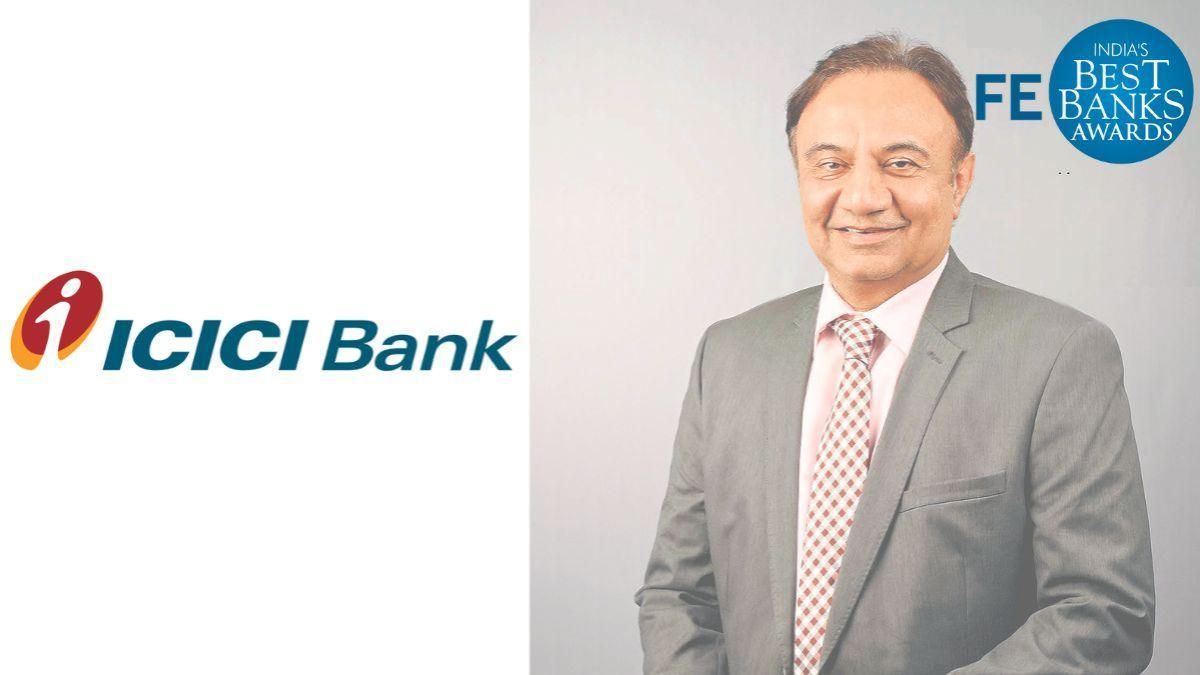
There is a phrase that Sandeep Batra, executive director of ICICI Bank, uses to describe what technology has done for lending: “What was once opaque has now become bankable.” It is a deceptively simple line, but it captures something important about how India’s second-largest private sector bank has quietly repositioned itself.

ICICI Bank’s approach over the past several years has been built on an unusual combination: grow fast, but don’t get sloppy. Push into new markets, but underwrite carefully. Embrace technology, but don’t chase every shiny new thing. That balance — aggression tempered by conservatism — has allowed the bank to scale rapidly while building competitive advantages that are harder to replicate than a rate cut or a marketing campaign.
The clearest expression of this strategy is its growing focus on business banking. MSMEs are the backbone of the Indian economy — contributing over a third of GDP and nearly half of the country’s exports — yet they receive only 12-13% of formal credit. That gap has long existed because lending to smaller businesses was considered too risky, too opaque, too difficult to assess. ICICI Bank has used GST data analytics and deeper credit bureau insights to change that calculus, opening up a segment that was previously off-limits for much of the formal banking system. Its digital platform InstaBIZ has further accelerated this push, giving businesses faster, more seamless access to banking services.
What distinguishes the bank’s approach here isn’t just the technology — it’s the philosophy behind it. Rather than selling individual products to MSME customers, ICICI Bank aims to serve their entire financial life: current accounts, working capital solutions, wealth products, digital payments and more. The result is stronger relationships, better cross-selling opportunities and fee income that adds resilience to the overall business model. Analysts have taken note, viewing the shift away from a predominantly corporate banking-led model as a strategically sound move, particularly given the government’s continued push to improve credit access for smaller businesses.
Business banking carries higher risk than lending to large corporates, and ICICI Bank is clear-eyed about that. But it also offers better yields and richer fee income — provided the underwriting is right. The bank has maintained a conservative credit culture throughout, prioritising a borrower’s actual repayment capacity over headline credit ratings. Its 7,000-plus branches are not just a distribution network; they provide on-the-ground intelligence about local borrowers that no algorithm fully replicates.
Corporate banking, meanwhile, has settled into a steadier gear. With system liquidity abundant and capital markets buoyant, large companies have had cheaper funding options available, moderating loan growth in this segment. But ICICI Bank has held its relationships firmly through transaction banking, foreign exchange services, working capital financing and cash management — businesses that generate reliable fee income and anchor the portfolio even when headline loan growth softens.
In retail, mortgages remain the anchor, accounting for nearly 30% of the loan book. Home loans are lower-margin but also lower-risk, providing stability. The bank is carefully expanding in auto loans, credit cards and personal loans — but with the same discipline it applies elsewhere, focused on assessing what borrowers can genuinely repay rather than simply pushing product volume.
With MD and CEO Sandeep Bakhshi receiving a two-year extension from October 2026, the bank heads into its next phase with leadership continuity intact — no small thing for an institution that has spent years carefully building its strategic direction.