



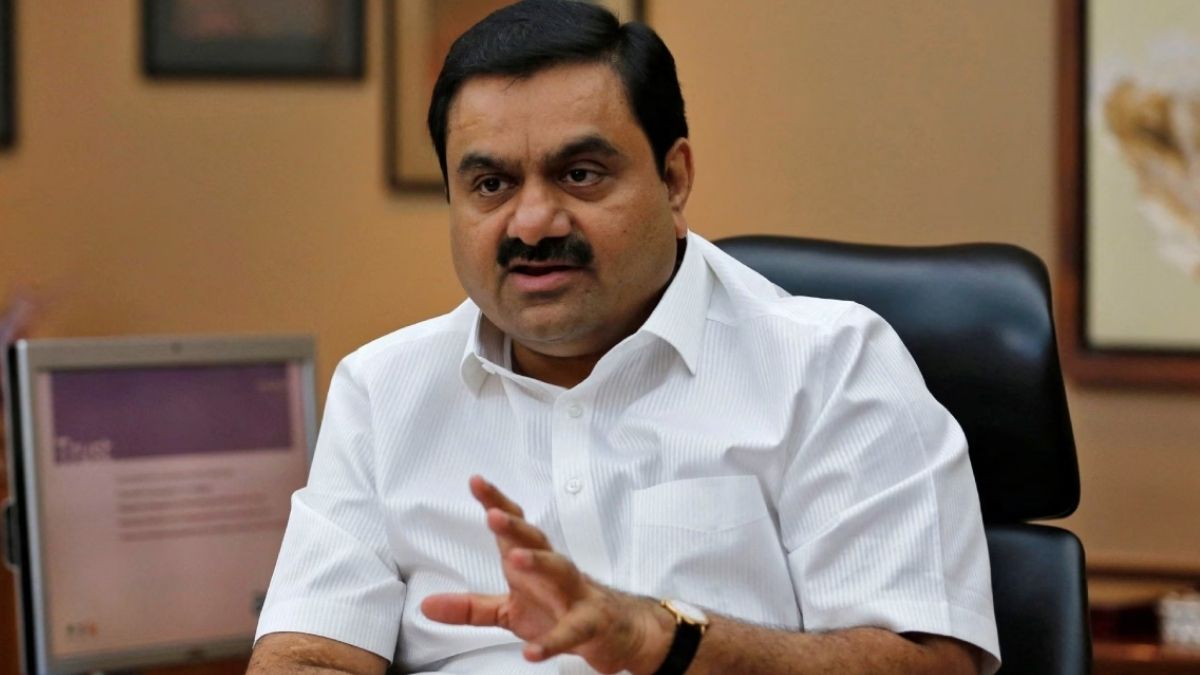
The US Justice Department is seeking to drop criminal fraud charges against Gautam Adani, according to court records cited by Reuters. The move comes months after the high-profile case accused the Adani Group chairman and others of orchestrating a bribery scheme linked to renewable energy contracts in India.
The development comes after Adani Enterprises paid $275 million to the US Treasury Department as part of an investigation into alleged violations of US sanctions on Iran during the ongoing conflict in the Middle East.
The case, filed in New York in 2024, accused Adani and others of offering around $265 million in bribes to Indian government officials to secure contracts tied to a large renewable energy project. Prosecutors had charged him with conspiracy, securities fraud, and wire fraud in connection with a deal involving Adani Green Energy and another company to supply 12 gigawatts of solar power to the Indian government, reported Reuters.
According to the original allegations, the project aimed to provide electricity to millions of homes and businesses across India. US authorities had claimed that investors in the United States received misleading information while billions of dollars were raised for the project over several years.
However, in a court filing on Monday, prosecutors said the US Department of Justice no longer wanted to continue the criminal case. “The Department of Justice has reviewed this case and has decided, in its prosecutorial discretion, not to devote further resources to these criminal charges against individual defendants,” prosecutors wrote in the filing.
The request still needs approval from Judge Nicholas Garaufis. Prosecutors said lawyers representing Adani and the other accused individuals agreed to the dismissal request.
Why did US bring charges against Adani?
When the charges were announced in 2024, US prosecutors alleged that Adani and his associates misled investors while secretly arranging bribes to secure energy contracts in India, reported Reuters. Authorities claimed the group presented the solar project as a major business opportunity to investors while allegedly using illegal payments to win approvals.
At the time, the Adani Group strongly denied the allegations. The company called the accusations “baseless” and rejected claims of wrongdoing.
Adani was never arrested in the case and never appeared in a US court. Many observers in India believed the case could eventually weaken after US President Donald Trump suspended enforcement of the Foreign Corrupt Practices Act in 2025. The law bans companies and individuals from paying bribes overseas to win business deals.
The Adani Group grew rapidly over the past three decades. Gautam Adani first built his business empire through coal trading in the 1990s before expanding into ports, airports, energy, mining, logistics, defence, and infrastructure projects.
The group later invested heavily in renewable energy and built one of the world’s largest solar power plants. Adani had also announced plans to become India’s biggest clean energy company by 2030, reported Reuters.
Impact on Adani group
The allegations triggered international scrutiny of the Adani Group and affected several overseas business deals. After the charges became public in 2024, Kenya cancelled airport expansion and energy agreements linked to the Adani Group. In Sri Lanka, Adani Green Energy withdrew wind power projects after local authorities sought to renegotiate pricing terms. A French energy company also paused fresh investments linked to the group.
The Adani Group also faced criticism from US-based short seller Hindenburg Research, which accused the conglomerate of “stock manipulation” and “accounting fraud.” The Adani Group denied those allegations and called the report “a malicious combination of selective misinformation and stale, baseless and discredited allegations,” reported Reuters.
Despite the investigations and legal pressure, Adani Group companies continued expanding operations in India and overseas. Gautam Adani remains one of Asia’s richest businessmen and continues to play a major role in India’s infrastructure and renewable energy sectors.