



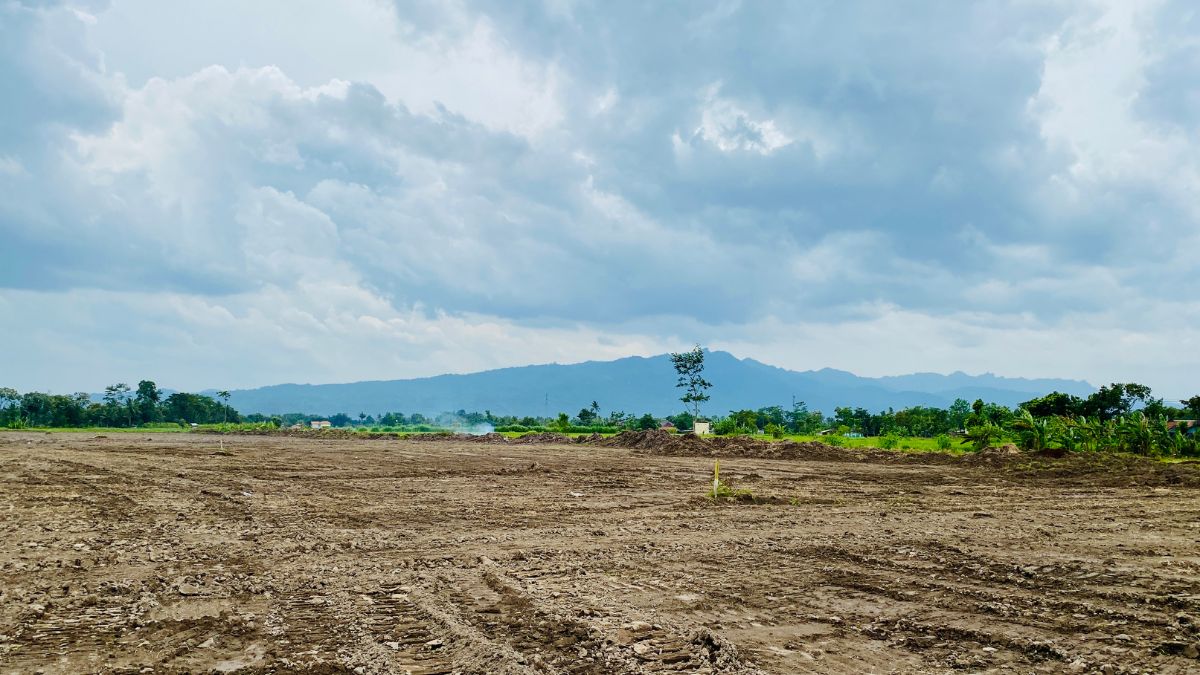
Economic Survey 2025-26 said that land has become a” dead capital” in many cities due to a combination of restrictive land-use regulations, title insecurity, and fragmented markets, as well as speculative incentives.
The survey said restrictive land-use norms in the form of development control regulations (DCR), such as low floor space index (FSI) or floor-area ratio (FAR), place a cap on the amount of built-up area per unit of land, constraining vertical development and forcing spatial expansion outward rather than upward.
FSI means permissible construction allowed a on a plot of land.
Artificial Land Scarcity
“This distortion raises land values and creates artificial scarcity in core urban areas,” the survey said .
It said compared to global cities like New York and Hong Kong, Indian cities have relatively lower FSI, with exceptions for denser areas such as central business districts.
“When the FSI is low, settlements are incentivised to expand horizontally, driving up average land cost and increasing infrastructure delivery costs per unit of housing or commercial space. This limits housing supply and raises prices relative to incomes,” it said .
However the survey said without infrastructure augmentation, the increase in FSI and FAR could result in unproductive outcomes though it would leave to more built up area per unit of land .
“Amenities such as mass transit, water, and sanitation, among others, must be key factors in the decision-making process. In the absence of adequate amenities, a rise in density will result in traffic gridlocks, water shortages and overwhelmed sanitation systems, it said .
The survey said land also remains unproductive due to unclear land titles compounded by fragmentation and opaque records.b “Secure, transferable property rights are essential for land to function as capital. They allow land to be used as collateral, traded in formal markets, and redeveloped efficiently,” it said.
Securing Property Rights
Land tenure and security encompass securing and transferring rights related to land and natural resources. This includes titling, resolving land disputes, land acquisition, and managing informal settlements, it said
. The central government has undertaken multiple initiatives to address these obstacles. Under the aegis of the Digital India Land Records Modernisation Programme (DILRMP), the government introduced the Unique Land Parcel Identification Number (ULPIN)or Bhu-Aadhaar, as well as the National Generic Document Registration System (NGDRS), it said
State governments have also introduced digital systems to address these issues.
These include, inter alia, the Telangana government’s single digital platform, where the revenue, stamps, and registration departments are integrated with the Bhu Bharati portal13, and the Karnataka government’s transition towards issuing digital land records under its ambitious Bhu Suraksha scheme14, it said .
Experts like Gulam Zia. Senior executive director at Knight Frank are not favour for higher FSI. “Top seven cities including Mumbai already have FSI of 5 to 6. Cities such as Hyderabad don’t have any restriction on FSI.,” Zia said.
He added that higher FSI leads to higher cost of development as the building goes taller. “In Mumbai cost of construction is Rs ,10000 to Rs 12000 per sq ft while in many cities it is Rs 2000 per sq ft.”However, Zia said land titling and digitization when happens, will be the big bang reform in real estate after Rera Act.