



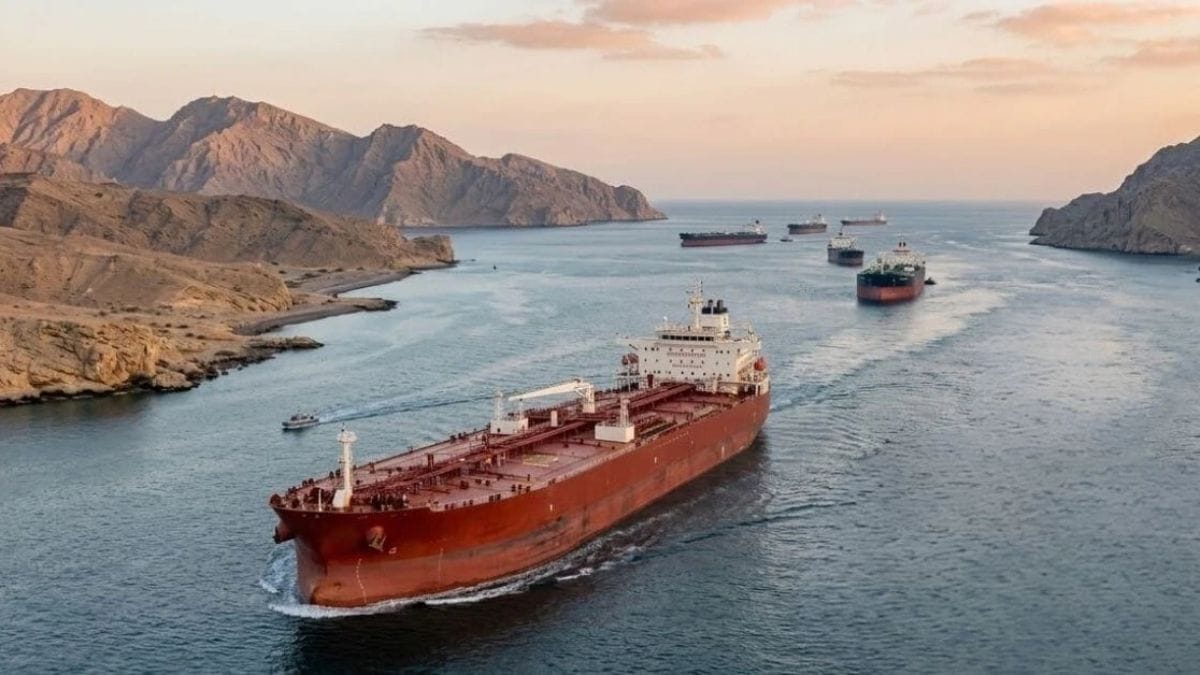
India is working with Iran to facilitate the passage of its ships carrying crude oil and LPG through the Strait of Hormuz, with vessel movements currently being handled individually on a ship-by-ship basis, a senior government official said, as tensions in West Asia threaten one of the world’s most critical energy shipping routes.
The diplomatic engagement comes as instability in the Gulf raises concerns over the safety of vessels passing through the narrow maritime corridor that carries a substantial share of global oil trade and a large portion of India’s energy imports.
S Jaishankar’s remarks on the matter
Earlier in the day, in an interview with The Financial Times, External Affairs Minister S Jaishankar said that a formal “blanket arrangement” for all Indian-flagged ships has not yet been established, noting that the transit of vessels is currently being handled on a “case-by-case basis.”
The ongoing engagement appears to have already helped facilitate the movement of several India-bound energy cargoes through the strategic chokepoint. Rajesh Kumar Sinha, special secretary in the Ministry of Ports, Shipping and Waterways, said LPG tanker Shivalik, carrying 46,000 tonne of LPG, docked at Mundra port at around 5 pm, with priority berthing arranged to ensure swift discharge.
“Before its arrival, priority berthing has been arranged,” Sinha said. Another Indian-flagged vessel, Jag Laadki, carrying about 81,000 tonne of Murban crude oil, sailed safely from the UAE’s Fujairah terminal and is expected to reach Mundra port tomorrow, he added.
In addition, two India-bound tankers carrying a combined 3 million barrels of Iraqi and Arab crude oil transited the Strait between March 5 and March 10, with their transponders switched off during the passage. The movement of these cargoes is significant for India, which depends heavily on energy imports routed through the Gulf.
Nearly 90% of India’s LPG imports and around 50% of its crude oil imports pass through the Strait of Hormuz, making the waterway one of the most critical arteries for the country’s energy security. Responding to questions about Iran potentially allowing Indian ships to pass through the Strait, Ministry of External Affairs Spokesperson Randhir Jaiswal said India’s engagement with Tehran is based on longstanding diplomatic ties.
India also clarified that it is not currently engaged in bilateral discussions with the US on sending naval assets to help secure the Strait of Hormuz, despite calls from Washington for oil-importing countries to contribute ships to protect the strategic waterway.
“We are aware this matter is being discussed bilaterally by several countries. We have had no such bilateral discussion yet,” Jaiswal said. Meanwhile, the government has taken several measures to ensure domestic fuel availability even as geopolitical tensions persist.
According to Sujata Sharma, joint secretary in the petroleum ministry, India’s LPG production has increased by about 36% since March 5, after refineries were directed to maximise cooking gas output. Authorities have also urged households and commercial establishments to switch to piped natural gas (PNG) wherever pipeline networks are available to conserve LPG supplies.
“We request consumers to shift to alternate sources of energy wherever available instead of LPG,” Sharma said.
City gas distribution companies including Indraprastha Gas, Mahanagar Gas, GAIL Gas and BPCL have rolled out incentives to accelerate PNG adoption. Indraprastha Gas and GAIL Gas are offering Rs 500 worth of free gas for new domestic consumers, while BPCL has waived security deposits for commercial connections.
What do officials say?
Officials said compressed natural gas (CNG) and PNG supplies remain fully protected for priority sectors, even as allocations for industrial and commercial consumers have been moderated. The petroleum ministry also reassured that India’s fuel supply position remains stable, with refineries operating at high utilisation and maintaining adequate crude inventories.
“Crude is available in sufficient quantity. All refineries are operating at the highest capacity. Our petrol pumps are operating normally. No dry out has been reported anywhere,” Sharma said at an inter-ministerial briefing. According to shipping ministry data, 22 Indian-flagged vessels with 611 seafarers remain west of the Strait of Hormuz, including six LPG carriers, one LNG tanker, four crude oil tankers, container ships and bulk carriers.
Officials said the continued movement of vessels carrying energy cargo indicates that operational arrangements are being maintained to safeguard India’s supplies through the crucial maritime route even as tensions continue to test global energy trade.
India has offered shipping and cargo owners relaxations for berthing their stranded ships at ports in India including concessions in anchorage, berth hire and storage charges, said Sinha.
He added that the Jawaharlal Nehru Port Authority has provided temporary transshipment storage for containers bound for West Asia and granted 100% rebate on ground rent and dwell time charges and around 80% rebate on reefer container plug-in charges for up to 15 days for containers originating at JNPA.
He also said that along with two LPG tankers scheduled to reach on 16 and 17 March, one crude carrier with 80,800 tonne of Murban crude oil originating from the UAE is safely enroute to India. He further said that major ports across the country are closely monitoring vessel movements and cargo operations and providing support to shipping lines and cargo stakeholders, including concessions in anchorage, berth hire and storage charges.
Ports are coordinating with Customs and other stakeholders to facilitate cargo operations, he added.