



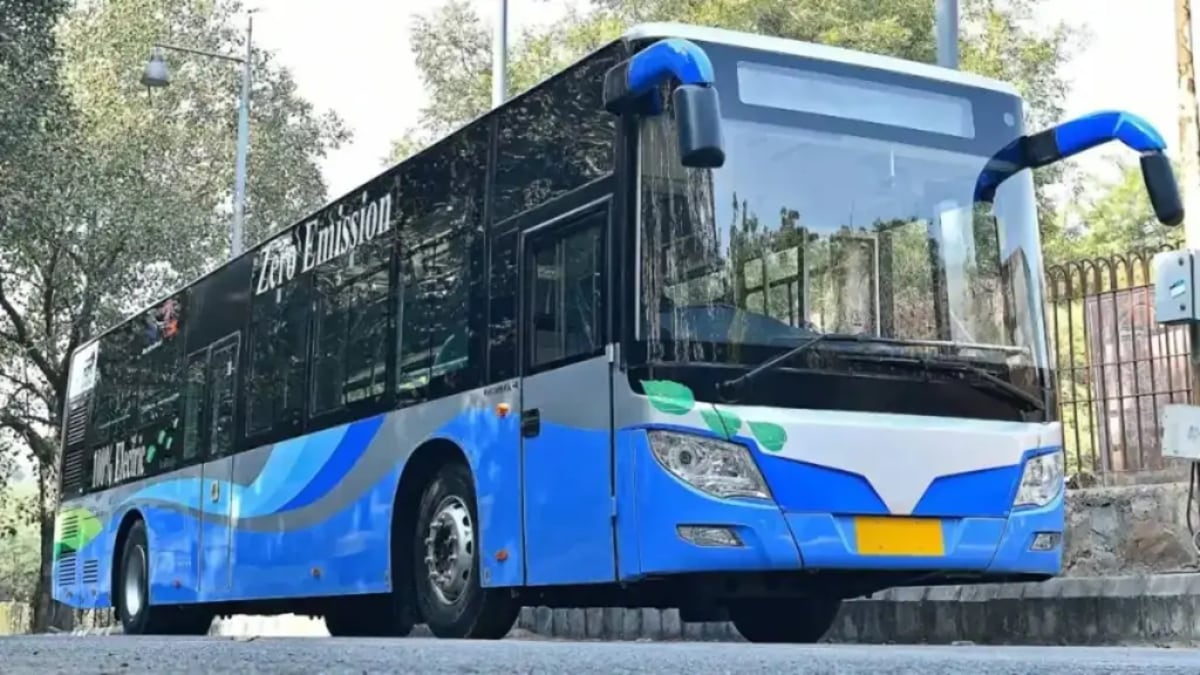
The electrification of India’s public bus fleet is gaining traction, with electric buses accounting for 4.5% of total bus sales in FY26 so far, up from 3.5% in FY25, as central and state tenders begin translating into large-scale deployment.
Of the 91,575 buses sold in FY26 till July 16, 4,158 were electric, according to Vahan data. This compares with 3,317 electric buses out of 95,641 units sold in FY25, indicating a steady rise in penetration even as overall volumes remain largely stable.
PMI Electro emerged as the largest seller in FY26 so far, accounting for 1,006 electric buses, or nearly a quarter of total e-bus sales during the period. Switch Mobility followed with 879 units, while Olectra clocked 853 buses. JBM Auto reported 817 units. Tata Motors and Volvo Eicher Commercial Vehicles were distant contenders, with 175 and 42 electric buses sold, respectively.
Manufacturer Standings
Industry executives attribute the increase to the accelerated rollout of buses sanctioned under the Centre’s flagship schemes — FAME-II and the PM e-Bus Sewa Scheme — alongside fresh state-level procurement.
On-ground deployment has picked up in recent weeks, with around 1,000 electric buses rolled out since January 1 across Delhi, Assam, Maharashtra, Gujarat and Odisha. Delhi alone inducted 500 buses on February 9, marking one of the largest single-day additions to a state transport fleet.
Sector experts said e-bus growth is poised to accelerate, with the country’s largest-ever tender for 10,900 electric buses — concluded in December 2025 — set to significantly boost deployment. This is expected to build on the momentum already generated under the PM e-Bus Sewa Scheme, they say.
Deployment Roadmap
Amit Bhatt, Managing Director-India at the International Council on Clean Transportation (ICCT) noted that the pace of electric bus penetration was relatively gradual in the initial phase, largely reflecting the time required to complete tendering and procurement processes. “With tenders now concluded for approximately 70% of the e-buses under the two central government schemes, we expect deployment across public fleets to accelerate in the coming months,” Bhatt said.
Overall, the Centre has finalised tenders for more than 16,568 electric buses across the two central schemes. This includes 5,668 buses under the PM e-Bus Sewa Scheme, out of a planned 10,000, and 10,900 buses under the PM E-Drive programme, against a target of 14,028.
Under the PM E-Drive initiative, PMI Electro secured nearly half of the total orders, reinforcing its leadership position. EKA Mobility, a subsidiary of Pinnacle Industries, won 3,485 buses, while Olectra received orders for 1,785 units. The remaining 420 buses were awarded to the Anthony Travels consortium. Deployment of these buses is likely to begin in FY27.
Bhatt noted that the momentum is not confined to central initiatives. Several states are actively advancing their own procurement programs. Maharashtra has concluded tenders for more than 5,000 electric buses, while Rajasthan and Tamil Nadu are at various stages of finalising their plans.
As these deployments materialise on the ground, electric bus penetration in public transport fleets is likely to increase significantly in the near term, he said.