



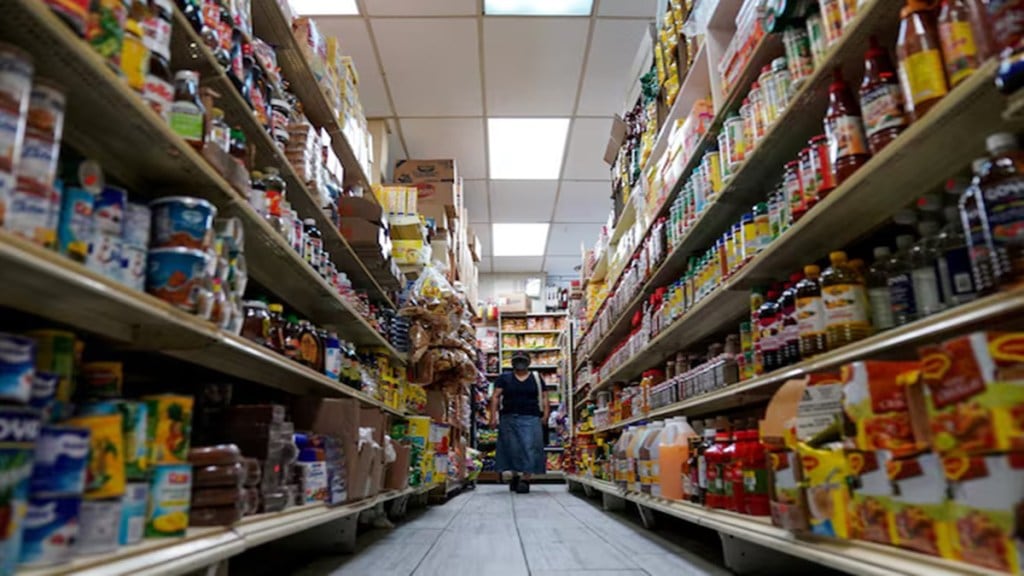
Fast-moving consumer goods (FMCG) companies hope to take the flight to growth next year riding on the fuel provided to the sector this year by big policy measures. The current year will go down as a unique year for consumer-facing businesses when income tax cuts, monetary policy easing and GST 2.0 reforms came one after the other in moves aimed at supporting growth. Adding to this, the momentum provided by sustained rural growth and lower commodity inflation and as Dabur India CEO Mohit Malhotra says the “puzzle pieces have come together” for FMCG. In contrast, consumer durables, fashion and lifestyle categories saw an immediate response to the policy stimulus provided by the government and central bank as discretionary spending took off after a slowdown. The question is: Will this last long enough?
“I think everything is in place for the FMCG sector to take off,” Malhotra said. “Unlike durables and cars, which took off the moment the GST 2.0 reforms were introduced in September, FMCG is a long-term bet. There were hiccups in 2025, but growth will show up in 2026,” he said.
What does Bizom’s data reflect?
FMCG’s mixed picture is visible in retail intelligence platform Bizom’s data for the first eleven months of calendar 2025. All-India value growth has been uneven through the year as companies battled urban slowdown woes in the first half and unseasonal rains and weather uncertainty in the second half. A much-anticipated urban recovery was mixed in the post-GST 2.0 period as companies and trade struggled with transition issues between September and November.
On the other hand, retail sales data released by the Retailers Association of India (RAI) for the first ten months of 2025 shows a bump-up in sales triggered by the GST price cuts. For the first time in three years, sales crossed the 10%-mark for the August-October period, standing at 11%, driven by both GST cuts and festive period sales.
Categories such as food & grocery, apparel, footwear, beauty & personal care, furniture, QSRs and sports goods saw sales growth rates of 9-15% between September and October. While RAI has not provided an update for November and December, but conversations with retail executives indicate that post-Diwali sales have been driven by a strong wedding season for fashion, beauty, footwear, durables and food products.
What did Kumar Rajagopalan say?
“Retail sector began the calendar year 2025 with 4–5% growth and moved to 7–8% through April–July following the income tax cuts and lowering of interest rates. The GST Bachat Mahotsav, between August and October, lifted festive-period sales into double-digit territory,” Kumar Rajagopalan, CEO, RAI, said.
“As I see it, things are settling down now and the transition issues are more or else behind for the FMCG sector,” Sudhanshu Vats, MD, Pidilite Industries, said. Sunil Agarwal, co-founder and chairman, RSH Global, parent company of Joy Personal Care, said that he saw climate volatility shaping the operating environment in 2025, with erratic weather and input cost pressures affecting margins across FMCG.
“This has sharpened the industry’s focus on adaptive sourcing, cost efficiency, sustainability initiatives and long-term resilience,” he said.
Saugata Gupta, MD & CEO, Marico, said that he saw affordability and availability driving growth for FMCG in the new year. “Foods are likely to see the biggest long-term gain, given low penetration and rising demand for convenient food. In personal care, growth will be driven by premiumisation and aspirational brands,” he said.
Swapneel Nagarkar, business head and executive vice-president at Interio by Godrej, said that a clear shift from unorganised to organised within furniture has provided more room for players to innovate. “With consumers increasingly opting for modern, space-efficient designs and ready-to-assemble solutions, organised players are quickly tapping into these trends with solutions that integrate seamlessly with technology to enable collaboration and productivity,” he said.